

News item
Vanuatu launches its first-ever National Employment Policy with ILO support
New policy aims to tackle youth unemployment, skills gaps and promote inclusive growth across the Pacific Island nation.
21 November 2025
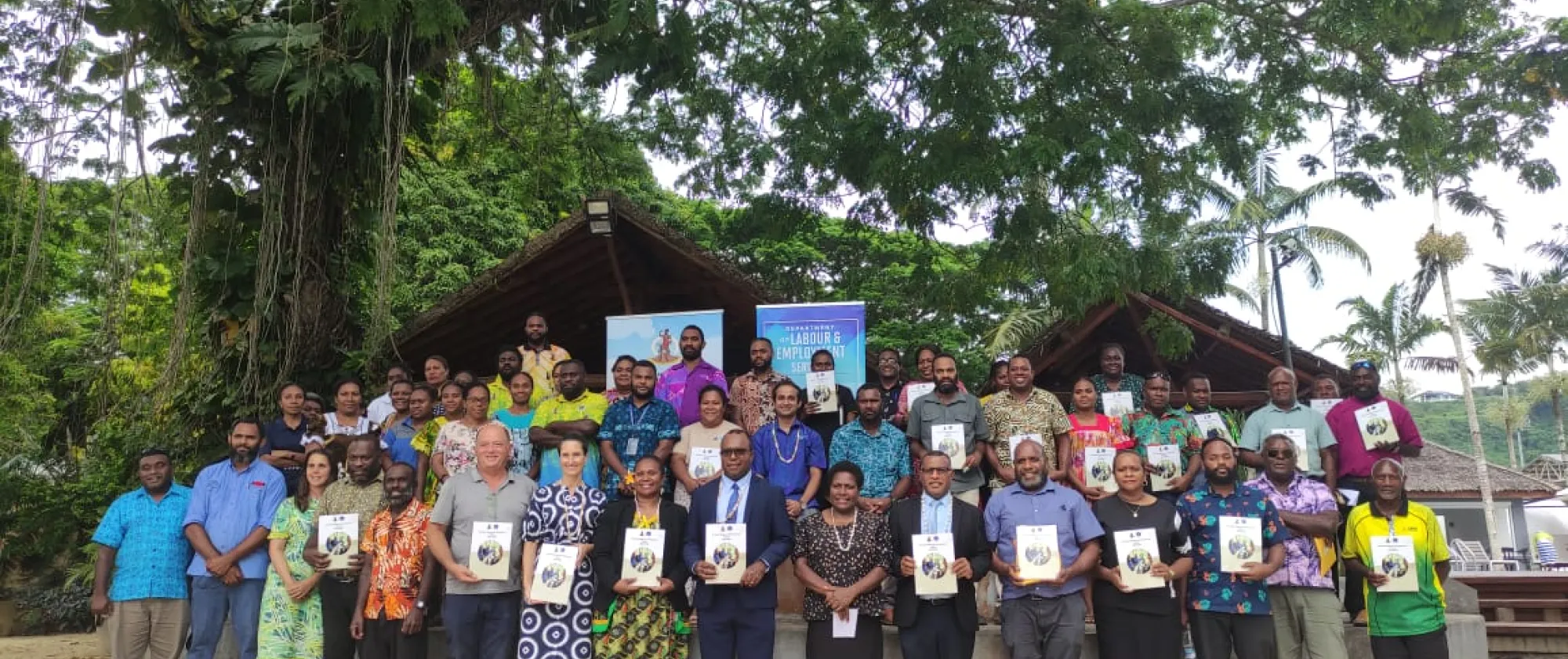
Port Vila, Vanuatu (ILO News) - The Government of the Republic of Vanuatu has launched its first-ever National Employment Policy (NEP) marking a historic milestone in the country’s commitment to promoting decent work, inclusive growth and sustainable livelihoods for its citizens.
The policy which covers the period 2025–2030 was developed through extensive consultation with tripartite partners, provincial authorities and development stakeholders. It sets out a clear framework to address key employment challenges facing Vanuatu, including the creation of quality jobs, skills development, youth employment, labour migration, gender equality, and social protection.
It was developed under the leadership of the Department of Labour & Employment Services through the Office of the Commissioner of Labour and with the engagement of employers and workers representatives. The International Labour Organization (ILO) provided technical and advisory support throughout the policy formulation process, through its Pacific Climate Change, Migration and Human Security (PCCMHS) Programme – Phase II.
Speaking at the launch Honourable Minister of Internal Affairs, Andrew Napuat said, "Employment remains one of the most powerful drivers of poverty reduction, social inclusion, and sustainable economic growth. This National Employment Policy is an important milestone for the Republic of Vanuatu, and I would like to thank the ILO for their technical support and contribution to the NEP development process."
Her Excellency Nicola Simmonds, the New Zealand High Commissioner to Vanuatu stated, "Decent, productive, and inclusive employment opportunities are something that all human beings should have access to. The Government of New Zealand looks forward to continuing to work together with the Government of Vanuatu to achieve the vision of this Employment Policy."
Martin Wandera, ILO Director for the Pacific Island Countries congratulated the Government and people of Vanuatu for their achievement.
“The National Employment Policy marks an important step forward. The ILO stands ready to continue its partnership with Vanuatu in transforming this policy into meaningful opportunities for workers, enterprises and communities across the islands. Together, we can build a future of work that leaves no one behind.”
The event was witnessed by representatives from the Ministry of Internal Affairs, the Tripartite Labour Advisory Council, employer and worker organizations, government partners and members of the diplomatic community.
Vanuatu Chamber of Commerce (VCCI) president Antoine Boudier stated, "We hope this policy’s implementation phase will provide opportunity for future consultations to ensure that reforms support the productivity, competitiveness and decent employment in way that work for both employers and workers. VCCI remains committed to constructive engagement through the TLAC and other forums to ensure that future employment reforms are practical, fair and economically suitable."
Vanuatu Trade Union Combined (VTUC) president Annette Daniel said, "To protect, empower and uplift every works, may the national employment policy ensure no workers are left behind and every Ni-Vanuatu has access to decent work, fair treatment and equal opportunity. VTUC reaffirm our commitment to work with all stakeholders to strengthen social dialogue, protect workers rights, and ensure that Vanuatu remains a model for fair and inclusive labour practice in the Pacific."
The ILO will continue to provide technical assistance to support the implementation, monitoring, and review of the policy in line with the Decent Work Agenda and the Sustainable Development Goals (SDGs).
Vanuatu faces significant employment challenges, largely due to its limited formal job market. Most people rely on agriculture and informal work, with few opportunities in wage employment outside of the tourism and public sectors. Youth unemployment and underemployment are particularly high, driven by skills mismatches and limited access to vocational training.