

Uzbekistan steps up dialogue on decent work and productive employment
A seminar in Tashkent brought together national and international partners to discuss progress towards Sustainable Development Goal 8 and priorities for decent work, productive employment and inclusive economic growth.
27 August 2026
TASHKENT (ILO News) – Representatives of government and international organizations met in Tashkent on 27 August to discuss Uzbekistan’s progress towards Sustainable Development Goal 8 (SDG 8) and practical measures to advance decent work, productive employment and inclusive economic growth.
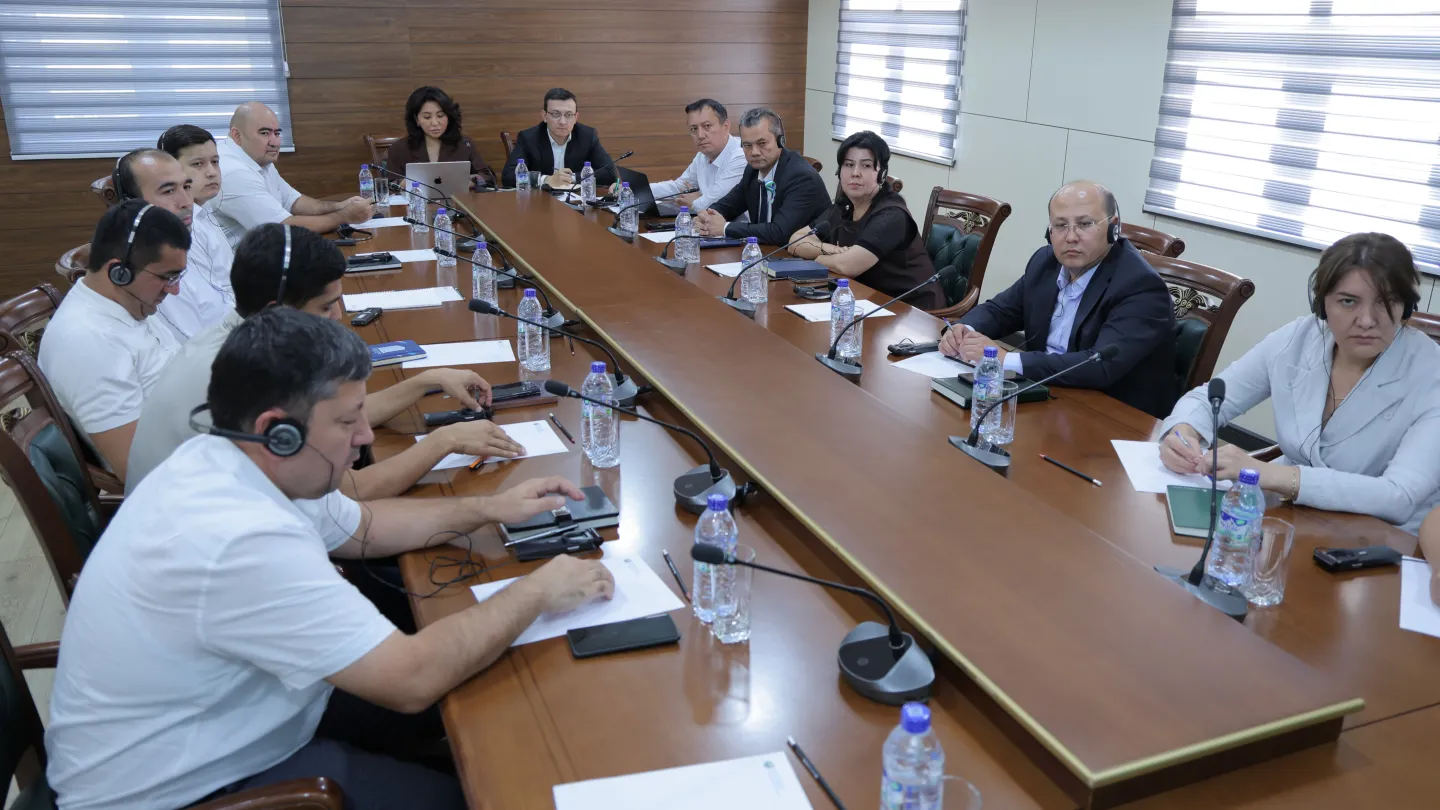
The national seminar, supported by the International Labour Organization (ILO) and held in a hybrid format at the Ministry of Employment and Poverty Reduction of the Republic of Uzbekistan, formed part of SDG Month, launched on 6 August by the Senate of the Oliy Majlis to promote dialogue on Uzbekistan’s progress towards Sustainable Development Goals. According to the United Nations Sustainable Development Cooperation Framework for Uzbekistan, the country’s SDG Index score improved by 12.1 points between 2015 and 2024, placing it among the five fastest-progressing countries in the world.
Employment trends and labour-market challenges
The seminar provided a platform for government and international development partners to examine Uzbekistan’s employment trends, global developments affecting the world of work, emerging skills and occupations, and the role of international labour standards in achieving SDG 8.
Sobir Xaytmuratov, Head of Department of the Ministry of Employment and Poverty Reduction of the Republic of Uzbekistan, presented recent demographic and labour-market developments and measures to improve employment opportunities and living standards. According to the presentation, Uzbekistan’s unemployment rate stood at 4.8 per cent in 2025, while the labour market continues to face challenges related to informality, demographic change and the need to create sufficient productive employment opportunities.
International experience and the future of work
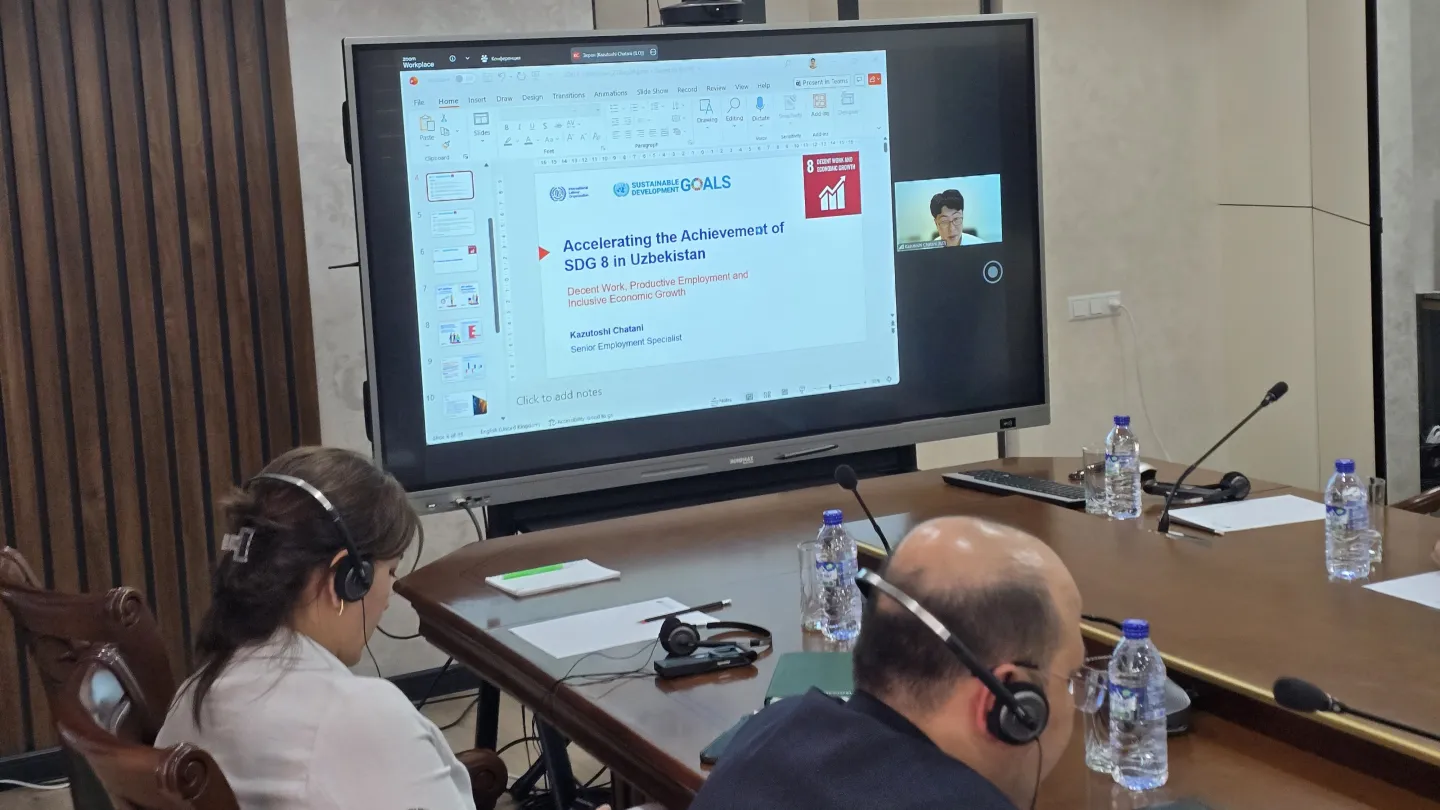
Kazutoshi Chatani, Senior Employment Specialist at the ILO Office for Eastern Europe and Central Asia, outlined global trends in the implementation of SDG 8, including youth employment, informality, gender gaps and the changing nature of work. His presentation also addressed the impact of technological change and artificial intelligence on occupations and skills, as well as approaches to financing employment policies and programmes.
Nargiza Khamidova, Programme Analyst at the United Nations Development Programme (UNDP), shared international experience on the future of work, including changing skills requirements, digitalization and new forms of employment. She highlighted initiatives in Uzbekistan such as the MyMehnat job-matching platform and the development of an occupational barometer to help anticipate future labour-market needs.
Ikuko Uochi, Senior Economist at the World Bank, addressed the role of employment in promoting inclusive growth and reducing poverty, emphasizing the importance of improving the quality and productivity of jobs, while addressing labour-market disparities.
International labour standards as a framework for SDG 8
Carlos Garcia Guzman, International Labour Standards and Labour Law Specialist at the ILO Office for Eastern Europe and Central Asia, examined how international labour standards can provide a practical framework for accelerating progress towards SDG 8 in Uzbekistan. Drawing on Uzbekistan’s experience in the cotton sector, he stressed the importance of coherent legislation, effective labour inspection, accessible remedies, evidence-based policy adjustment, formalization and protection for workers in informal, non-standard, migrant and platform employment.
The presentation proposed a practical pathway towards 2030 based on mapping SDG 8 priorities to international labour standards and national institutions, implementing legal and administrative reforms and conducting regular tripartite reviews to assess progress and adjust policies. Participants also discussed the implications of technological change for employment status, algorithmic management, remuneration, occupational safety and health, social protection, data and collective voice.
Strengthening cooperation for decent work
The event, moderated by Nilufarkhon Kamalova, Head of the International Cooperation and Rankings Department of the Ministry of Employment and Poverty Reduction of the Republic of Uzbekistan, concluded with an exchange on practical measures to accelerate progress towards SDG 8 by 2030. Discussions underscored the value of continued cooperation between government institutions, employers’ and workers’ organizations, the United Nations system, international financial institutions and other partners to translate economic and employment progress into more productive, inclusive and decent work.
The event was organized at the request of the Ministry of Employment and Poverty Reduction of the Republic of Uzbekistan by the ILO RISE for Impact project and delivered jointly with the UN Global Accelerator joint programme. The RISE for Impact project promotes fundamental principles and rights at work in the cotton supply chain. The UN Global Accelerator joint programme, supported by the Joint SDG Fund, contributes to accelerating progress towards the SDGs with support from the European Union and partner governments.
Relevant projects

Project country page (Uzbekistan)
RISE for Impact: Fundamental Principles and Rights at Work in the Cotton Supply Chain – A New Phase, A New Vision (UZBEKISTAN)