

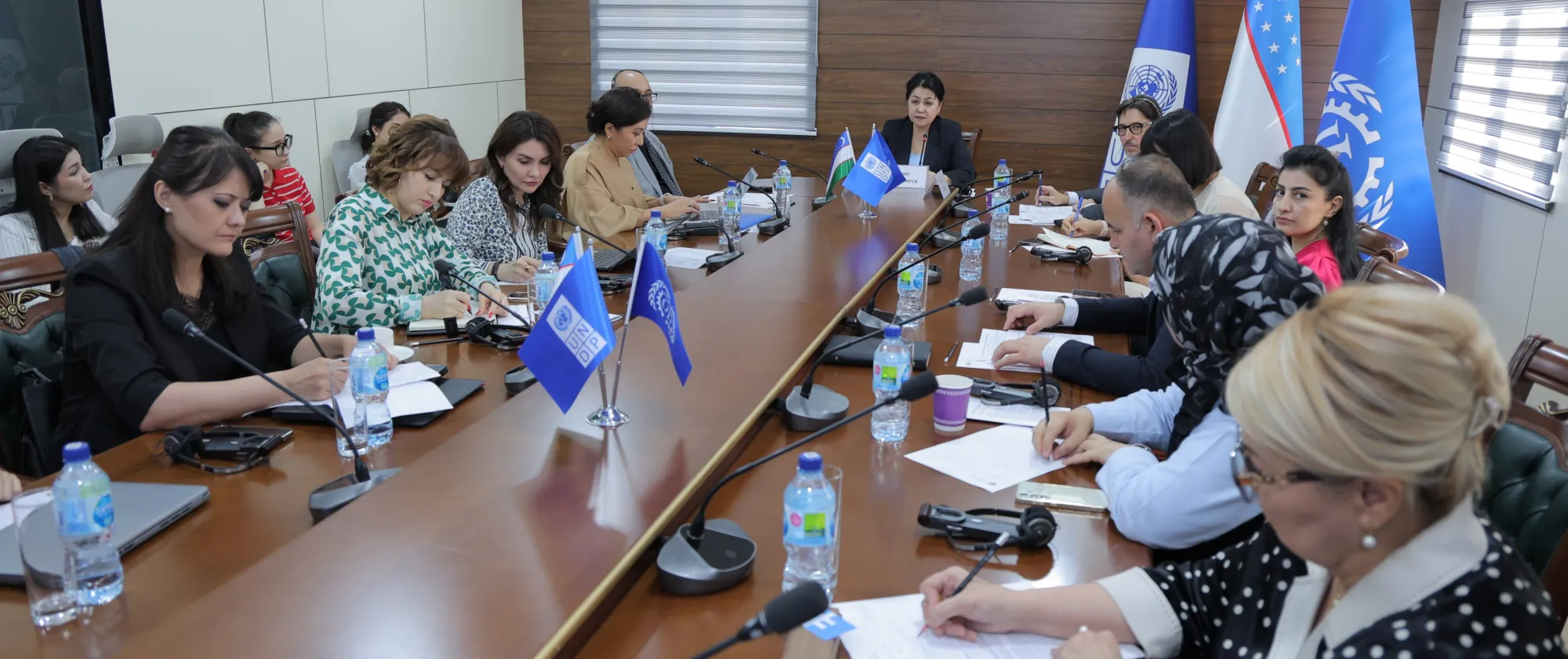
Uzbekistan advances national dialogue on gender equality and women’s economic empowerment
Discussions focused on practical priorities for expanding women’s access to decent work, social protection and economic opportunities.
10 September 2026
TASHKENT (ILO News) – A seminar held on 10 September 2026 focused on practical priorities for advancing gender equality and women’s economic empowerment in Uzbekistan by 2030. Supported by the International Labour Organization (ILO) and the United Nations Development Programme (UNDP), the event took place at the Ministry of Employment and Poverty Reduction of the Republic of Uzbekistan.
The event formed part of SDG Month, launched by the Senate of the Oliy Majlis on 6 August to promote dialogue on Uzbekistan’s progress towards the Sustainable Development Goals. It followed a national seminar on SDG 8, which focused on decent work and economic growth. Supported by the ILO, the August event highlighted the close links between gender equality, women’s economic empowerment and decent work.
Participants reviewed Uzbekistan’s progress in strengthening the legal and institutional framework for gender equality, including the Strategy for Achieving Gender Equality until 2030. Discussions focused on translating these commitments into substantive equality in practice, particularly by expanding women’s access to decent employment, skills development, care systems, economic resources and leadership opportunities.
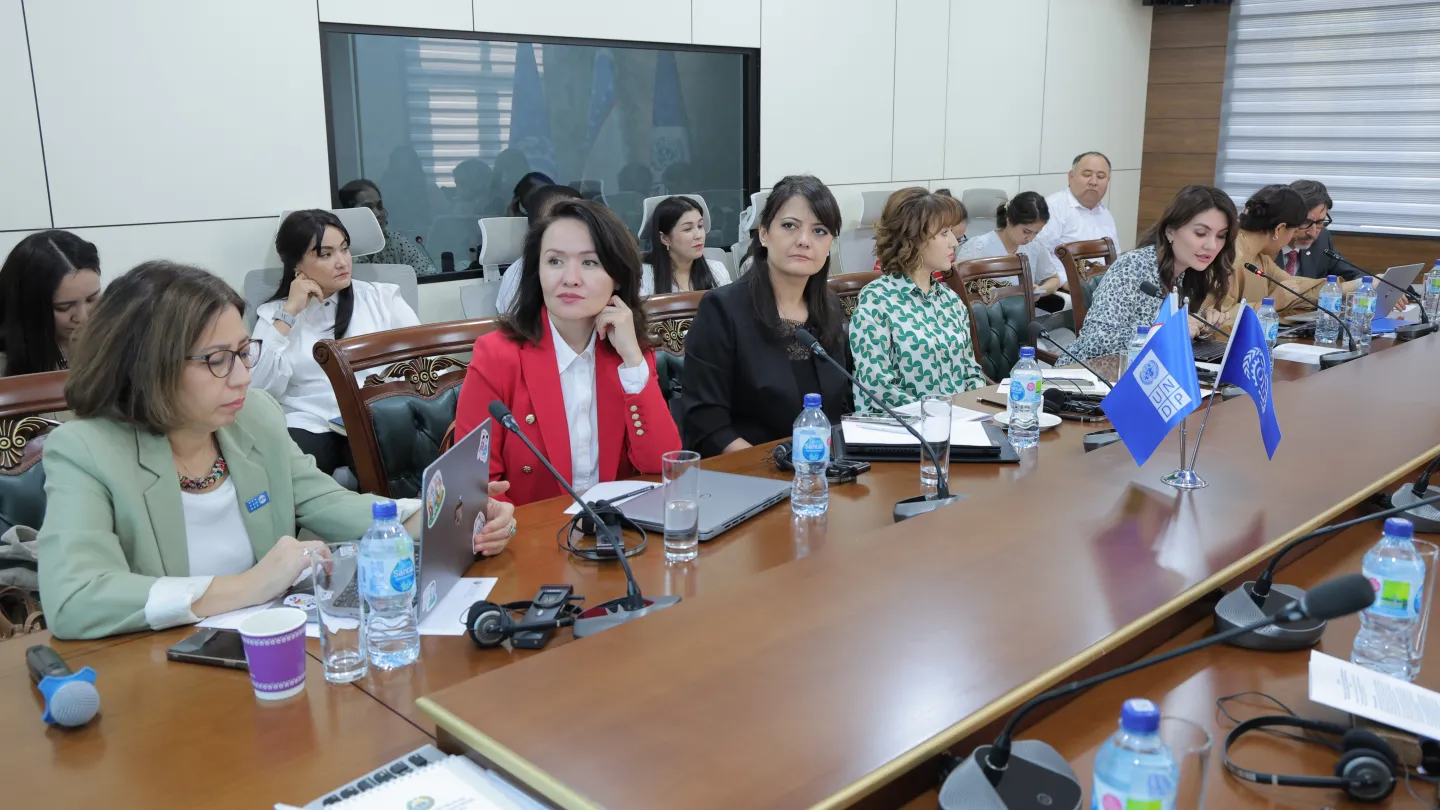
The seminar also examined challenges in the world of work, including gender gaps in labour force participation, occupational and sectoral segregation, unequal remuneration, unpaid care responsibilities, gaps in social protection, violence and harassment and the under-representation of women in decision-making.
The discussions emphasized the importance of integrating gender equality across employment policies, social protection, skills development, care systems and labour market institutions, with the active engagement of employers’ and workers’ organizations through social dialogue. The Resolution concerning the ILO transformative agenda for gender equality in the world of work, adopted in 2026, and international labour standards, including the Equal Remuneration Convention, 1951 (No. 100), the Discrimination (Employment and Occupation) Convention, 1958 (No. 111), the Workers with Family Responsibilities Convention, 1981 (No. 156), the Maternity Protection Convention, 2000 (No. 183) and the Violence and Harassment Convention, 2019 (No. 190), provide an important foundation for this work.
Care was highlighted as an important dimension of women’s economic empowerment. Accessible and affordable care services, social protection and family-friendly workplace policies can help reduce and redistribute unpaid care responsibilities, enabling women and men to participate more equally in the labour market. Uzbekistan’s ratification of Convention No. 156 in 2024 was recognized as an important step towards supporting workers with family responsibilities and strengthening the link between gender equality, employment and family-supportive policies.
A dedicated session also examined measures to promote a safe and non-discriminatory environment for women in the world of work, including the prevention of violence and harassment.
The seminar concluded with a discussion on practical priorities for accelerating progress towards SDG 5 by 2030. Participants stressed the importance of sustained cooperation among government, employers’ and workers’ organizations, civil society, international partners and other stakeholders to translate commitments on gender equality into measurable improvements in women’s economic opportunities and working lives.
This UN Global Accelerator joint programme is supported by the Joint SDG Fund, with contributions from the European Union and the governments of Belgium, Denmark, Germany, Ireland, Italy, Luxembourg, Monaco, the Netherlands, Norway, Poland, Portugal, the Republic of Korea, Saudi Arabia, Spain, Sweden and Switzerland, helping to accelerate progress towards the SDGs.