

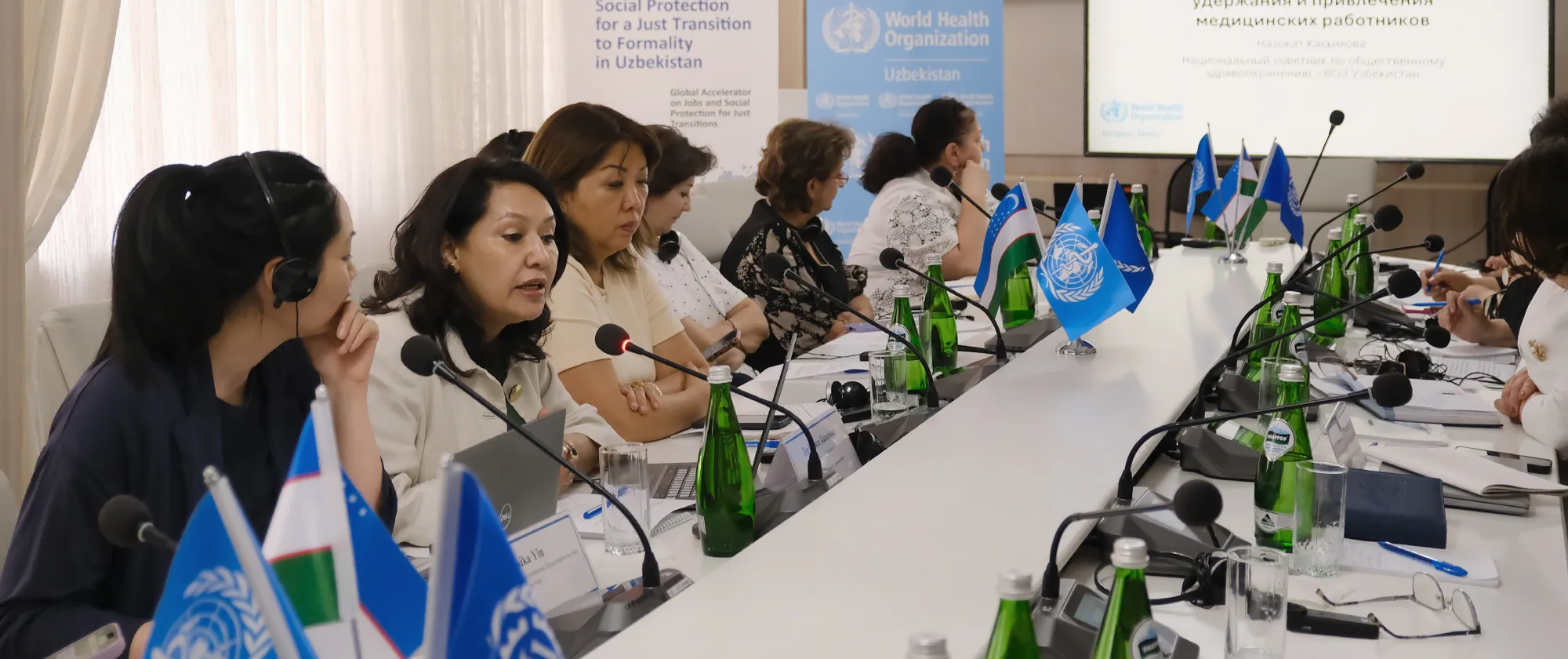
Uzbekistan addresses violence and harassment in the health sector
WHO and ILO bring together tripartite partners and health professionals in Uzbekistan to discuss violence and harassment in the health sector and measures to promote safer workplaces.
29 April 2026
TASHKENT (ILO News) – Violence and harassment in the health sector are increasingly recognized as a serious challenge affecting both health workers and the quality of care they provide. To bring greater attention to this issue, the World Health Organization (WHO) and the International Labour Organization (ILO), in collaboration with the Ministry of Health and the Ministry of Employment and Poverty Reduction of Uzbekistan, convened a joint workshop in Tashkent.
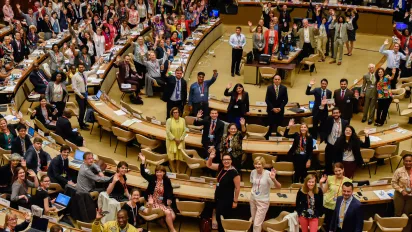
The event brought together representatives of government institutions, employers’ and workers’ organizations, professional associations and health professionals to explore the scale of the problem and identify practical steps to create safer and more respectful health workplaces.
The workshop was particularly timely as it aligns with the theme of this year’s World Day for Safety and Health at Work, which focuses on psychosocial risks and mental health at work. Psychosocial risks, such as excessive workloads, lack of support, and exposure to violence and harassment, are now recognized as major occupational safety and health challenges worldwide.
A widespread challenge with real consequences
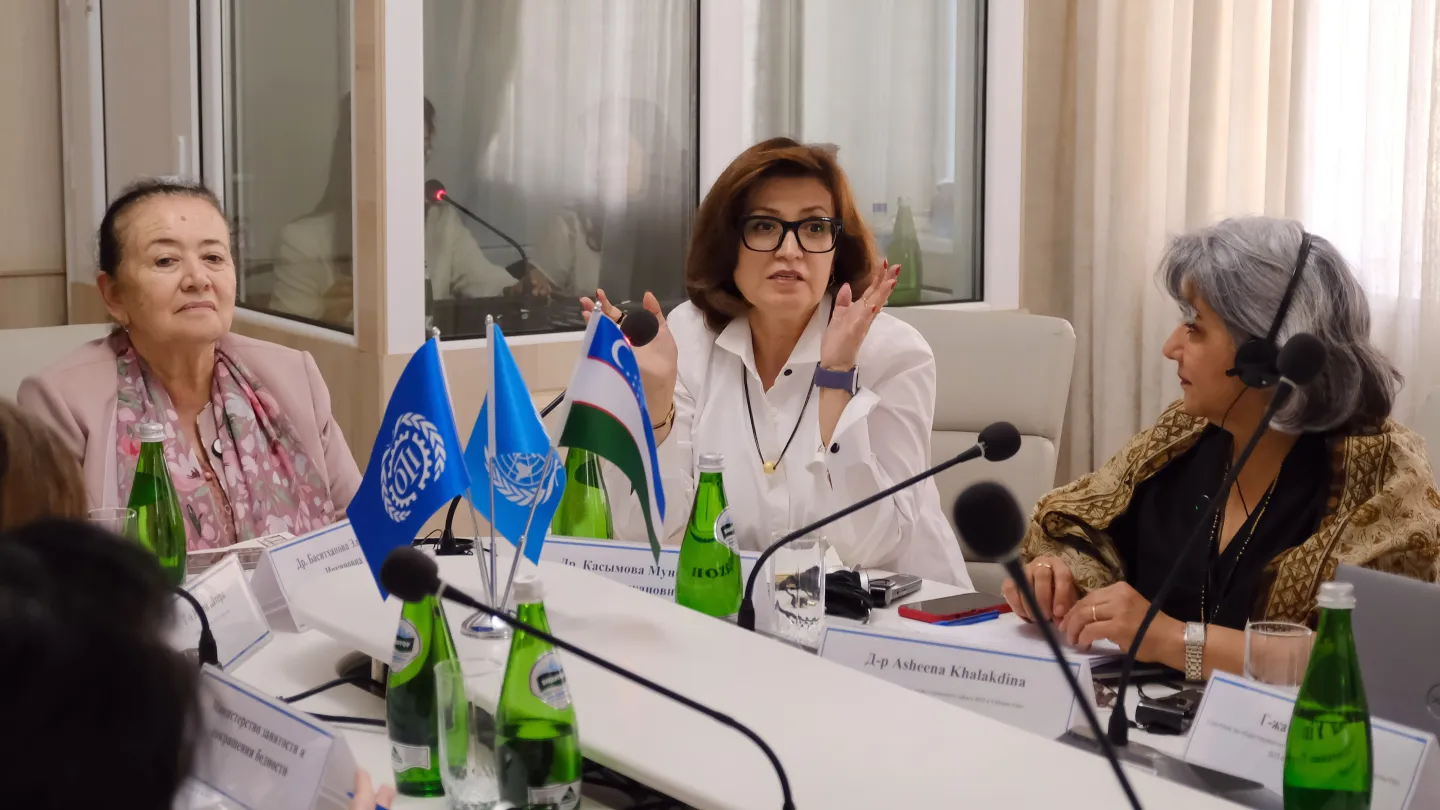
The discussions highlighted a sobering reality. Globally, 1 in 5 workers experience violence or harassment, while in health settings the number rises to 6 out of 10. The impact goes far beyond individual incidents, affecting mental health, increasing burnout and contributing to staff leaving the profession.
In Uzbekistan, the issue carries particular weight. Women make up nearly half of doctors and as many as 90% of nurses, meaning that violence and harassment disproportionately affect those at the very core of service delivery.
Addressing these risks is a growing priority across the European Region and Central Asia. Through the Special Initiative on Violence against Women and Girls (SIVAWG), WHO is supporting countries to strengthen health system responses to violence against women. including sexual harassment, while protecting health workers themselves and equipping them to provide quality care to survivors. The ILO is working closely with the tripartite constituents to adapt national legislation in line with ILO Convention on Violence and Harassment, 2019 (No. 190), support tripartite policy dialogue and build capacity on violence and harassment in the world of work.
Protecting health workers as a cornerstone of health reform
Opening the workshop, Adviser to the Minister on Maternal and Child Health Protection Dr Elmira Basitkhanova noted the increasing number of incidents involving violence against health workers and called for a comprehensive approach – one that extends beyond regulations to reach communities, families and future generations.
WHO emphasized that safe working environments are fundamental to building strong and resilient health systems. “Violence and harassment in health workplaces remain a serious public health and health system issue. They harm physical and mental health, contribute to burnout and attrition, and undermine quality of care and patient safety,” said Dr Asheena Khalakdina, WHO Representative in Uzbekistan. “Uzbekistan’s ambitious health reforms can only succeed if health workers are supported, respected, and able to work in safe and decent conditions.”
The discussions highlighted the importance of preventing and addressing violence and harassment through workplace policies, occupational safety and health measures and social dialogue. Participants also discussed the ILO Convention No. 190, and its accompanying Recommendation (No. 206), which are the first international labour standards specifically addressing violence and harassment in the world of work.
The ILO highlighted the importance of addressing the issue through a rights-based and workplace-focused lens. “No one should experience violence or harassment simply for doing their job – it is a fundamental right. It is also critical to recognize the gender dimension of this issue. Women are disproportionately affected by violence and harassment, including gender-based violence,” said Yuri Sterk, Senior Coordinator of the ILO for Uzbekistan. “In the health sector, workers are among the most exposed to violence and harassment. These risks are closely linked to stressful working environments, long hours and staff shortages, and they affect both workers and the quality of care.”
“Healthcare institutions need clear procedures defining how staff should respond in situations involving conflict or violence, how incidents should be reported and what support workers can receive,” said Eka Margishvili, employers’ representative.
Identifying solutions across the system
Participants explored the root conditions driving violence and harassment in health settings, including heavy workloads, staff shortages and high emotional demands. These conditions create psychosocial risks that affect both the wellbeing of health workers and the performance of health systems.
Discussions focused on practical measures that can help prevent and respond to violence and harassment, including:
- strengthening national policies in line with international labour standards and health frameworks;
- improving prevention mechanisms including reporting systems and ensuring protection against retaliation;
- raising awareness among health workers about their rights and available support;
- integrating prevention and response measures into training and professional development;
- improving workplace safety and access to psychosocial support;
- strengthening social dialogue and complementary roles of government, workers’ and employers’ organizations
Participants also emphasized that meaningful progress would require action beyond the health sector, engaging ministries, workers’ and employers’ organizations, communities, civil society and other stakeholders.
Building momentum for safer workplaces
Creating working environments free from violence and harassment is essential to protecting health workers and ensuring quality care for patients. The workshop marked an important step in raising awareness and fostering dialogue among key stakeholders in Uzbekistan. Participants affirmed their commitment to supporting the country in translating this dialogue into practical actions that protect health workers and promote safe, decent working conditions.
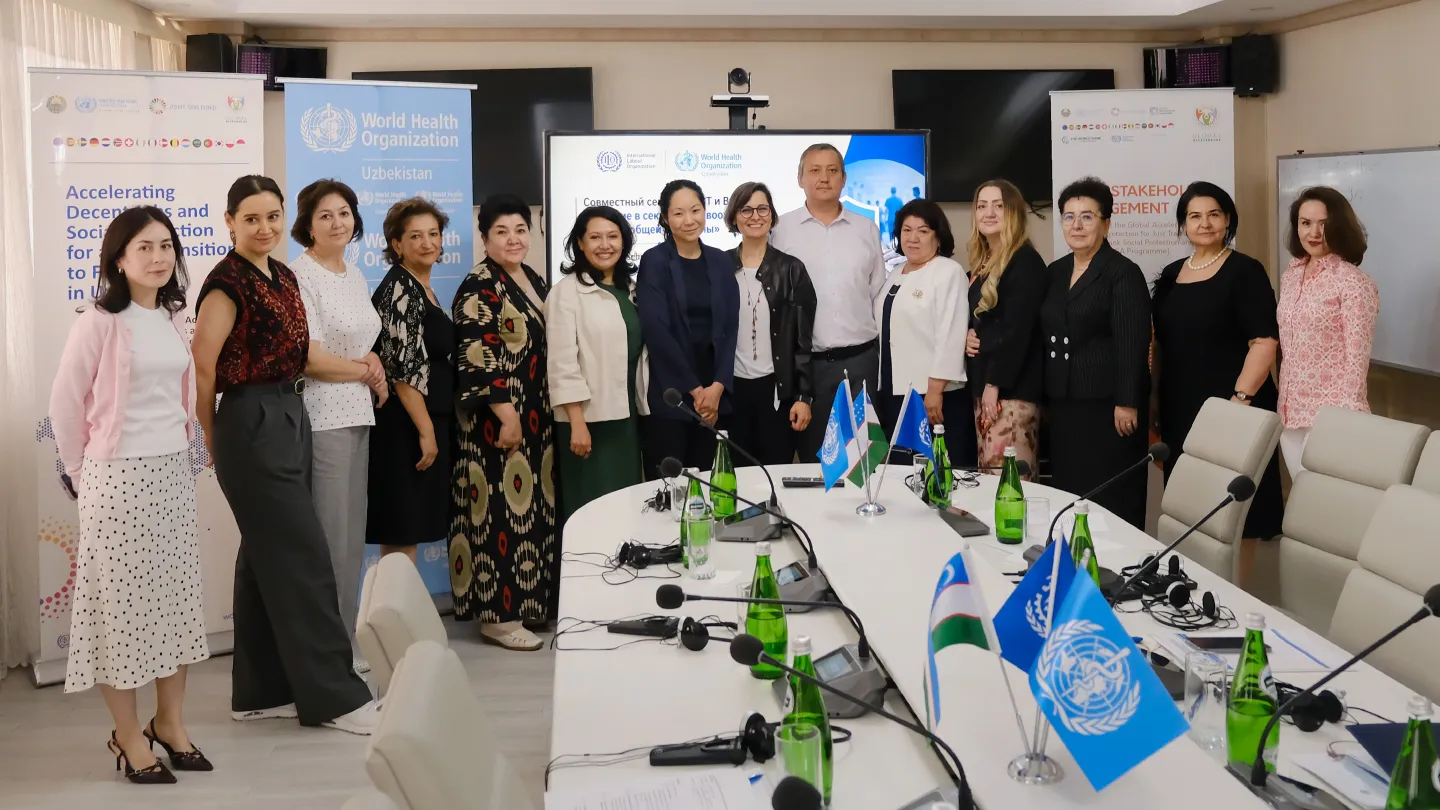
Support for the ILO's contribution to the workshop was provided through the UN Global Accelerator on Jobs and Social Protection for Just Transitions in Uzbekistan. This UN Global Accelerator joint programme is supported by the Joint SDG Fund with generous contributions from the European Union and the governments of Belgium, Denmark, Germany, Ireland, Italy, Luxembourg, Monaco, the Netherlands, Norway, Poland, Portugal, Republic of Korea, Saudi Arabia, Spain, Sweden, and Switzerland in accelerating progress towards the SDGs.
Related content
Country portal
Uzbekistan
Topic portal
Violence and harassment in the world of work
Sector portal
Health and social services

World day for safety and health at work 2026