

Better Work Programme
Uzbek delegation explores Cambodia’s garment sector reforms
Uzbekistan delegation studies Cambodia’s best practices in developing the textile industry, with a focus on tripartite governance and fruitful collaboration with workers and industry actors.
29 May 2025
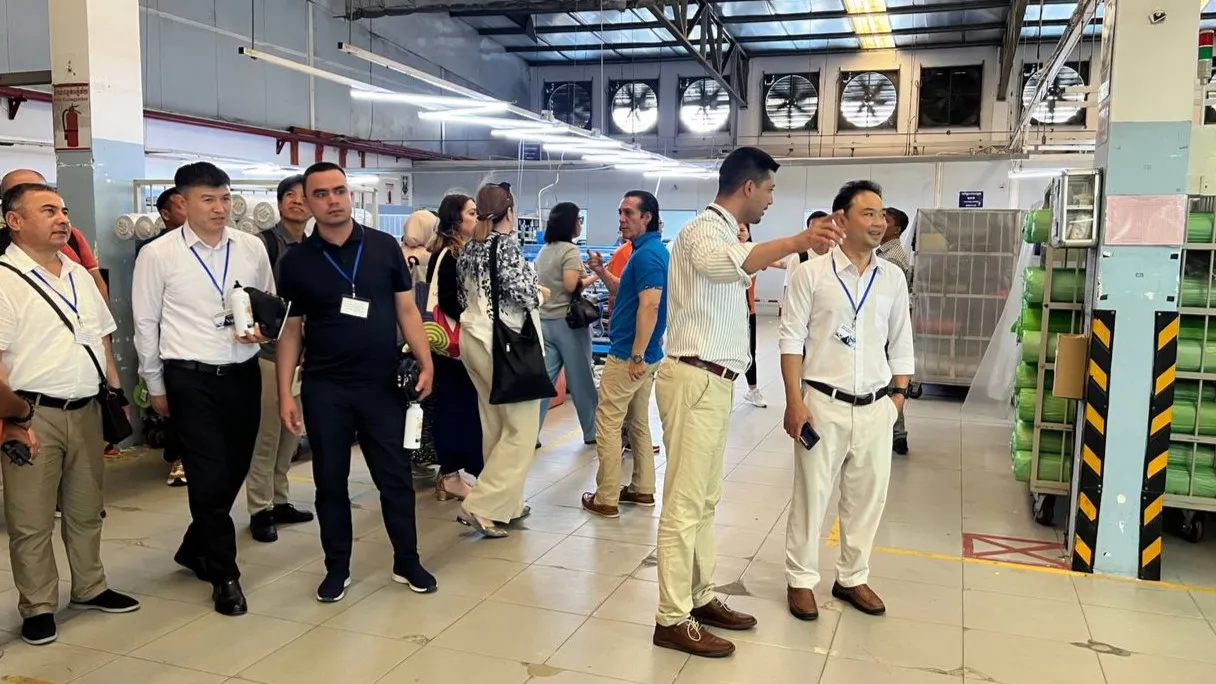
PHNOM PENH (ILO News) – A high-level delegation, representing Better Work Uzbekistan’s Project Advisory Committee (PAC) and including representatives of the Ministry of Employment and Poverty Reduction, the Confederation of Employers of Uzbekistan and The Federation of Trade Unions of Uzbekistan travelled to Phnom Penh to study the tripartite model and operational innovations of Better Factories Cambodia (BFC) on 26-28 May 2025. Over three days the Uzbek team engaged key stakeholders, observed factory operations firsthand and identified practices adaptable to Uzbekistan’s textile and apparel sector.
Tripartite partnership and financing
The delegation met with BFC senior management to review the Programme’s highlights since its establishment under the U.S.–Cambodia trade agreement in 2001. Delegates learned how BFC’s joint-financing mechanism through government allocations, employer contributions and buyer fees ensure both sustainability and shared ownership. Oversight by the PAC, which brings together the Government, employers’ and workers’ representatives, was presented as crucial for aligning BFC assessments with national labour priorities. The stable governance framework is underpinned by the Cambodian Government’s financial commitment, formalized through a Memorandum of Understanding extending to 2030.
Industry and worker engagement
The Uzbek team met with leaders of the TAFTAC (Textile, Apparel, Footwear & Travel Goods Association of Cambodia) who emphasized that adherence to Better Work’s rigorous assessment standards remains indispensable for maintaining market access in the United States and European Union and described their own financial support and regular coordination meetings with BFC as hallmarks of a strong partnership.
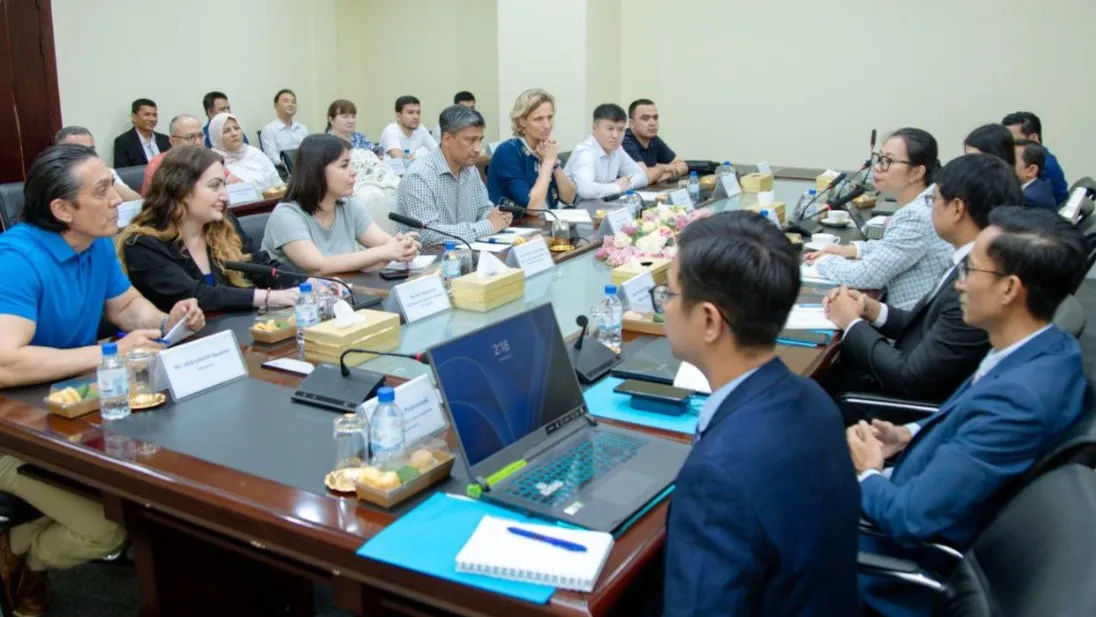
Engagement with trade union leaders from the Cambodian Alliance of Trade Unions highlighted unions’ integration into both factory-level bipartite committees and national tripartite structures. Union representatives shared how capacity-building workshops in negotiation, gender inclusion and dispute-investigation procedures, supported by BFC, strengthened workers’ voice in over 900 export-oriented factories. Transparent reporting tools and brand-facilitated dispute resolution were cited as effective means to resolve workplace issues without resorting to strikes.
Brand collaboration
The meeting with representatives from global brands such as H&M, VF Corporation and Marks & Spencer, who have over two decades of collaboration with BFC, highlighted how integrating social compliance and environmental sustainability criteria, such as renewable-energy use, waste-management practices and formal grievance mechanisms, into sourcing decisions enhances market competitiveness and factory performance. Brands also shared insights into their corporate due-diligence processes and recommended similar benchmarks to attract and retain international buyers.
Factory learning visit
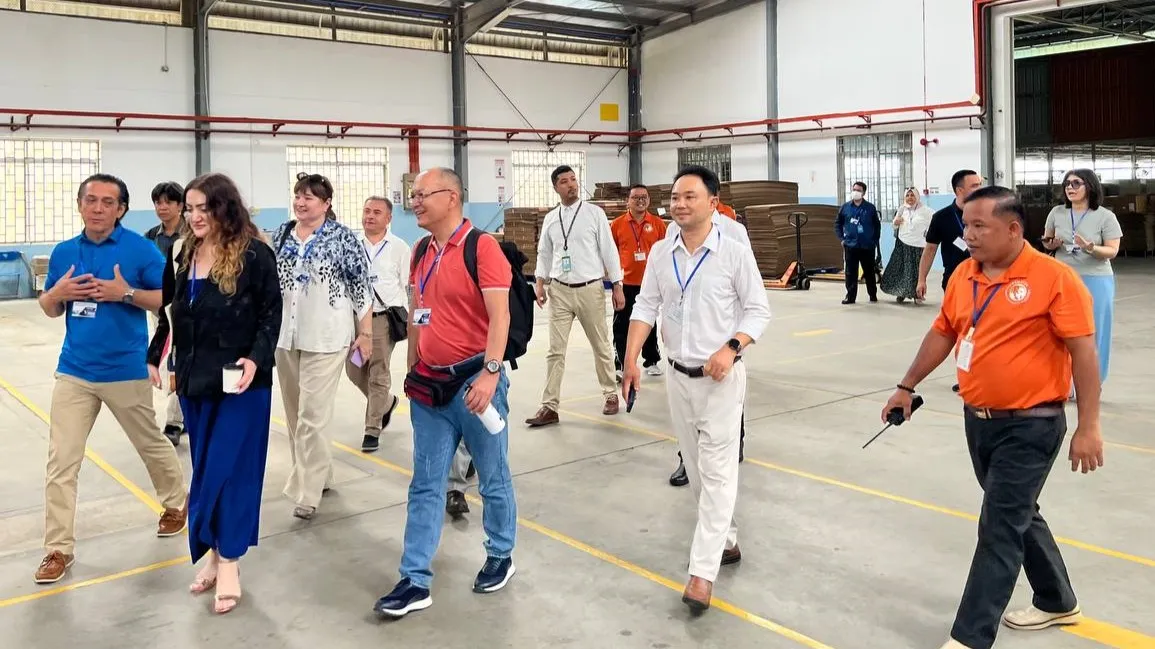
The delegates also visited a BFC-registered garment factory, where the team learned of the factory profile and brand partnership and toured production lines to observe quality-control measures and efficiency practices. A dialogue session with the factory’s bipartite committee showcased concrete examples of social-dialogue mechanisms that have successfully resolved disputes over working conditions. During an in-depth exchange with the Occupational Safety and Health committee, delegates discussed risk-assessment methodologies and preventative safety measures.
Next steps
The study tour reaffirmed the value of a strong tripartite governance framework, a sustainable co-funding model, targeted capacity building for inspectors, union representatives and OSH practitioners, and close collaboration with industry and brands. Better Work Uzbekistan and its tripartite constituents will now explore adapting these elements particularly institutional oversight, financing arrangements, capacity-building modalities and stakeholder engagement to advance decent work, gender inclusion and sustainable compliance in Uzbekistan’s textile and apparel sector.