

Social dialogue
Union representatives in the Bahamas sharpen negotiation skills
Trade union representatives in The Bahamas strengthened practical collective bargaining skills through ILO-supported training focused on negotiation, communication and social dialogue.
7 August 2026
NASSAU, The Bahamas (ILO News) — Collective bargaining depends not only on what each side wants, but also on how well representatives prepare, listen, understand competing interests and work through disagreement. Thirty trade union representatives in The Bahamas recently put those skills into practice through an ILO-supported training programme centred on real-world negotiation.
Collective bargaining is the process through which workers’ and employers’ representatives negotiate matters such as terms and conditions of employment and their workplace relationship. Effective bargaining therefore requires more than presenting demands. Representatives need to understand their objectives, prepare alternatives, recognize the interests behind different positions and communicate effectively when disagreements arise.
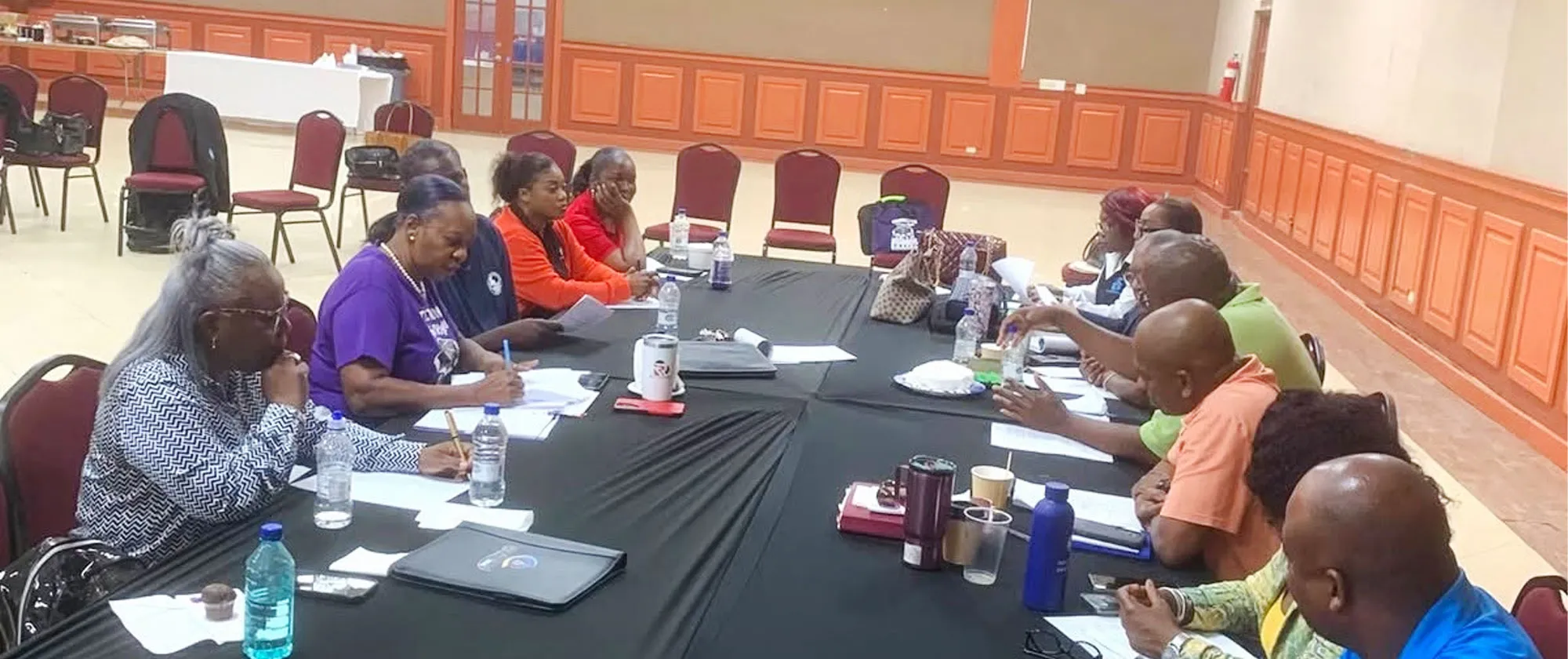
Members from each of the three trade union congresses in the country– the National Congress of Trade Unions Bahamas (NCTUB), Bahamas National Alliance Trade Union Congress (BNATUC) and Commonwealth of the Bahamas Trade Union Congress (CBTUC) – participated in the two-part training programme which combined an online theory session on 30 July, with face-to-face practical learning on 4 August. The in-person workshop hosted by the NCTUB and led by ILO Senior Specialist in Social Dialogue and Labour Relations, Pablo Arellano, was particularly tailored to help participants apply negotiation concepts when representing workers at the bargaining table.
The trade unionists examined the international labour standards that underpin collective bargaining and considered how different negotiating approaches can shape what happens at the table. They contrasted positional negotiation, where each side works to defend its stated demands, with interest-based negotiation, which looks beyond the positions to understand the needs driving them and to identify common ground on which an agreement can be built. They then had the opportunity to put principles into practice – defining goals, fixing limits and assessing the best, worst and most likely outcomes if no agreement is reached. They also sharpened their communication techniques, including listening, questioning, non-verbal signals and managing emotions at the table.
“Effective negotiation starts well before the parties sit across the table. Representatives need to understand their interests, know their alternatives and limits, and listen carefully enough to identify where interests may overlap. Practising those skills can help turn difficult discussions into more constructive social dialogue,” said Pablo Arellano, ILO Senior Specialist in Social Dialogue and Labour Relations.
Co-facilitator Vera Guseva, Workers’ Activities Specialist at the ILO Office for the Caribbean, noted that the capacity building programme contributed directly to implementation of The Bahamas Decent Work Country Programme 2021–2026, saying, “over the period of the DWCP, the ILO Caribbean Office has been working to meet its commitment to equip social partners to engage in productive social dialogue at enterprise and sector levels. This is one of the explicit priorities established by our constituents in the Bahamas.”
“The course content was highly relevant and informative, and the practical exercises and demonstrations greatly enhanced participants' understanding of the concepts presented… particularly the emphasis on negotiation skills, social dialogue, and effective collective bargaining strategies. We are grateful for the support provided by the ILO and look forward to future opportunities for collaboration and continued capacity-building for trade union leaders and representatives in The Bahamas.” Daniel Thompson, President of the Union of Tertiary Educators of the Bahamas.
Effective social dialogue depends in part on strong workers’ and employers’ organizations with the technical capacity to participate meaningfully. ILO technical support for strengthening practical bargaining skills is therefore one step towards enabling workers’ representatives to engage more effectively in workplace problem-solving and negotiations.
Resource (webpage link): Negotiation as a mechanism for conflict prevention and resolution: positional negotiation and interest-based negotiation | International Labour Organization