


Uganda’s pilot opens doors for youth and refugees to the digital economy
ILO supported Online Gig Work pilot programme equipped over 200 youth and refugees in Uganda with essential digital skills, paving the way for income generation and greater inclusion in the global gig economy.
25 April 2025
ILO News (Kampala) – A showcase event held on 25 April 2025 at Speke Resort Munyonyo brought together young digital workers, government officials, employers, and development partners to spotlight the impact of Uganda’s pioneering Online Gig Work Pilot. The event, organized by the International Labour Organization (ILO) under its PROSPECTS programme, highlighted how the initiative is expanding income and inclusion opportunities for young people and refugees in the country’s growing digital economy.
Launched in January 2024, the 15-month pilot aimed to build pathways to decent work for vulnerable youth—particularly those affected by forced displacement—by equipping them with the skills and tools needed to access the online gig economy. Implemented in collaboration with StartHub Africa, Kolaborate, Humans in the Loop (HITL), UNICEF, and UNHCR, the pilot tested integrated approaches that combined training, mentorship, digital tools, and partnerships.
Progress Towards Digital Inclusion
Addressing the showcase, Evans Iwanga, Programme Manager of ILO PROSPECTS Uganda, emphasized the importance of adaptability in shaping future employment models. “The labour market is changing, and young people are thinking differently. Our approaches and partnerships must evolve accordingly to promote social justice and decent work.”
Pilot results presented at the event revealed promising early outcomes. A total of 218 young people from Kampala and the Nakivale Refugee Settlement completed a 10-day intensive training, acquiring foundational digital and work-readiness skills. Participants built their portfolios through mock assignments and engaged in awareness sessions on labour rights and the realities of gig work.
Beyond group sessions, the programme provided one-on-one coaching to help participants create freelancer profiles, navigate digital platforms, and secure test gigs in areas such as content writing, data entry, transcription, graphic design, website development, and social media management.
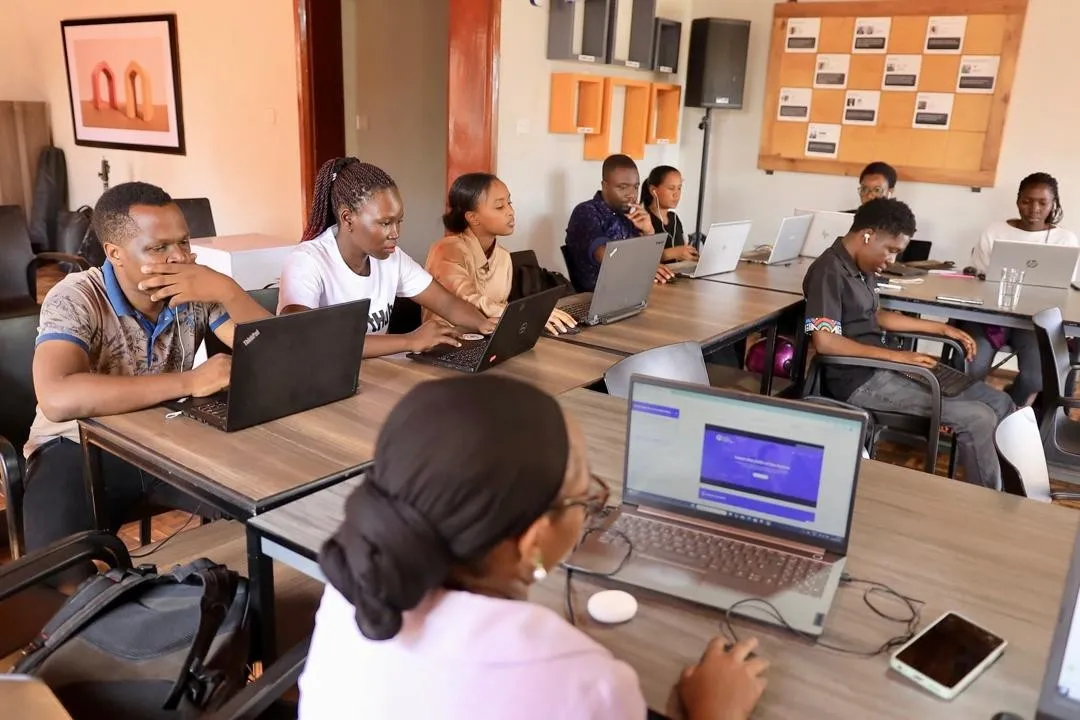
“In addition to foundational skills, specialized tracks were introduced to reflect emerging market demands,” explained Melissa Kyeyune, ILO National Project Coordinator for Digital Skills and Microwork. “Forty participants—almost half of them women—were trained in data annotation to support ethical AI development. A smaller group of 20 explored generative AI, preparing them for future-focused roles.”
The learning materials developed through the programme, including the ILO-HITL co-designed “Beginner Introduction to the World of Annotation” course, will soon be released as open-source content to benefit a wider audience.
Early Impact and Real-World Application
To date, 70 graduates have secured 148 paid online gigs, earning a collective 13 million Uganda shillings. Others have independently pursued freelance work beyond the programme. For continued learning and engagement, refresher courses and WhatsApp communities were set up to encourage peer-to-peer support.
Midway through the initiative, a 60-Day Challenge was introduced to encourage the practical application of digital skills and reinforce commitment. While completion rates were low, the challenge revealed the importance of perseverance, self-motivation, and a growth mindset in navigating the competitive online work environment.
Stakeholders Call for Scale and Systemic Change
A multistakeholder panel at the showcase explored how partnerships can leverage gig work opportunities while addressing associated challenges. Hillary Businge, Assistant Commissioner for Labour Productivity, commended the pilot’s alignment with Uganda’s National Development Plan IV and expressed support for scaling the model through national youth employment strategies.
Douglas Opio, Executive Director of the Federation of Uganda Employers, highlighted key skills in demand, such as big data, cloud computing, cybersecurity, and app development. He stressed that technical expertise must be matched with lifelong learning, a clear vision, and strong networks to succeed in digital careers.
Zulum Avila, ILO Specialist on Employment Strategies in the Digital Economy, noted that while gig work can offer entry-level opportunities and income support, it often lacks social and labour protections. “As AI reshapes the gig economy, workers need to develop the ability to collaborate with AI tools, not just compete against them,” she said.
Richard Bigirwa, Secretary General of the National Organisation of Trade Unions, emphasized the need for rights awareness. “You cannot claim rights you do not know about,” he stated, calling for stronger labour rights education in digital training programmes.
Connectivity and infrastructure also emerged as central themes. Sybille Izere, Founder of Her Dreams Count, urged stakeholders to improve internet access and provide language support for refugees. Charity Rwabutomize, Corporate Social Responsibility Manager at Airtel Uganda, shared initiatives to expand community Wi-Fi access points, especially in underserved regions.

Lessons and Looking Forward
Despite strong results, the pilot exposed persistent barriers: unreliable electricity, high data and device costs, and gaps in soft skills and entrepreneurial knowledge. While many participants had basic digital literacy, assessments showed that further upskilling was needed to meet the demands of the global digital labour market.
Reflecting on the pilot’s broader significance, Kyeyune stated, “With intentional design and the right support, digital work can build inclusive livelihoods. Institutionalizing such models is key to scale and sustainability.”
Andrew Kakinda, Projects Lead at StartHub Africa, echoed the sentiment. “This is just the beginning; a spark that can ignite a new generation of young workers ready to thrive in the digital economy.”
As Uganda continues to invest in inclusive digital strategies, the Online Gig Work Pilot offers a blueprint for scaling gig work as a viable livelihood path for youth and refugees—anchored in rights, skills, and partnerships.
***
This pilot was supported by PROSPECTS Uganda and the Opportunity Fund project ‘Promotion, Inclusion and Protection of Refugees and Host Communities in the Gig Economy’, with generous funding from the Kingdom of the Netherlands.
Relevant projects

Promotion, inclusion and protection of refugees and host communities in the digital and gig economy

PROSPECTS Opportunity Fund project
Advancing Young People’s Engagement and Meaningful Participation in the PROSPECTS Partnership