

Trade unions strengthen cross-border cooperation to promote decent work for Indian migrant care workers
Workers’ organizations call for active trade union participation in labour migration governance across the India–Germany corridor.
29 September 2026
NEW DELHI (ILO News) - Indian trade unions and workers’ organizations have committed to work together and to collaborate closer with counterparts in Germany to protect the rights of migrant health and care workers to ensure that expanding labour migration opportunities translate into decent work.
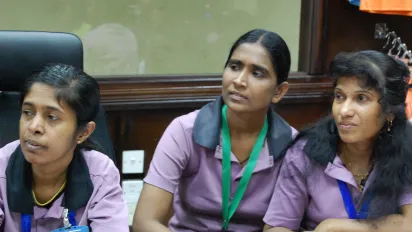
The commitment emerged from a Trade Union Roundtable on Promoting Decent Work for Indian Health and Care Workers Migrating to Germany, held in Hyderabad on 23 July 2026 organized by the International Labour Organization (ILO) under its Migrant Care project, funded by GIZ’s MEG programme on Shaping Migration oriented Development.
The Roundtable brought together Indian central trade unions and workers’ organizations alongside representatives of regional and international trade union federations to discuss coordination between countries of origin and destination.
A joint statement endorsed by 21 trade union and workers’ organizations based in India and 3 regional and global trade union federations reaffirmed support for safe, regular and rights-based labour migration, with migrant health and care workers enjoying rights and dignity on an equal footing with local workers in destination countries. It also identified risks that can accompany migration, including misinformation, unethical recruitment, excessive recruitment costs, informal employment, difficulties in recognition of qualifications, discrimination and barriers to fundamental principles and rights at work.
The unions stressed that cross-border cooperation is essential because protection cannot stop at the point of departure. Migrant workers need reliable information when deciding whether to migrate, support before departure, representation and access to remedies while employed abroad, and continuity of rights and social protection when they return. The statement therefore calls for no recruitment fees for migrant workers, transparent contracts, recognition of qualifications, freedom of association, portable and adequate social protection, and joint monitoring involving ILO constituents in origin and destination countries.
“Trade union collaboration is particularly important in the care economy. With demand for elderly, long-term and home-based care rising, and women making up a substantial share of care workers,” said Sonia George, Vice President SEWA. “The statement emphasizes workers’ choice and agency with regard to the type and location of their employment. It links these choices directly to workers’ physical and mental well-being and calls for decent wages, recognition of skills and experience, and decent working conditions at both origin and destination”.
The 23 July Trade Union Roundtable was designed specifically to advance trade union coordination within India and provide origin-to-destination support. It witnessed interventions from participating Indian central trade unions, care sector-specific trade unions active in various Indian states as well as regional and global union federations such as Public Services International (PSI), the South Asian Regional Trade Union Council (SARTUC) and the International Trade Union Confederation (ITUC) Asia Pacific.
“The resulting statement places trade unions at the centre of labour migration governance. It calls for bilateral labour migration agreements to be developed, finalised, implemented and monitored with the active participation of unions from both origin and destination countries,” said Yuki Otsuji, Specialist for Workers Activities for South Asia. “This approach would allow workers’ organizations to bring workplace experience into policy discussions, identify emerging problems, support grievance mechanisms and use social dialogue and collective action to strengthen accountability across the migration corridor.”
At the international level, the statement envisages deeper cooperation with German trade unions and stronger cross-border solidarity through networks including ITUC, SARTUC and PSI, while working with the ILO and other partners. Such collaboration bears immense potential to connect workers to representation, grievance redressal mechanisms across jurisdictions and help ensure that standards agreed at policy level are reflected in recruitment and employment practices as well as access to collective bargaining and freedom of association.

Additional details
References
- DOI: n/A
Relevant projects
Migrant Care - Promoting Decent Work for Migrant Care Workers