

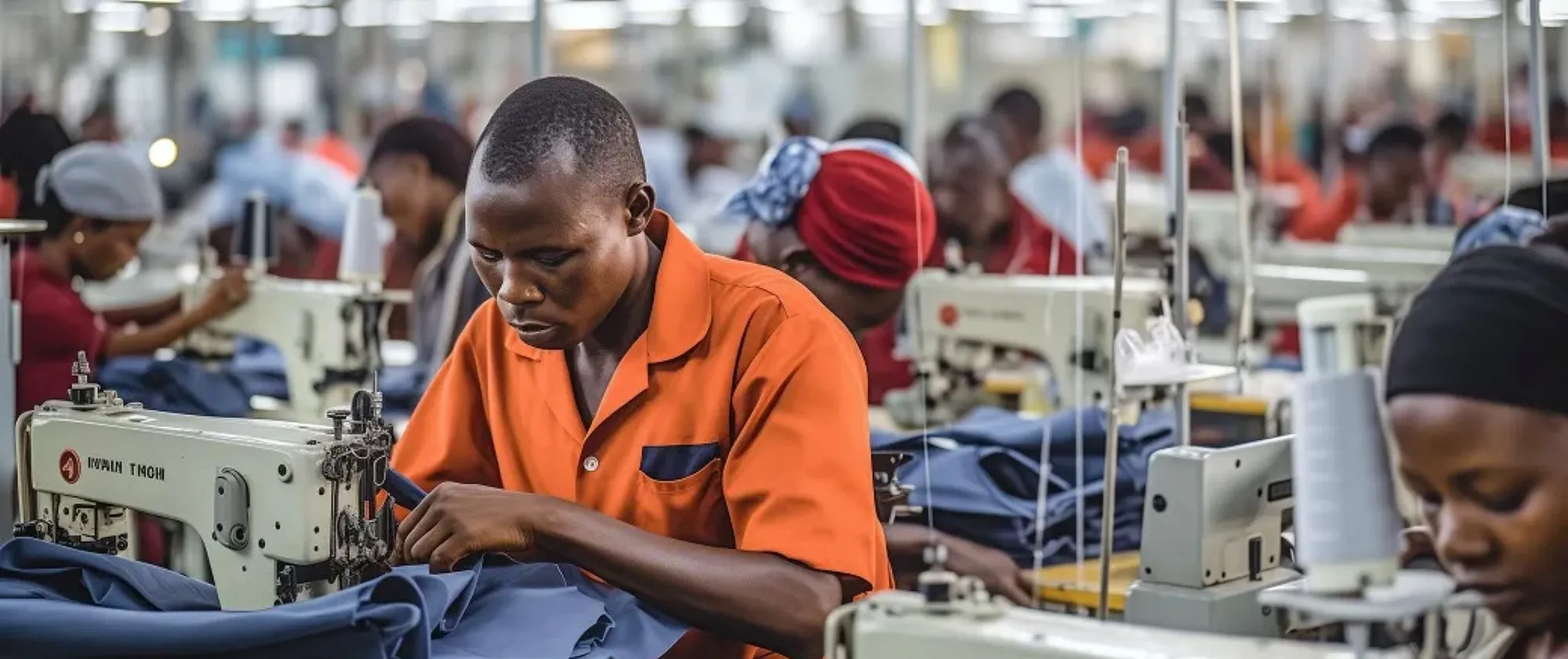
Improving alignment of labour, decent work, trade and investment
Trade and investment can drive decent work in Africa with stronger policy alignment
Trade and investment can drive inclusive economic growth in Africa, but only if accompanied by respect for international labour standards, institutional coordination, policy coherence and social dialogue. This finding was one of the key conclusions of a three-day regional seminar on ‘Decent Work, Trade and Investment: Transforming Development in Africa’ convened by the International Labour Organization (ILO) in Cape Town from 17–19 February 2026.
24 February 2026
Cape Town, South Africa (ILO News) More than 25 representatives from ministries of labour, trade and investment, employers’ and workers’ organizations, regional institutions and development partners participated in a regional training seminar in South Africa organized by the ILO under its IMPLEMENT and SUSTAIN projects. Supported by the Government of Flanders (Belgium), and the European Union, the two projects aim to promote decent work through more inclusive, coherent and sustainable trade and investment policies.
Over three days, participants examined the evolving global and regional trade and investment landscape, including the growing inclusion of labour provisions and responsible business conduct in trade and investment frameworks. They also discussed the implications of the African Continental Free Trade Area (AfCFTA) for more and better jobs and for structural transformation in Africa.
The seminar was officially opened by Alexio Musindo, Director of the ILO Decent Work Team and Country Office (DWT/CO) Pretoria. In his remarks, Mr Musindo underscored that trade and labour policies can no longer operate in isolation. He stressed that achieving inclusive economic growth requires deliberate alignment between economic and financial strategies and social justice objectives. Without such alignment, he cautioned, growth may instead deepen inequalities and contribute to more precarious forms of work.
Thomas Castrel, General Representative of Flanders in Southern Africa, highlighted the evolving expectations of international trade partners regarding sustainability and labour standards. He underscored that competitiveness increasingly depends on responsible business practices and compliance with international norms.
Ending the opening session, Laura Corrado, Head of Unit, Director-General for Employment at the European Commission, emphasised that the European Union is very much in favour of trade and open commercial relationship, but these relationships have to be to be sustainable. Hence, for this reason, Laura, that labour rights are an integral part of our trade relations.
The new generation trade agreements that we have concluded in the past years, most recently India, Indonesia, and Kenya which enters into force in 2024, all have commitments on fundamental principles and rights at work, and a commitment to ratify and implement all the ILO fundamental conventions
Evidence-based dialogue on trade and employment
The seminar provided a platform for in-depth discussions on trade, investment and labour market outcomes in Africa, covering topics including the employment effects of trade and investment, labour provisions in trade agreements, and policy tools to strengthen the links between economic integration and decent work. Panels and roundtables drew on evidence from expert surveys and analytical work conducted under the IMPLEMENT and SUSTAIN projects, which highlighted both opportunities and challenges associated with regional trade integration. Discussions were complemented by practical case studies and interactive learning tools, encouraging peer exchange and reflection on policy challenges and good practices.
Addressing structural labour market challenges
Throughout the seminar, participants noted that official unemployment statistics often obscure the true extent of working poverty and informality across many African economies. They highlighted that even when trade contributes to employment growth many workers remain trapped in low-productivity and vulnerable forms of work. This underscores the importance of assessing trade outcomes not only by number of jobs created, but by the quality and productivity of those jobs.
Participants also identified weak coordination between labour, trade and investment government institutions as a persistent structural constraint. Trade negotiations often advance without systematic labour policy input, while labour reforms are sometimes undertaken without reference to trade or investment commitments. Strengthening inter-ministerial coordination mechanisms was therefore highlighted as a key step toward more coherent policy formulation.
Responsible business conduct shaping trade and investment decisions and outcomes
One of the topics discussed in detail was how global trade and investment are increasingly shaped by expectations around responsible business conduct (RBC) and sustainable development. Issues such as deforestation, forced labour regulations, trade and sustainable development chapters in trade agreements, RBC clauses in international investment agreements, and social safeguards now influence how countries, sectors, and companies participate in global markets. Governments in both home and host countries, together with investors, consumers, and buyers, expect businesses to respect labour and human rights, follow RBC standards, and align their activities with the Sustainable Development Goals. Consequently, sustainability and responsible business practices have moved from being optional to becoming key requirements for market access, reputation, and competitiveness.
Social dialogue and stakeholder engagement
Another central theme was the importance of institutionalised social dialogue that connects the world of work with trade and investment processes. Participants noted that structured engagement platforms, such as South Africa’s National Economic Development and Labour Council (NEDLAC), demonstrate the value of bringing governments, employers and workers together to shape trade and investment policy. However, they stressed that consultation must begin early in the negotiation process and be supported by sufficient analytical capacity among social partners to enable informed and meaningful participation.
Conclusion of the seminar – Trade and investment as a tool for inclusive development
As Africa’s population continues to grow, the development challenge is not only to create jobs, but to generate productive, formal and decent employment at scale. Trade integration — including through the AfCFTA— can advance this goal when accompanied by strong labour standards, responsible business practices, coordinated economic policies, and robust social dialogue. Sustained collaboration at both national and regional levels will be essential to ensure that trade contributes to inclusive and sustainable development across the continent.
About the IMPLEMENT Project:
The ILO IMPLEMENT project “Trade and Investment Arrangements: Implementation and Stakeholder Engagement for Promoting Decent Work” is funded by the Government of Flanders, Belgium, and is one component of a broader research programme entitled “Integrating Trade and Decent Work” (INTEGRATE). The project aims to enhance the capacity of stakeholders in African and Asian countries to implement initiatives that support decent work in the context of trade.
About the SUSTAIN Project:
The ILO SUSTAIN project “Promoting decent work and capacity building for labour ministries, labour inspections and social partners to advance international labour standards and responsible business conduct through sustainable trade and investments in Southern Africa (SUSTAIN – Southern Africa)” is financially supported by the European Union. The project aims to further harness trade and investment to advance decent work opportunities for women and men in Southern Africa through increased respect for International Labour Standards and the adoption of responsible and sustainable business practices, guided by the ILO MNE Declaration.
Related content
ILO Programme
Integrating Trade and Decent Work

Project factsheet – IMPLEMENT
Trade and investment arrangements: Implementation and stakeholder engagement for promoting decent work
Relevant projects
SUSTAIN
Sustainable Trade and Investment in Southern Africa