


Forced labour
Tackling Forced Labour in Indonesia’s Fishery and Palm Oil Sectors
ILO Indonesia hosted a crucial refresher workshop in Bandung on 2-3 October 2024 to strengthen the understanding of forced labour among government representatives, employers, and workers' organizations.
3 October 2024
This workshop focused on the Fundamental Principles and Rights at Work, specifically tackling the ongoing challenges of labour protection in Indonesia's fisheries and palm oil sectors—industries particularly vulnerable to forced labour, child labour, and inadequate occupational safety and health conditions.
The workshop is part of ILO’s ongoing efforts to promote decent work conditions in Indonesia through several projects. These include the 8.7 Accelerator Lab Programme, funded by the Norwegian Agency for Development Cooperation (NORAD), which accelerates progress toward eradicating forced and child labour. Other critical projects joining this initiative are the Ship to Shore Rights South-East Asia Programme, supported by the European Union and the United Nations, which promotes regular and safe labour migration in the fishing and seafood processing sectors; the Workers’ Rights in Rural Sectors project funded by the US Department of Labor (USDOL), which aims to improve labour law compliance and occupational safety, particularly for women workers in Indonesia and the Philippines, and the Strengthening Social Compliance in Indonesia Palm Oil Sector project also funded by the USDOL.
Indonesia has ratified nine fundamental ILO conventions, including two core conventions to suppress forced labour. However, some gaps remain in the legal framework. Notably, Indonesia has yet to ratify the ILO’s Protocol of 2014 to the Forced Labour Convention (P. 29) and the Occupational Safety and Health Convention (C.155), both essential for enhancing labour protection mechanisms in high-risk sectors. To address this, the ILO in collaboration with the Ministry of Manpower and the Ministry of Foreign Affairs, has been working on a strategic plan to promote ratification and improve the implementation of international labour standards.
Simrin C. Singh, ILO Country Director for Indonesia and Timor-Leste, underscored the importance of collective action by the government, employers, and workers' organizations in combating forced labour. She emphasised that each pillar of the tripartite partnership plays a vital role in eliminating labour exploitation.
Government agencies must ensure robust policies and enforcement mechanisms; employers should commit to ethical business practices and ensure their supply chains are free from exploitation; and workers' organizations must advocate for and protect the rights of vulnerable workers. Simrin C. Singh, ILO Country Director for Indonesia and Timor-Leste
Fachrurozi, Acting Director General for the Development of Labour Inspection and Occupational Safety and Health at the Ministry of Manpower, highlighted the vulnerability of workers in the fisheries and palm oil sectors. He noted that with over 61 million people employed in these sectors in Indonesia, it is imperative to prioritise worker protection. He highlighted the challenges of addressing forced labour, and child labour, and promoting gender equality in these industries, while also noting the complexities of overlapping regulations and transnational jurisdictions that complicate enforcement efforts.

Expert speakers at the workshop included Bharati Pflug, Senior Specialist in Fundamental Principles Rights at Work, Yuka Ujita, Senior Specialist in Occupational Safety and Health, Alix Nasri, Technical Specialist on Forced Labour, and Andrea Davila, ILO Coordinator Global Business Network on Forced Labour Coordinator, who shared and discussed the indicators and signs of forced labour, global prevalence, and the root causes contributing to its persistence. Participants also engaged in a panel discussion on the prevention and protection of workers’ rights, with representatives from the Indonesian Pole & Line and Handline Fisheries Association (AP2HI), the Indonesian Manning and Crewing Agent Association (IMCAA), Indonesia Ship Manning Agents Association (ISMAA) and Indonesia Palm Oil Association (GAPKI) sharing good practices in promoting decent work standards and protecting workers from labour violations.
The two-day event brought together 42 participants from government, employers, and workers' organizations, marking a significant step toward building capacity in the fight against forced labour. By enhancing knowledge, revisiting international legal frameworks, and promoting collaboration among key stakeholders, Indonesia is positioning itself to better protect its most vulnerable workers in sectors like fisheries and palm oil, contributing to global efforts to eradicate forced labour by 2030.
Further information about the related projects

Project
Strengthening Social Compliance in Indonesia’s Palm Oil Sector

Child labour and forced labour
Multi Partner Fund

Workers' rights in rural sectors
Improving Workers’ Rights in Rural Sectors of Indonesia
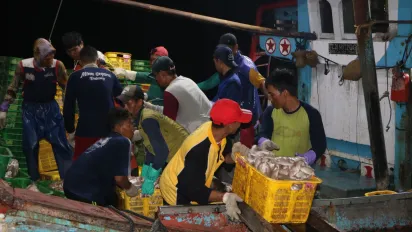
Ship to Shore Rights South East Asia - Indonesia
Relevant projects
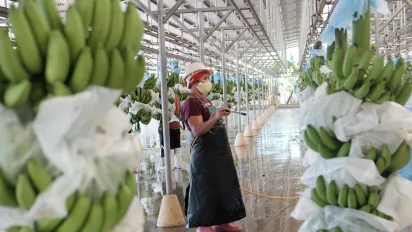
Workers' rights in rural sectors
Improving Workers' Rights in Rural Sectors of the Philippines
Project
Strengthening Social Compliance in Indonesia’s Palm Oil Sector
Child labour and forced labour
Multi Partner Fund
Workers' rights in rural sectors
Improving Workers’ Rights in Rural Sectors of Indonesia