

Türkiye explores the role of cooperatives in an emerging care economy
A dedicated session on the role of care cooperatives under an ILO-UNDP joint initiative highlighted their potential to provide quality care services and decent work opportunities in Türkiye.
30 June 2025
ANKARA (ILO News) – As part of a week-long ITC-ILO training on the Transformative Growth of the Care Economy in Türkiye, a dedicated session on care cooperatives was held on 18 June 2025 in Ankara. The session was organized under the joint programme supported by the ILO Office for Türkiye and UNDP Türkiye, with technical input from the ILO Cooperative, Social and Solidarity Economy Unit (COOP/SSE) and facilitation by Ms Ayşe Turunç Kankal, consultant to the ILO on COOP/SSE development.
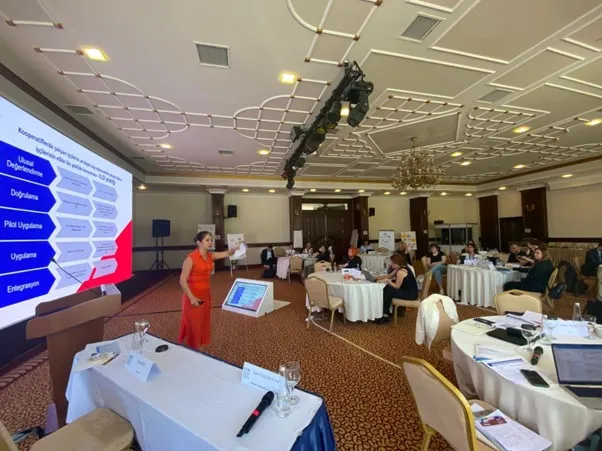
The training brought together around 40 participants from ministries, municipalities, trade unions, UN Agencies, civil society, care sector organizations as well as care workers. The session introduced the concept of care cooperatives as a potential community-based model to improve access to quality care services and promote decent work, particularly for women and informal care workers. Participants explored the ILO’s 5Rs Framework (Recognise, Reduce, Redistribute, Reward, Represent) and the Cooperative Care Provision as a Gender-Transformative Decent Work Solution, an ILO cross-regional, multi-country programme that promotes care provision models through cooperatives and other SSE entities. Global and local examples of care cooperatives were presented and practical group work on designing care cooperative models tailored to local needs in five different provinces of Türkiye was conducted.
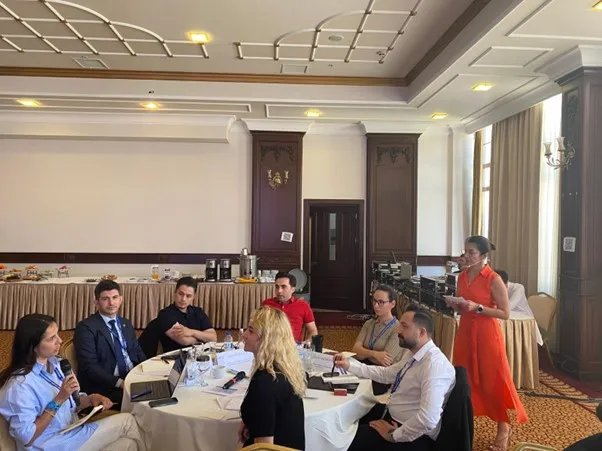
While this was a initial step, the session sparked an interest in how cooperatives could contribute to formalizing care work and supporting inclusive care service provision in Türkiye. Participants emphasized the importance of multi-stakeholder engagement, encompassing trade unions, municipalities, civil society organizations, healthcare services, and universities. Many highlighted the role of care cooperatives in facilitating women's return to the workforce and promoting social inclusion for marginalized groups including informal caregivers, low-income families, elders, and people with disabilities. Discussions also revealed a shared interest in embedding cooperatives into local ecosystems through public-private partnerships.
Participants expressed interest in further learning and collaboration, and several institutions initiated follow-up discussions envisioning pilot projects aligned with Türkiye's care policy priorities. This session is part of a broader effort to build understanding and capacity around inclusive care economy solutions, with cooperatives offering one promising avenue for future exploration.
See also
Training tools
Think.CareCoop and Start.CareCoop

SSE: Care economy

Webinar
Providing care through the social and solidarity economy
Thematic page on the cooperative, social and solidarity economy
SSE: Gender equality
Thematic page on the cooperative, social and solidarity economy
SSE: Migration, forced displacement and crisis response