

Decent Work Country Programme (DWCP)
Suriname one step closer to establishing just transition policy
Tripartite partners commit to develop inclusive and sustainable green labour market framework.
10 December 2024
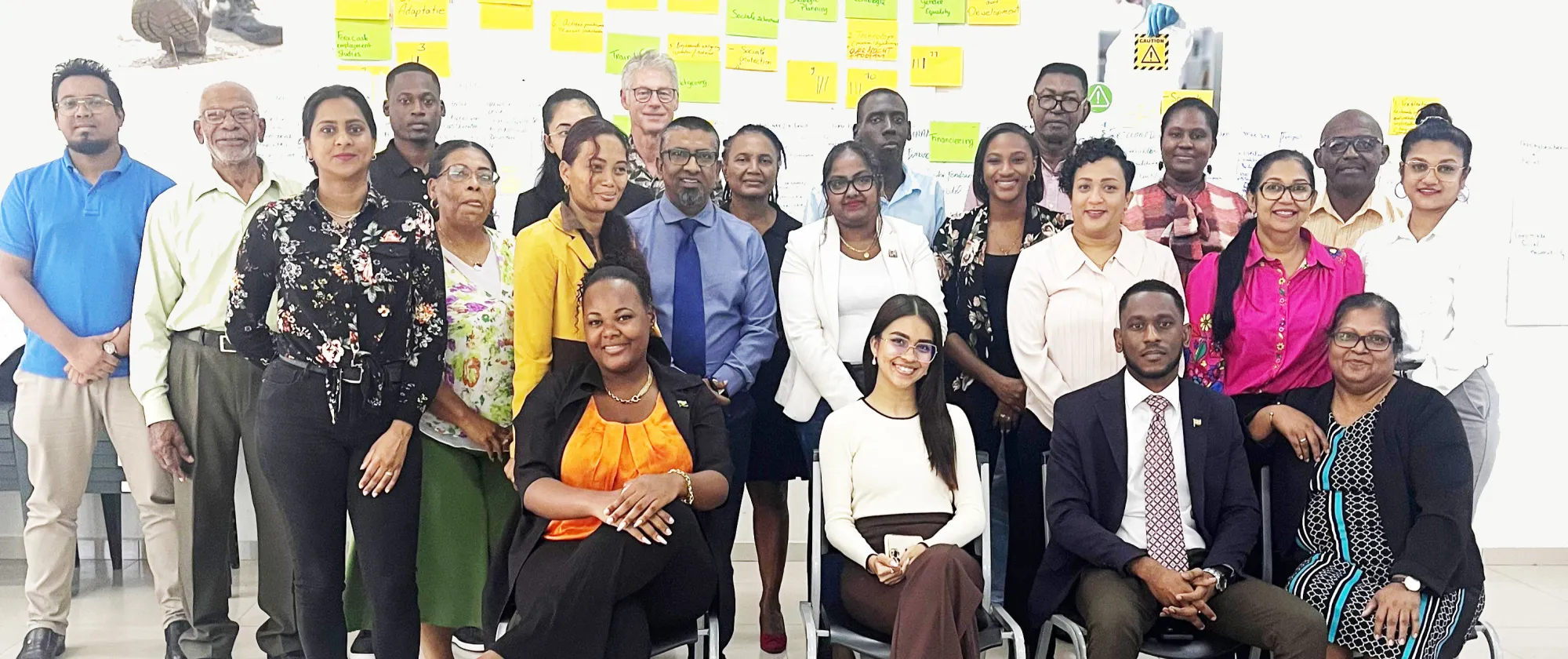
PARAMARIBO, SURINAME (ILO News) – Suriname has completed the initial step in establishing its first-ever just transition policy following a tripartite workshop that set the groundwork for developing labour legislation to support national green growth ambitions.
Held on December 2 and 3, 2024, the training was organized by the Government in collaboration with the International Labour Organization (ILO). Participants included officials from the Ministry of Labour, Employment Opportunity, and Youth Affairs, Vereniging Surinaams Bedrijfsleven (VSB) and Raad van Vakcentrales in Suriname (Ravaksur). Also in attendance were officials from Ministry of Regional Development, Spatial Planning and Environment, Ministry of Foreign Affairs, the National Environmental Authority, the Labour Advisory Board, the Centre for Innovation and Productivity, as well as members of the National Decent Work Commission.
The training was led by ILO consultant and just transition expert Kees van Ree. Sessions were built upon earlier discussions on sustainable development, green economy initiatives, and just transition principles, including an ILO training on trade unions and social dialogue in October 2024.
This process started earlier this year with awareness raising and capacity strengthening of the social partners. The social partners learned about the JT topics and were trained in improving social dialogue skills. The aim of social dialogue is to reach consensus between employers, trade unions and the government on various topics for JT such as working conditions, social protection, economic policy-making and sustainable development. These workshops took place in October 2024
During this latest training, participants gained insights into existing public and private initiatives addressing climate change, conservation, and the green economy strategy in Suriname. They also took part in an interactive knowledge exchange to shape their shared vision. The workshop culminated in a joint commitment to policy purpose, content, institutional framework, and cooperation.
“The legislation to be developed will form part of a key outcome of the Decent Work Country Program III (2023-2026) and complements the Government’s broader National Green Development Strategy,” said Shoblina Chotkan-Somai, ILO National Project Officer in Suriname.
A key next step is the establishment of a dedicated tripartite committee that will lead the strategic development of the just transition policy, with technical insights from the ILO and other partners. Future activities will involve public consultations, ensuring a collective and active participation in creating and implementing the framework.
“The ILO has a well-established approach that supports countries as they develop policies for a just transition that focuses on actions to address climate change while reducing inequalities by promoting decent work and social justice. Suriname’s commitment to this global objective is underscored by the commitment of tripartite partners and other key stakeholders for continued collaboration,” said John Bliek, ILO Caribbean Specialist for Sustainable Enterprise Development and Job Creation.
The successful conclusion of this workshop is milestone in Suriname’s journey toward sustainable economic development and sets a strong foundation for a socially just and environmentally resilient future.