


Stronger social protection key to protecting Lao workers from climate risks
Symposium on Social Protection explored practical approaches to protecting workers, strengthening livelihoods and adapting social protection systems to a changing climate.
26 October 2026
VIENTIANE (ILO News) – The importance of integrating social protection into climate adaptation strategies to better protect Lao workers was highlighted at the third annual Symposium on Social Protection in the Lao People's Democratic Republic.
Held in Vientiane on 23 October 2026 under the theme “Empowering Workers and Adapting Systems for a Changing Climate”, the Symposium was organised by the International Labour Organization through the EU–funded SOLAR – Phase II project, in partnership with the Lao Social Security Organization and the National University of Laos.
Bringing together a range of policymakers and provincial implementers, the development community, researchers and young people, the event explored perspectives on human resilience in the face of a changing climate in the Lao People's Democratic Republic.
Bouahome Phommachanh, Acting Director General of the Lao Social Security Organization opened the event by underscoring the importance of protecting vulnerable workers.
“As we see climate-related risks affecting livelihoods and working conditions, our priority is to expand social security coverage, especially to protect workers and families in the informal economy,” she said.
Speaking on behalf of the European Union, Karla Leitzke, attaché at the EU Delegation to Lao PDR reaffirmed its commitment to workers in value chains.
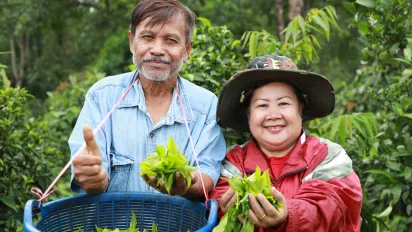
“The European Union stands firmly, as a reliable partner, behind Lao PDR's commitment to extend social protection to informal and vulnerable workers in the coffee, tea, and forestry sectors, to support green, sustainable and inclusive growth that creates decent jobs and supports people as well as the planet," she said.
A range of coordinated and people-centred climate adaptation strategies were discussed during the symposium. These included guidelines and practical measures to prevent occupational safety and health (OSH) risks and protect informal and rural workers from heat stress, adapting healthcare and social security coverage for an increasing incidence of workplace injuries and illnesses, supporting cooperatives to adopt climate-resilient farming practices and improve agricultural productivity, and disaster risk financing mechanisms.

Dr Somkhit Boulidam, Dean of the Faculty of Social Sciences at the National University of Laos emphasized the role of academia and youth in shaping social protection solutions.
“Students have a growing interest in policy matters and development issues now, and they can contribute valuable and innovative perspectives to the evolving needs of society. We are encouraged by the teams from different faculties that came together to prepare innovative proposals on climate-resilient social protection for Lao workers and communities,” Dr. Somkhit said.
Meanwhile, Loveleen De, Social Protection Programme Manager at the ILO stressed the vital role social protection plays as climate change impacts grow.
“As the Lao People's Democratic Republic experiences more frequent extreme weather events and workers are increasingly affected by rising temperatures, changing rainfall patterns, and greater risks to their health and livelihoods, social protection systems can play a crucial role in safeguarding well-being, protecting livelihoods, and strengthening resilience,” she said.
The Symposium also provided a platform for exchange of ideas to find solutions to shared challenges and for public engagement through a photography exhibition: “Through Your Lens: Human Resilience in the Face of a Changing Climate” as well as local youth-led initiatives like storytelling and theatre.

Relevant projects
Reducing Vulnerability in Lao People's Democratic Republic: Advancing Social Protection and Labour Rights and Entitlements in the Coffee,...