

Child Labour
Strengthening occupational health and safety: a key step toward preventing child labour in the Honduran coffee industry
7 May 2026
The ILO-led CLEAR Supply Chains Project is empowering companies and cooperatives in Honduras’s coffee sector to prevent child labour through concrete strategies to be implemented throughout the supply chain.
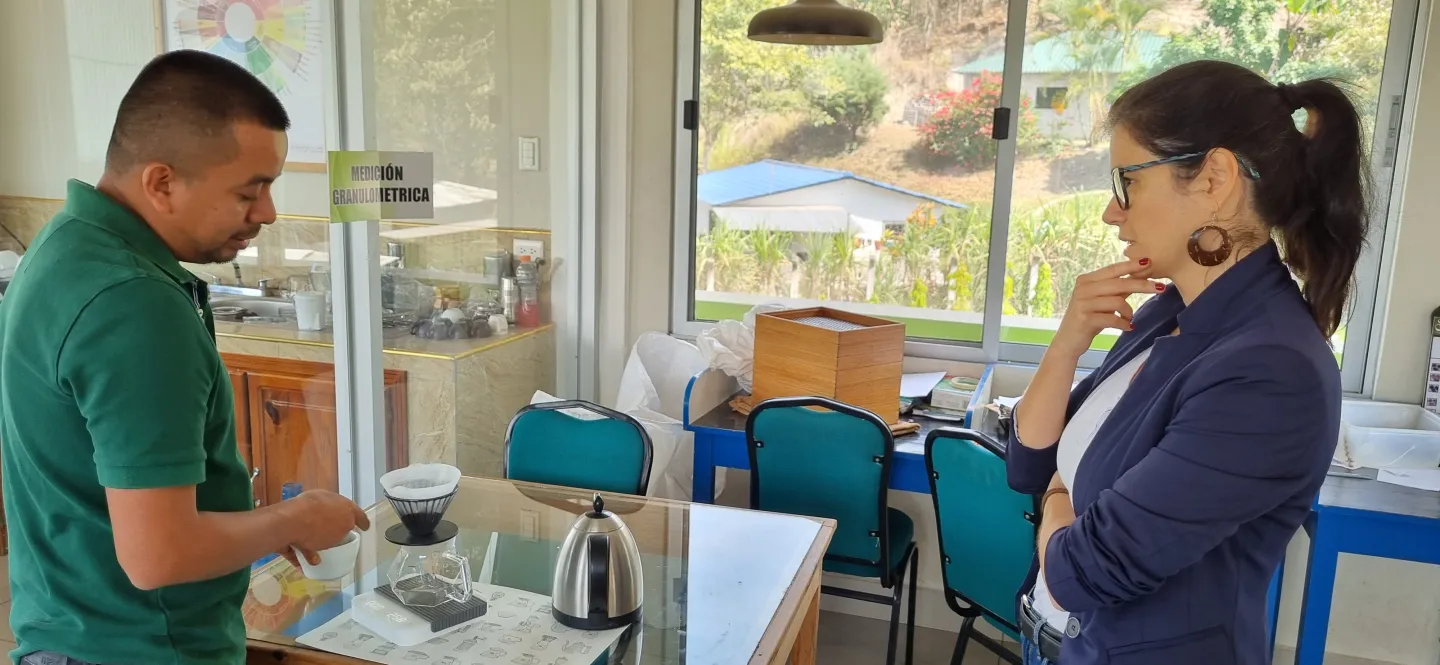
Tegucigalpa, HONDURAS (ILO news) – As part of the CLEAR Supply Chains project : “Ending Child Labor in Supply Chains,” the International Labor Organization (ILO) conducted a specialized technical assistance mission on Occupational Safety and Health (OSH), led by Tzvetomira Radoslavova, an OSH Specialist, aimed at strengthening the exercise of fundamental rights at work in the Honduran coffee sector.
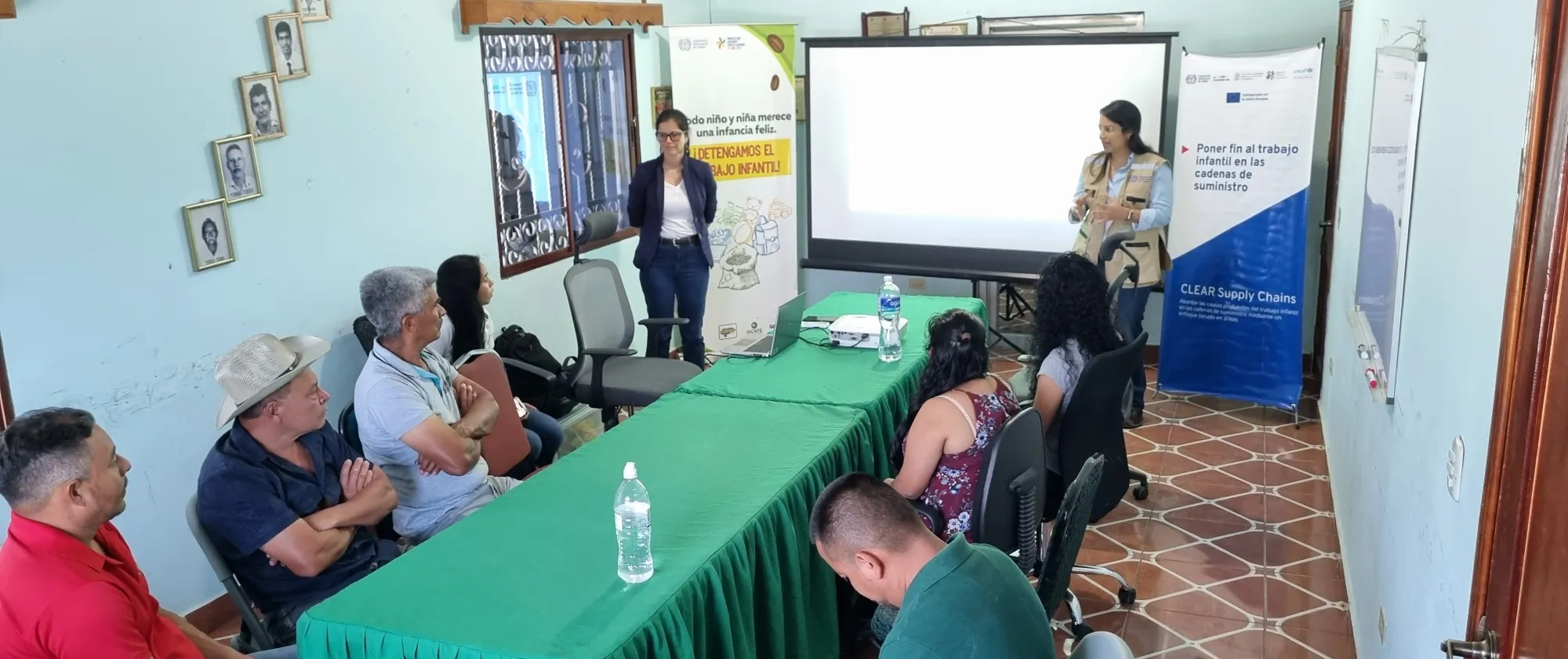
As part of this mission, a pilot training session was held with the COAQUIL Cooperative, located in the municipality of Masaguara, in the department of Intibucá. The session saw the active participation of 14 representatives, including members of the Board of Directors, the Supervisory Board, and administrative staff, who jointly discussed the main challenges related to health, safety, and occupational risk prevention.
The training, which lasted approximately three hours, helped identify specific priorities that the cooperative will incorporate into its annual work plan, laying a solid foundation for the creation and consolidation of Occupational Health and Safety (OHS) Committees as key spaces for social dialogue and shared responsibility.
One of the central themes of the training was to highlight the close relationship between promoting safe and decent work for adults and preventing child labour, especially in rural coffee-growing communities. Specialist Radoslavova emphasized that the persistence of child labour—particularly hazardous child labour—cannot be separated from the precarious working conditions faced by parents and adult workers.
During the session, common risks in coffee farming were analysed, such as the use of sharp tools, the manual handling of heavy loads, exposure to agrochemicals, and ergonomic risks resulting from long workdays.
When not properly managed, these factors limit adults’ ability to work, increase occupational accidents and illnesses, and create pressure to replace or supplement the adult workforce with children and adolescents, especially during periods of high demand such as harvest season.
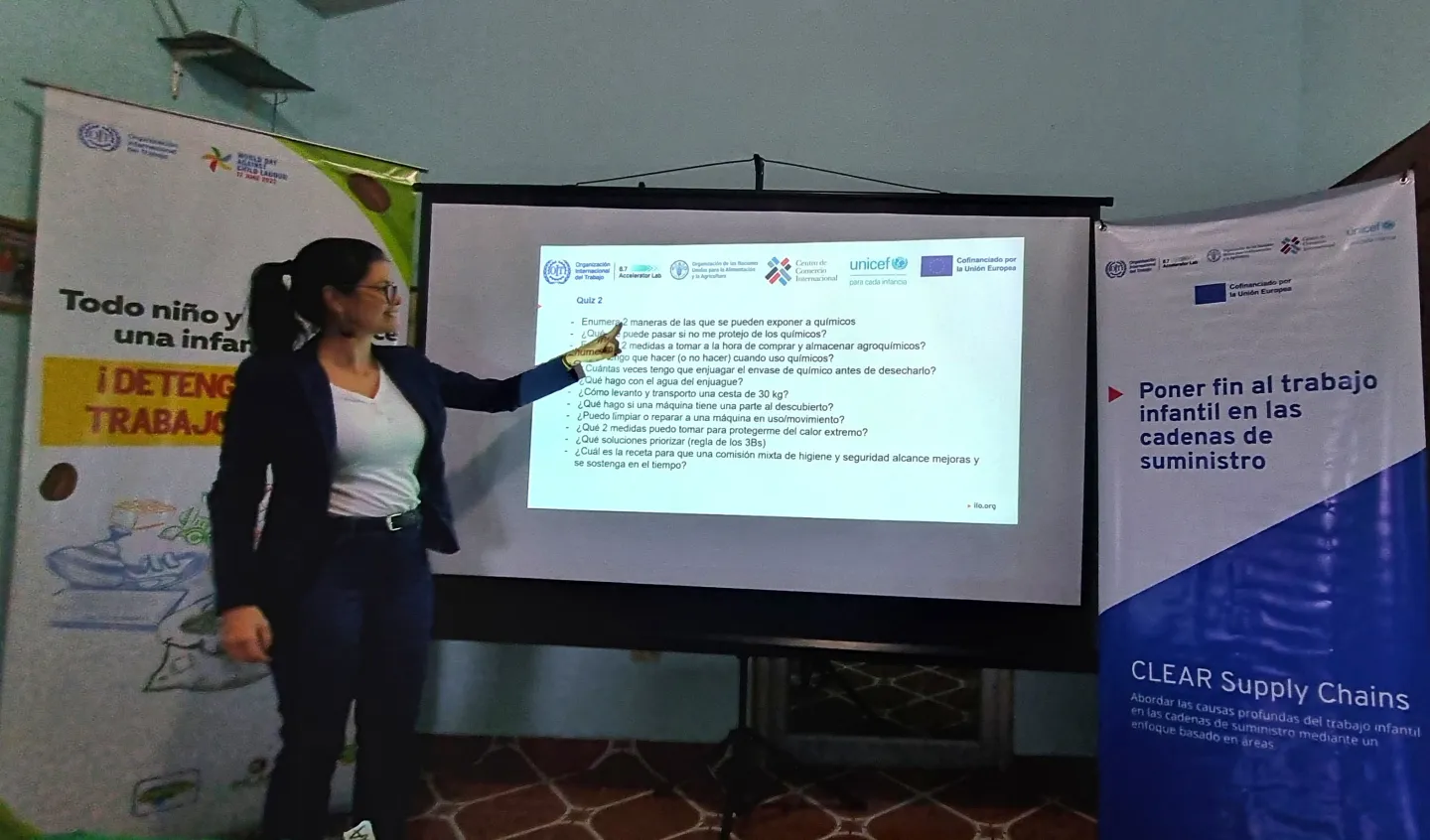
In this regard, the training emphasized that collectively managing risks through OSH committees not only protects the lives and health of adults but also directly reduces the need for and demand for child labour, thereby advancing the fulfilment of fundamental rights at work.
This technical mission is part of a comprehensive strategy under the CLEAR Project, which aims to have at least six coffee cooperatives formally establish OSH committees capable of: systematically identifying occupational hazards, recognizing specific risks to women, children, and adolescents, and promoting sustainable preventive measures within the cooperative itself.
Furthermore, the results of this technical assistance contribute to the monitoring of the Decent Work Country Program for Honduras 2024–2027, reinforcing the tripartite commitment to ensuring safe, healthy, and child-labour-free work environments in coffee supply chains.
Through such actions, the CLEAR Supply Chain project reaffirms that the promotion of fundamental labour rights for adults is an indispensable condition for preventing child labour and building fairer, more responsible, and sustainable supply chains.
For more information about the CLEAR Supply Chains Project in Honduras, visit the ILO CLEAR Supply Chains project page.
Related content

Child labour
CLEAR Supply Chains: Ending child labour in supply chains
Relevant projects
Child labour
CLEAR Supply Chains: Ending child labour in supply chains