

Strengthening Caribbean cooperatives as a formula for their success
ILO’s recent initiatives have deepened capacity to increase livelihoods, productivity and resilience.
3 January 2025
PORT OF SPAIN, TRINIDAD AND TOBAGO (ILO News) - The International Labour Organization (ILO) has been instrumental in bolstering the cooperative sector across the Caribbean, with focused efforts in countries such as Dominica, Guyana, and Suriname.
Leading up to the declaration of 2025 as the International Year of Cooperatives, the ILO has amplified its support to strengthen these vital economic and social structures. These efforts are in coordination with ILO's ENTERPRISE COOP Unit, led by Esim Simel. Support to cooperatives is one of ILO's most longstanding areas of technical support since its inception.
Recent estimates from the Food and Agriculture Organization of the United Nations (FAO) indicate that there are over 108,000 cooperatives in Latin America and the Caribbean - one-fourth of which are agricultural and/or rural cooperatives, numbering nearly 28,000, with over 6 million members.
The cooperative sector in the Caribbean has historically played a crucial role in promoting inclusive economic growth, supporting local livelihoods, and fostering community resilience. Recognizing this, the ILO’s recent initiatives have aimed at deepening the capacity of cooperatives to contribute effectively to sustainable development and job creation, particularly in the context of the economic disruptions triggered by the COVID-19 pandemic.
The ILO’s groundwork over the past three years, led by John Bliek, Specialist for Job Creation and Sustainable Enterprise Development, has been crucial in preparing policymakers and cooperatives at the national level for the recognition and opportunities that the International Year of Cooperatives in 2025 will bring. This focus year aims to highlight the role of cooperatives in achieving the United Nations Sustainable Development Goals (SDGs), particularly in promoting decent work, economic growth, and social inclusion.
Dominica: Building resilience and sustainability
The Government of Dominica's focus on rebuilding and enhancing resilience in the face of climate change aligns with the ILO’s objective to improve livelihoods and reduce informality through sustainable enterprise development. Over the past three years, the ILO has facilitated programs for vulnerable sectors, particularly farming and fisherfolk cooperatives, so they can transition their food production activities to successful businesses that can withstand future disruptions. Several associations of producers benefitted from this effort.
By promoting financial literacy and resource management, the ILO has supported Dominica’s broader commitment to economic development is both inclusive and ecologically responsible.
“Farmers were educated on managing their finances; this included planning, budgeting and savings. They were also introduced to insurance, planning for times of natural disasters,” said Jones Telemaque, Education and Training Officer of Dominica’s Cooperatives Division.
“I learned about financial literacy. This included budgeting and how a budget helps me to better manage my finances and assist in the development of the Cooperatives business,” said training participant Mervyn Tavernier, a fisherman at Newtown Fisheries.
"The Training was very helpful teaching farmers how to recognize and organize the finite details of finances that will help us achieve success and future stability," said Samantha Francis, a potato farmer.
The ILO has supported the development of an enabling environment for cooperatives by a cooperative assessment realized by the CIPRIANI College for Labour Law and Cooperatives of Trinidad and Tobago, likewise it supported the development of an actualized cooperative policy, currently under review by Dominica's cabinet.
Guyana: Strengthening local economies
In 2024, staff from the Ministry of Labour participated in an initial series of workshops with support from the ILO Caribbean Office and Cipriani College to learn how more robust policies and programmes can unlock a revitalization of the country’s cooperatives.
“We were able to interact, share experiences and even get on-the-spot advice and guidance on how to move forward. This information, this knowledge, this empowerment – I look forward to using it excitedly,” said Winneth Collymore, Cooperatives Development Officer.
Officials also participated in a training of trainers to expand the reach of their learning. The educational opportunity was developed in response to a request from the Minister of Labour, the Honourable Joseph Hamilton, to strengthen the cooperatives ecosystem of Guyana.
“Cooperativism is a very important mechanism to support decent work with particular potential to transform rural communities. This training of trainers is part of a bigger process and we will be working with technical officers, the Minister of Labour and the Department of Cooperatives to make greater progress,” explained John Bliek.
The Ministry of Labour's Department for Cooperatives and Friendly Societies has shown strong commitment and has established a comprehensive action plan to strengthen their institutional support for cooperatives.
The ILO will continue to partner with Guyana and the Ministry and other stakeholders now in a joint effort with FAO FISH4ACP, strengthening the social organizations within the high potential seabob shrimp value chain.
Suriname: Enhancing agricultural development
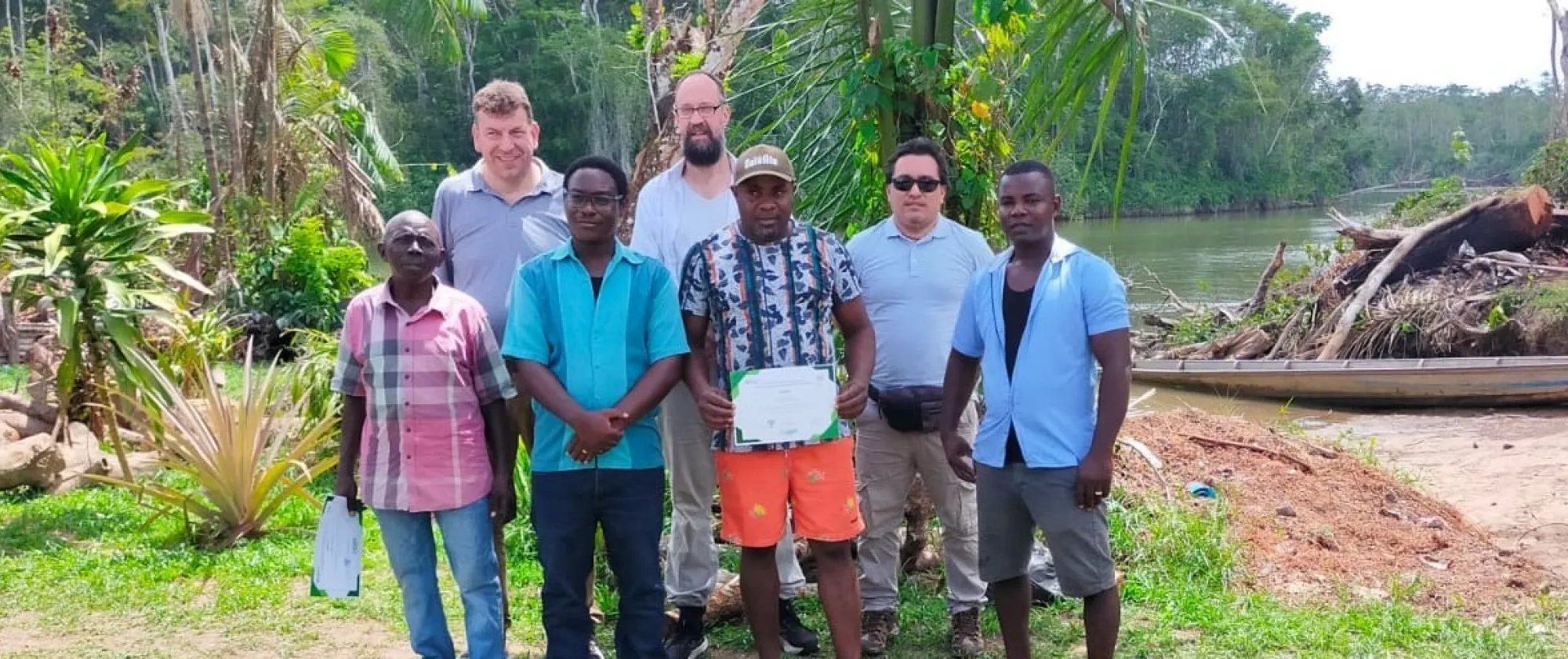
Under Suriname’s Decent Work Country Programme, the ILO’s work centres around capacity building for agro-cooperatives that can uplift local economies and create employment opportunities across all regions. Through strategic partnerships with policymakers, the agriculture sector and community leaders, the ILO has facilitated training programs for farmers and food vendors focused on strengthening cooperative governance, strategic planning, as well as financial literacy and business management. This has been in a UN2UN agreement with FAO SAMAP, as there was a strong need to strengthen the cooperatives participants of this program.
These programmes have empowered 30 agro-cooperatives to better manage resources and improve their operational efficiency so their members can reap rewards such as greater networking opportunities, modernization of productivity and increased earnings.
By partnering with these cooperatives, the ILO has not only strengthened the agricultural sector but also contributed to food security and rural development in Suriname.
“We accessed important information as well as networking opportunities, and our members will be able to increase production and processing,” said Ram Lutchman, Chairman of the Sunday Market Cooperative.
“We learned how to improve registration, better understand our clients and strengthen how we operate as a cooperative,” said Claudia Maatsen, Chairwoman of the Cooperative Asajaka Weno.
The ILO continues to support Suriname and is currently realizing a Training of Trainers for all entities that support cooperatives in Suriname, as Council for Cooperatives (RACO), and is also readying an assessment on how to improve the institutional support for cooperatives in Suriname. This has been realized as part of a Joint Program on the pineapple value chain with FAO, UNIDO and UNFPA.
Prepared for IYC2025: A year of recognition
Through this tailored support and strategic partnerships, the ILO’s work in Dominica, Guyana and Suriname underscores its commitment to building resilient, sustainable, and inclusive cooperatives. With the International Year of Cooperatives now underway, these nations stand as examples of how strengthened cooperative sectors can drive economic and social progress, contributing to a future where shared prosperity and solidarity are central.