

Joint Press Release
Stakeholders urged to rethink labour migration, gender and climate change through a business and human right lens
As the interlinkages between climate change, labour migration, gender equality and corporate accountability become increasingly urgent and complex, Nepal has taken proactive steps to address these challenges through an inclusive and cross-sectoral approach.
1 July 2025
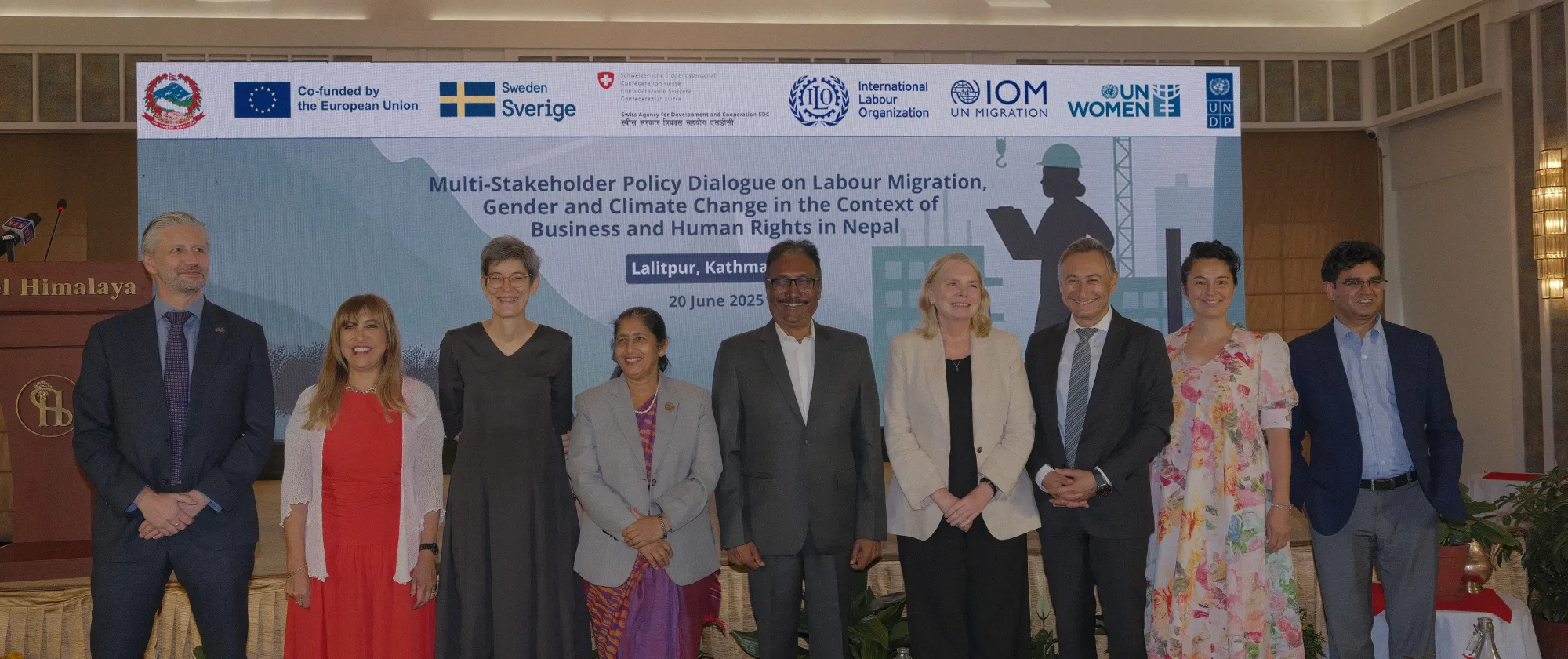
KATHMANDU, Nepal (ILO News)- A national level “Multi-Stakeholder Policy Dialogue on Labour Migration, Gender and Climate Change in the Context of Business and Human Rights,” was held on 20 June 2025. This event was jointly organized by the International Organization for Migration (IOM), the International Labour Organization (ILO), the United Nations Development Programme (UNDP) and UN Women, under the framework of the United Nations Sustainable Development Cooperation Framework (UNSDCF) and a One-UN approach in Nepal.
Nepal remains highly vulnerable to the impacts of climate change. Changing weather patterns, floods, droughts and landslides pose serious threats to agriculture and rural livelihoods, increasingly pushing communities to adopt labour migration as a coping strategy. While migration may offer families a way to cope with challenges, it often places burdens on those left behind, particularly women or forced people to migrate in unsafe conditions.
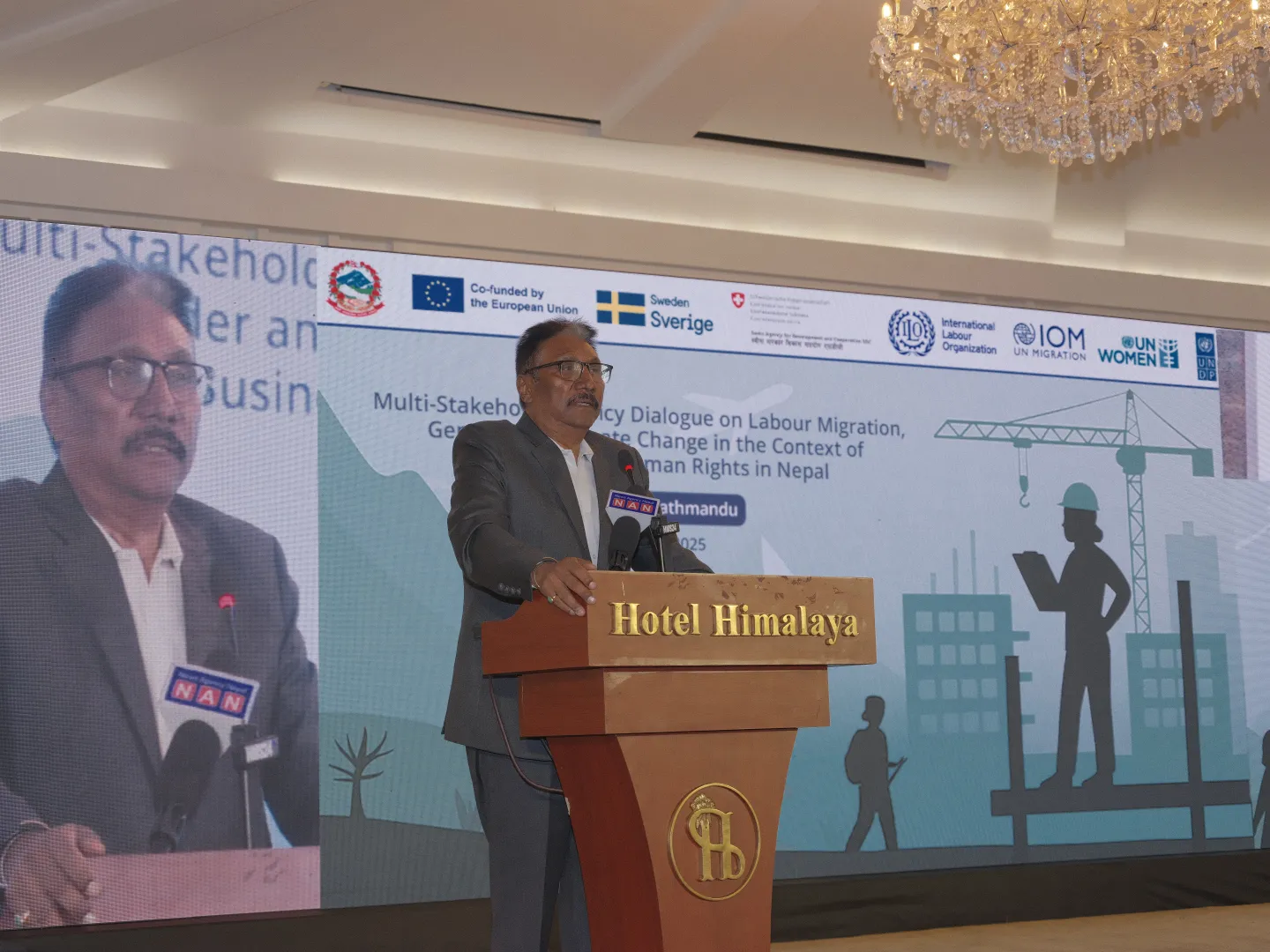
The Minister of Labour, Employment and Social Security, Hon. Sharat Singh Bhandari emphasized the need for gender-responsive, inclusive and rights-based migration policies at all stages of migration cycle. “The private sector must ensure ethical recruitment and decent work. Nepal’s National Action Plan on Business and Human Rights represents an important step towards enhancing corporate accountability,” said Hon. Sharat Singh Bhandari.
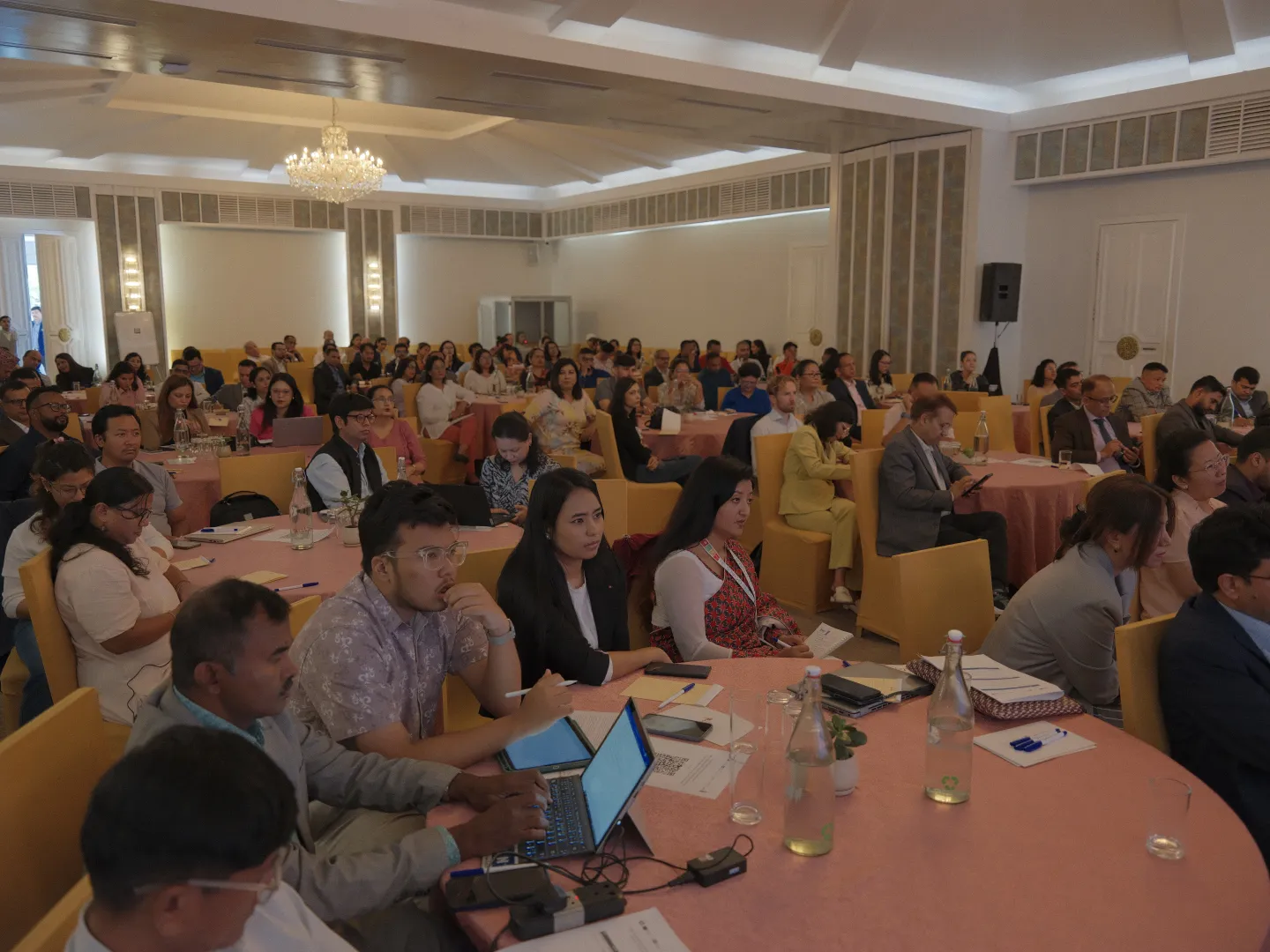
The event brought together over 100 participants from government institutions, civil society, trade unions, academia, the private sector, women’s organizations, climate experts, and UN agencies. The discussion focused on fostering partnerships and sharing knowledge to advance fair migration governance, gender equality, and climate resilience.
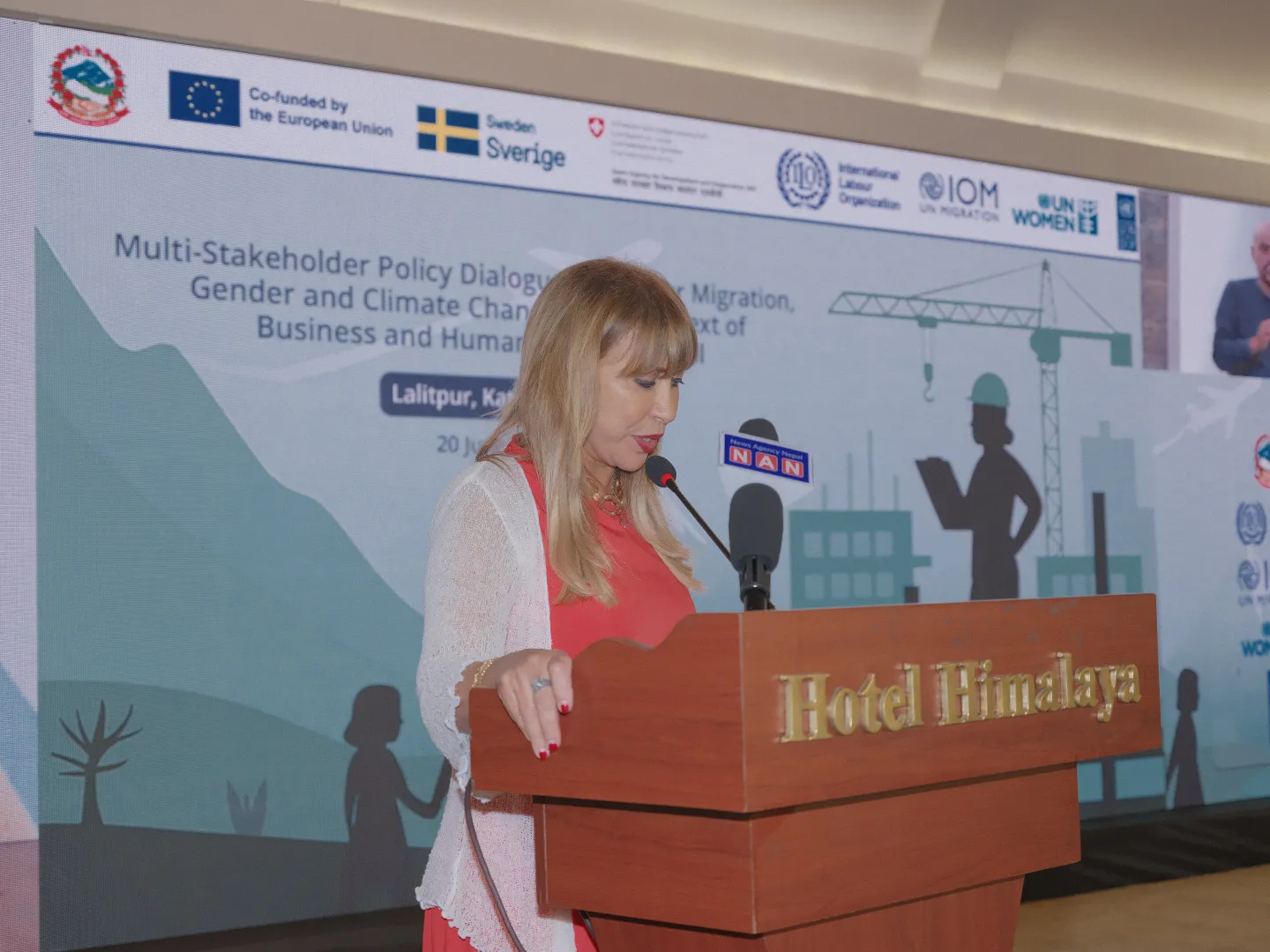
UN Resident Coordinator in Nepal, Hanaa Singer-Hamdy, underscored the importance of collective action to translate commitments into tangible progress. “Migration governance must uphold human dignity, promote gender-responsive climate action and ensure fair and ethical recruitment,” she said. “The United Nations remains committed to supporting to the Government of Nepal in this shared effort.”
The event emphasized the need to integrate labour migration governance with climate justice, gender-responsive policymaking and responsible business practices. It urged expanding safe, regular migration routes, especially for women domestic workers and ensuring equal access to opportunities and protections in Nepal and abroad.
This dialogue comes at an important juncture as Nepal is moving forward with several important national plans and policies. These include the 16th Five-Year Plan, updated commitments to tackle climate change, a revised labour migration policy, and efforts to boost employment.
The event also marked 30 years since the Beijing Declaration, which reaffirmed the global promise to “leave no one behind.” The outcomes of the dialogue will help shape future policies aligned with global frameworks such as the Global Compact for Safe, Orderly and Regular Migration, the Paris Agreement and the Sendai Framework.
As Nepal navigates the interlinked challenges of labour migration, climate change, gender equality and human rights in global supply chains, this collaborative dialogue marks a positive step towards building a more equitable, inclusive and sustainable future for all.
For more information, please contact:
Dipti Shah, Communications Focal Point at IOM Nepal, [email protected]
Nistha Rayamajhi, Communications Officer at ILO Nepal, [email protected]
Tek Tamata, Portfolio Manager at UNDP Nepal, [email protected]
Priti Shrestha, Programme Analyst at UN Women Nepal, [email protected]