

Stakeholders agree to strengthen labour protection in Uganda’s growing digital economy
The third thematic session of the Community of Practice on Decent Work in the Digital Economy led by the ILO and FUE highlighted the need for adapting legal and regulatory frameworks to ensure decent work for digital workers.
18 December 2024
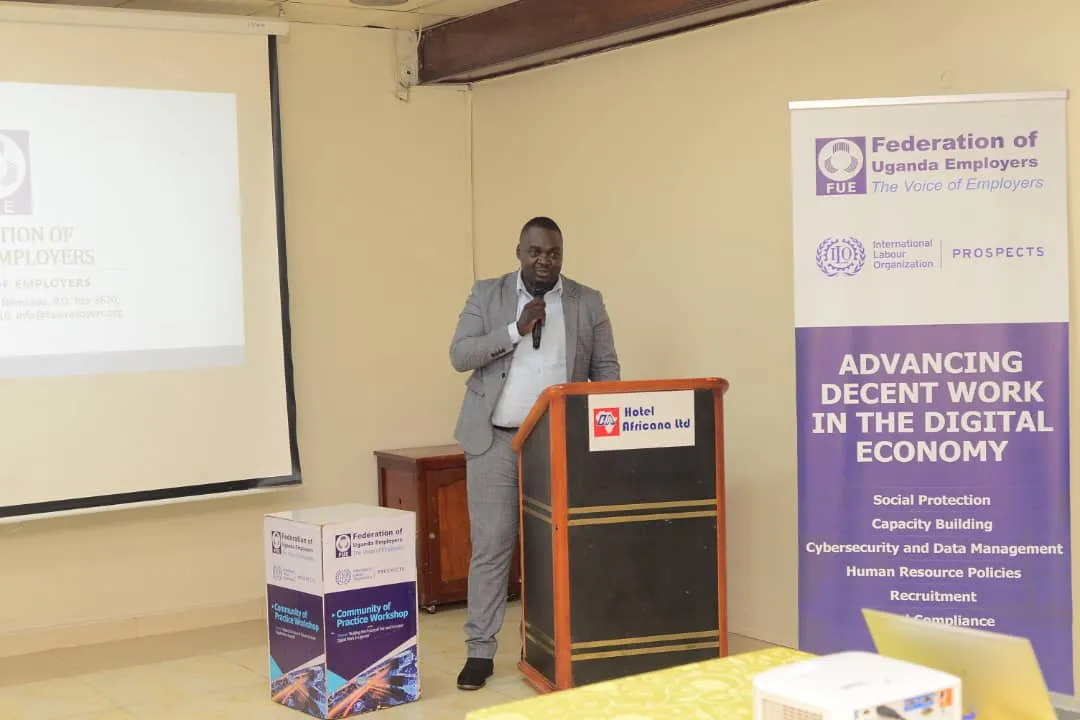
Kampala, Uganda (ILO News) – The third thematic session of the Federation of Uganda Employers (FUE) and the International Labour Organization (ILO) Community of Practice (CoP) on Decent Work in the Digital Economy was held on 18 December 2024. This event brought together tripartite constituents and key stakeholders to discuss the evolving landscape of online gig work and highlighted labour rights challenges and policy solutions to enhance protections for digital workers.

Balancing opportunities and challenges in the digital economy
Uganda’s gig economy has expanded significantly, particularly among young people, offering new income opportunities. However, challenges persist in ensuring decent work. Dan Okanya, representing the Federation of Uganda Employers (FUE), outlined both the opportunities and challenges associated with gig work.
“Significant challenges including limited legal protections, cybersecurity threats, digital access disparities and concerns persist in digital gig economy,” Okanya stated. “Addressing these issues is key to unlocking the sector’s potential for inclusive employment and economic growth.”
Masiga Isaiah from the Ministry of Gender, Labour, and Social Development (MoGLSD) underscored ongoing government efforts to address regulatory gaps. “A key priority is adapting labour laws, including through the ongoing review of the Employment Act (2006) and the Employment Regulation (2011), to establish clearer provisions for gig workers, clarify employment classifications and introduce sector-specific minimum wages to ensure fair compensation.” He further highlighted collaboration with the National Social Security Fund (NSSF) to develop tailored social protection policies and implement a flexible savings mechanism for gig workers, ensuring they have means to ensure longer-term financial security.
With technical assistance from the ILO, Uganda is also in the process of updating the National Employment Policy and Strategy which identifies the ICT sector as an important driver for job creation, recognizing its potential to generate decent work opportunities, particularly for young people across the country.
Strengthening accountability in the digital economy
Participants emphasized the need for robust accountability frameworks for digital platforms and uphold worker protections while fostering innovation. The discussion highlighted emerging good practices among some platforms, including transparent payment structures that ensure timely and fair compensation, algorithmic management models that avoid discriminatory practices and fair contracting practices aligned with international labour standards.
Cybersecurity risks were also flagged as a major concern, with many gig workers vulnerable to scams and data breaches. CoP members called for strengthened cybersecurity frameworks that protect workers’ data and prevent exploitation. The MoGLSD shared plans to introduce cybersecurity training and awareness programs to mitigate these risks and enhance digital safety for platform workers.
New ways of workers organizing in the digital economy
Ester Namatovu, representing the National Organization of Trade Unions (NOTU), discussed the evolving role of trade unions in protecting workers' rights within Uganda’s digital economy. She acknowledged the challenges posed by the decentralized nature of digital work and outlined how NOTU is adapting to this new environment.
“Trade unions are embracing digital tools for outreach and engagement, using online platforms for meetings and campaigns to connect with workers across different sectors and locations,” Namatovu explained. She also highlighted NOTU’s annual youth camps, which focus on digital skilling, rights awareness, and fostering solidarity among young members through mentorship initiatives.
Collaborative solutions for a fair and inclusive digital economy
The session concluded with a call to action for collaborative efforts among policymakers, employers, trade unions, and digital platforms. Key recommendations included:
- Labour law reforms to address the realities of gig workers, establish clear guidelines for employment classification and extend social protections.
- Strengthened regulatory frameworks to enhance transparency and accountability among digital labour platforms.
- Investment in cybersecurity to safeguard gig workers from online threats and risks of exploitation.
Institutionalizing platforms such as the CoP for ongoing dialogue and partnerships was recognized as a crucial step in developing comprehensive policy responses to challenges in the digital economy.
For more details, please refer to the attached reports.
***
The CoP is facilitated by the PROSPECTS programme in Uganda and the Opportunity Fund project on the Promotion, inclusion and protection of refugees and host communities in the gig economy, with the generous funding of the Kingdom of the Netherlands.
Relevant projects

Promotion, inclusion and protection of refugees and host communities in the digital and gig economy

PROSPECTS Opportunity Fund project
Advancing Young People’s Engagement and Meaningful Participation in the PROSPECTS Partnership