

SEWA showcases gender equity through formalization in Gujarat
The union is promoting childcare centres and financial security for improving women's employment outcomes
6 September 2024
Delhi, INDIA (ILO News): ‘Sewa’ in Hindi translates into ‘service’ in English, and the trade union Self-Employed Women’s Association (SEWA) has embodied this characteristic in its work for the last 50 years. The union has recruited women from various trades, helped organize self-employed women in the informal economy, and assisted their collective struggle for social justice, equality, and fair treatment, ultimately moving them closer to formalization.
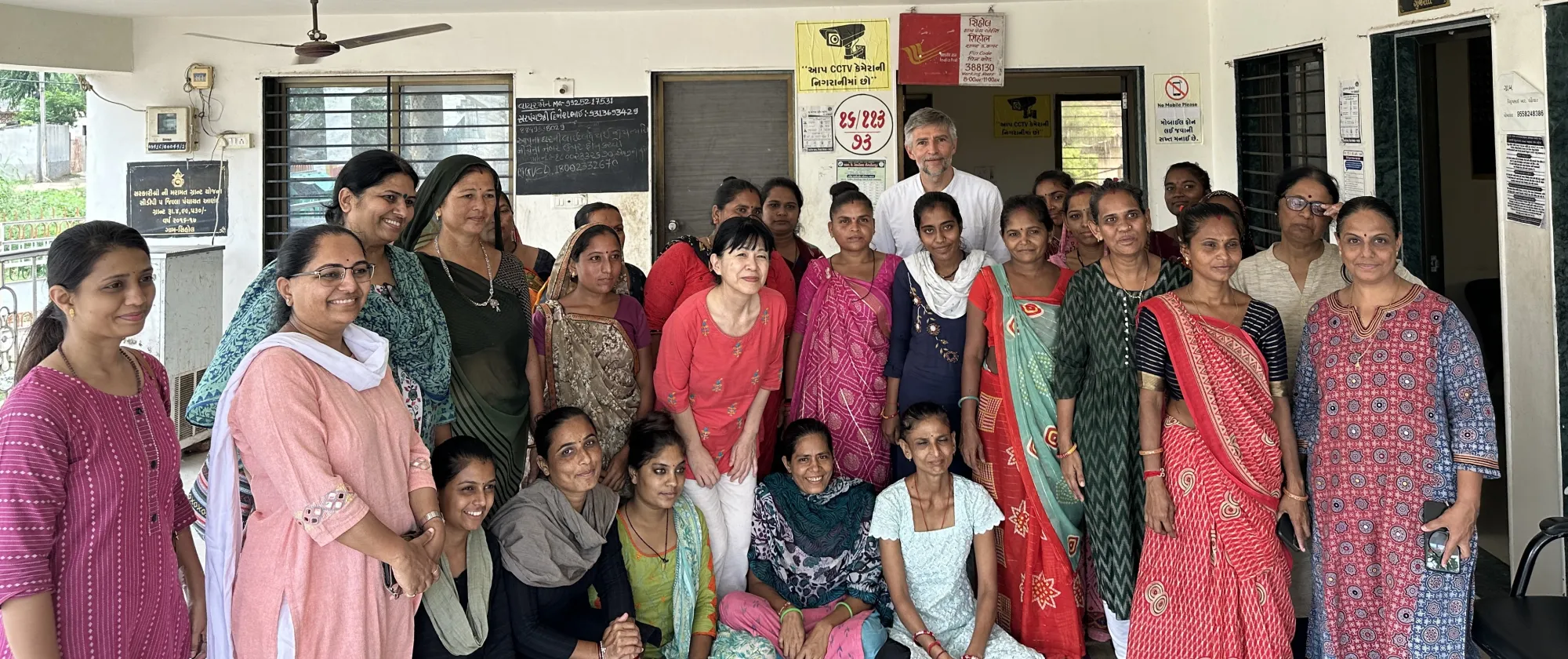
The International Labour Organization (ILO) has four Priority Action Programmes (APs) that cut across its various policy outcomes and present significant opportunities and challenges for promoting social justice through decent work. One of the APs, on ‘facilitating the transition from the informal to the formal’ or AP/FORMALIZATION, is working towards improving the coherence and effectiveness of formalization policies. It aims to address informality and its root causes with particular attention to gender equality concerns, highlighting the essential contribution of formalization to social justice. Frédéric Lapeyre, Director, AP/FORMALIZATION and Michiko Miyamoto, Director, ILO DWT/CO-New Delhi, were invited by SEWA to gain first-hand insight on how the union has furthered formalization in the state of Gujarat by meeting with the women in the community.
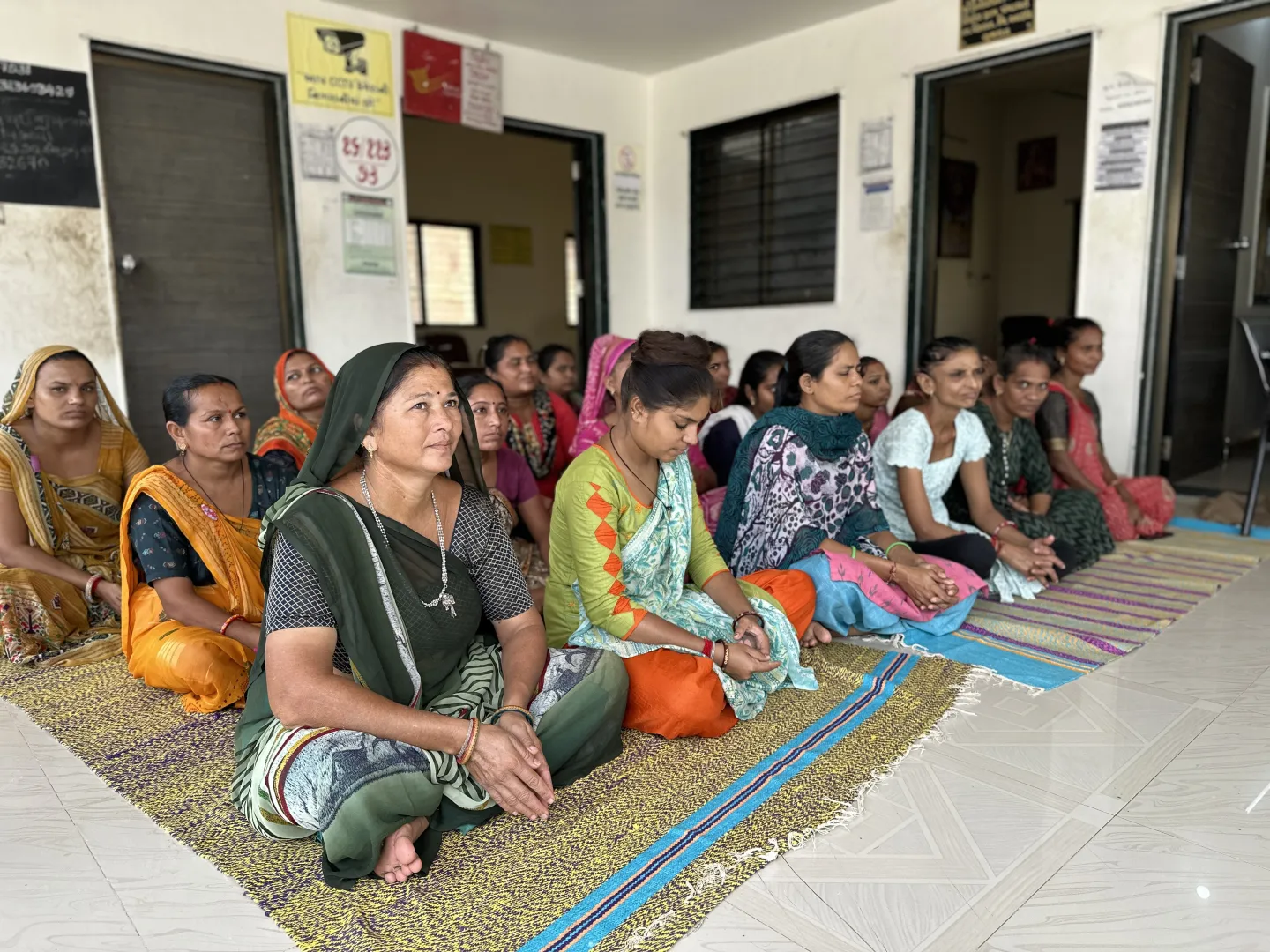
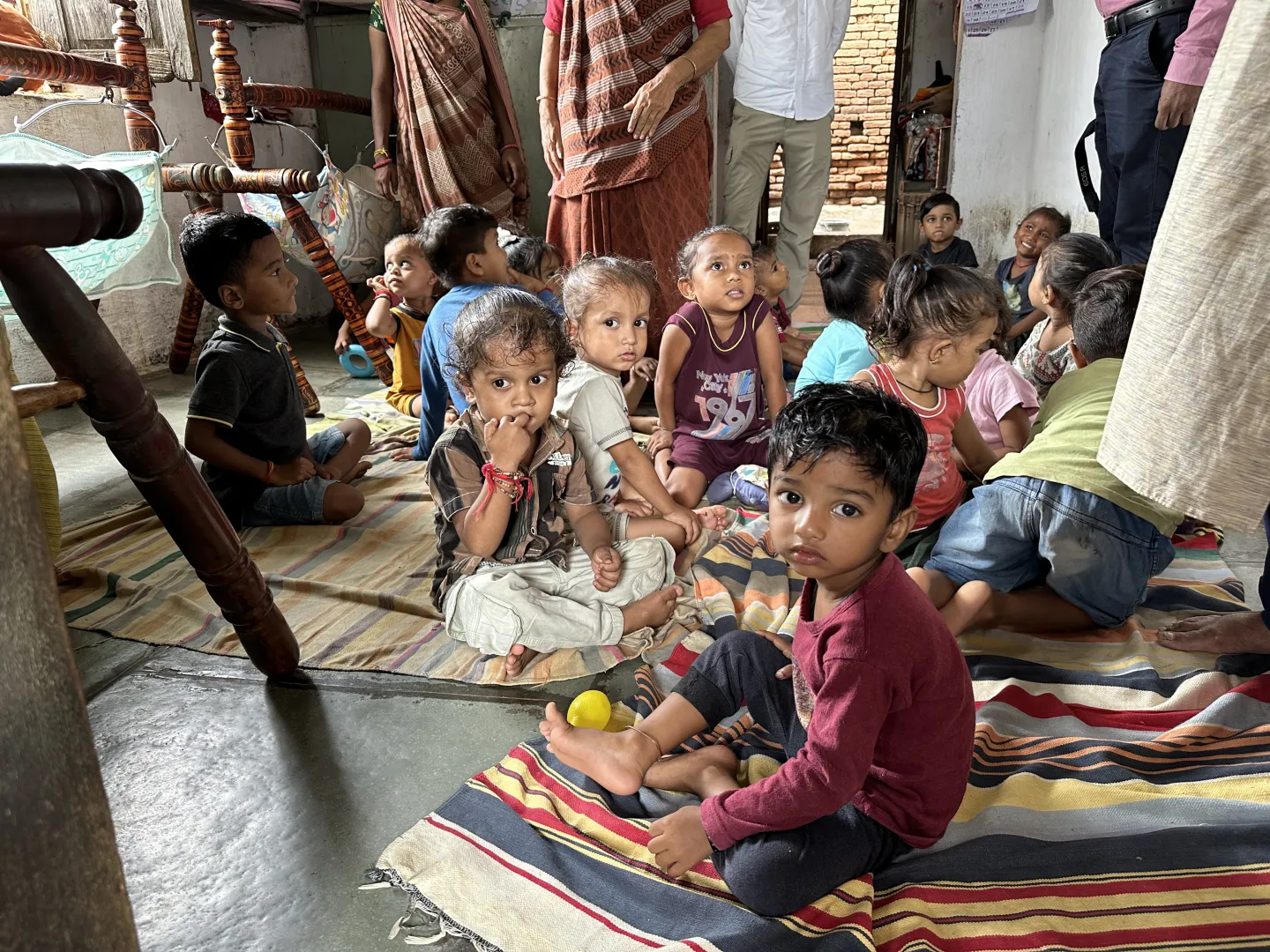
Responding to the needs of the community is essential for the sustenance of any movement. Gujarat’s Anand district is predominantly agrarian, where most women are engaged in daily wage work in the tobacco sector. They need to balance their domestic and employment responsibilities, which means that even one day off for care responsibilities would result in a loss of income. On the other hand, taking the children to the work units would be hazardous for their health and educational outcomes. In families with more than one child, the oldest tends to skip school to become a caregiver for the younger children and support their parents. SEWA responded to this need of the community by establishing childcare centres in the villages to ease the caregiving burden on mothers. The childcare centres, which opened in 1989, are operational from 8 am to 6 pm – during the mother’s working hours.
SEWA responded to the gap in social protection mechanisms like the lack of maternity benefits by ensuring the centres are open to newborn children till the age of six, while the care workers ensure the children are enrolled in the 1st grade when they are ready to leave the childcare centres. The community women shared how the centres focus on the health, nutrition and overall well-being of the children, while the structure the centre establishes in the children’s lives helps them assimilate into schools easily. The women have also gone a step further to create cooperatives out of the childcare centres that they manage. The village has taken ownership of the centre, with the Panchayat providing the land for it while the workers and employers contribute funds for its operation.
In parallel, given the meagre wages and lack of social protection benefits for the women, SEWA has worked on creating recognition of women’s work and identity by enumerating their contribution to family, society and the economy as a whole. They collectively bargained with the employer and engaged with the government and labour department to create identity cards and recognition for women as workers. The identity card, with the worker’s photo, signed and stamped by the employer and the labour department, is the first step in getting formalized and creating security. The women’s efforts have also increased their wages.
After tackling childcare, the union looked at the problem of surplus labour and employment deficits to understand what other income-generating activities could be instituted in the community. Being an agrarian community, many workers who worked as farm labour have had their employment opportunities shrink due to mechanization and climate shocks, among other reasons. They have also seen their savings shrink despite the income growth due to the oppressive rates of interest they have paid on loans to money lenders, sometimes going up to 20 per cent. An important step in the formalization journey has been financial security, which has been made possible by instituting Self-Help Groups (SHGs), savings, and lending groups. Access to microcredit has helped women supplement their incomes, repay loans, and improve their living conditions.
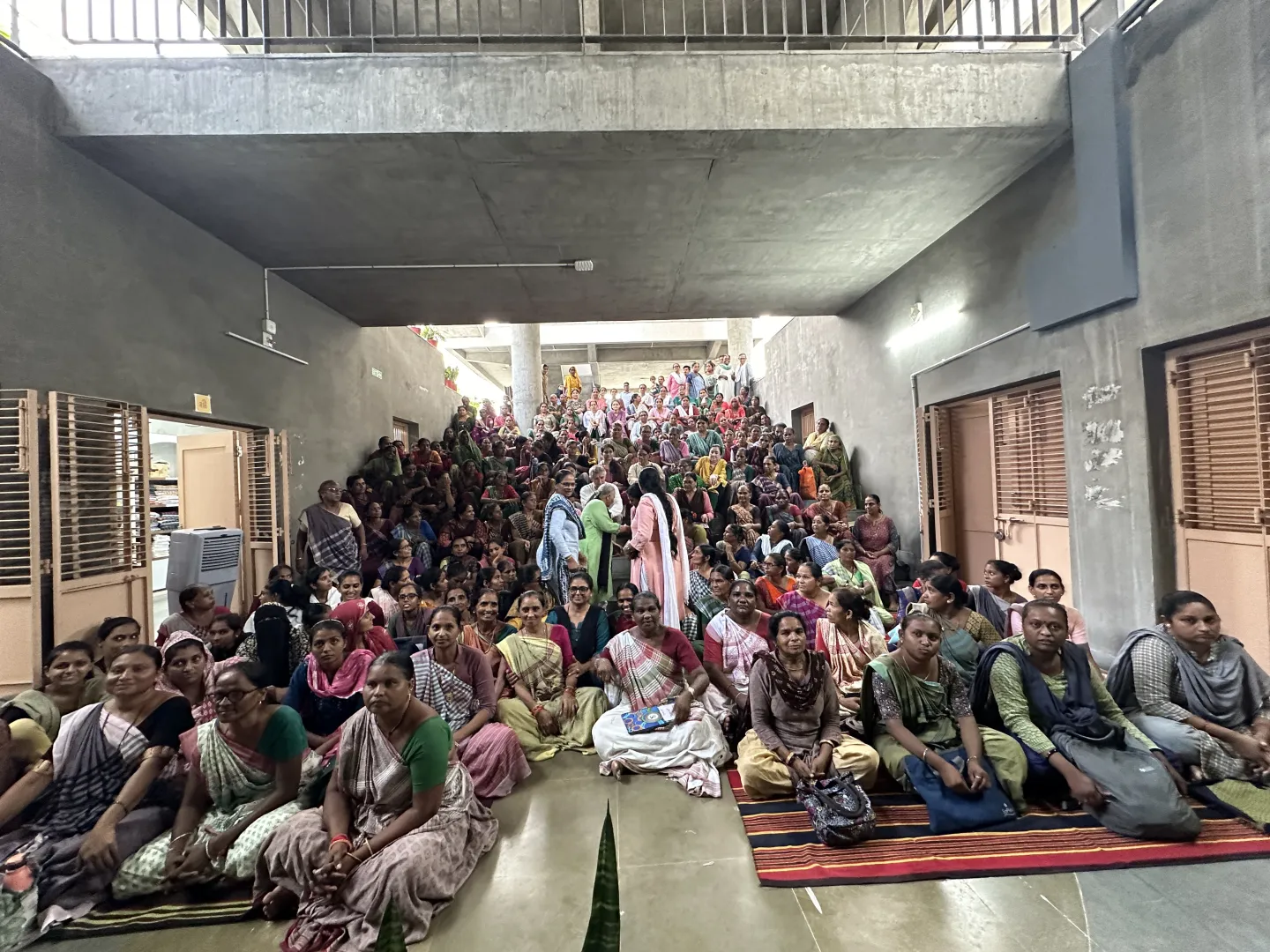
The workers shared their experiences of being associated with SEWA, some as second or third-generation union members. They have benefitted from the membership in myriad ways, from being able to participate in the workforce to increasing their incomes, undertaking entrepreneurial ventures, and becoming leaders to champion a new generation of women to take the union forward.