

Safety at work
Saint Vincent and the Grenadines moves to modernize workplace safety
Saint Vincent and the Grenadines is working with the ILO to modernize its occupational safety and health framework, strengthen tripartite dialogue and build national capacity to better apply international labour standards.
27 June 2026
KINGSTOWN, Saint Vincent and the Grenadines (ILO News) – Saint Vincent and the Grenadines has taken a further step towards modernizing its occupational safety and health framework, as government, employers’ and workers’ representatives came together to examine how stronger prevention systems, better reporting and more effective social dialogue can support safer workplaces.
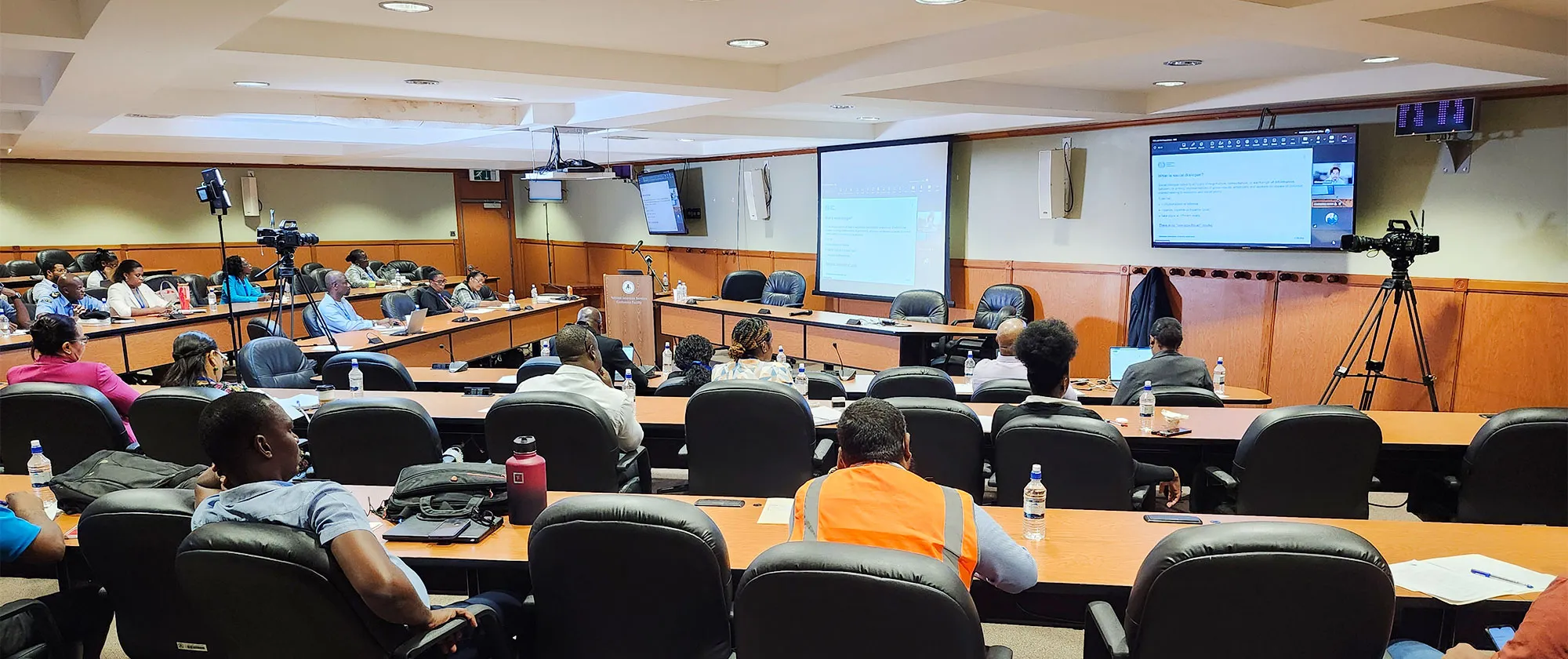
The ILO-supported workshop on modernizing the occupational safety and health framework was held in Kingstown from 23 to 25 June 2026. It provided a tripartite platform to review the country’s current occupational safety and health arrangements, discuss international labour standards, and consider practical steps towards a more coherent national system. The activity came at an important moment for labour governance. Since 2022, a safe and healthy working environment has been recognized by the International Labour Organization as a fundamental principle and right at work. This means that all ILO Member States have a responsibility to respect, promote and realize this principle, whether or not they have ratified the relevant Conventions.
For St. Vincent and the Grenadines, the issue is both practical and strategic. The country already has an occupational safety and health framework which includes the Factories Act, employment injury protection through the National Insurance Services, and arrangements for the notification of accidents and occupational diseases. At the same time, the national framework is in transition. A new Occupational Safety and Health Act has been passed and awaits proclamation, while draft National Occupational Safety and Health Profile, Policy and programme are under review with the support of the ILO.
The workshop helped connect these national efforts with the ILO Global Strategy on Occupational Safety and Health 2024–30, which promotes stronger national frameworks, improved coordination and investment, and better workplace-level prevention systems. Discussions focused on how modern laws, clearer institutional roles, improved labour inspection, stronger data collection and more consistent reporting can help reduce risks before injuries, diseases or deaths occur.
Ariel Pino, ILO Social Protection and OSH Specialist for the Caribbean, facilitated the discussions on the ILO framework, the Global Strategy, the Occupational Safety and Health Convention, 1981 (No. 155), and the Promotional Framework for Occupational Safety and Health Convention, 2006 (No. 187).
“Modern occupational safety and health systems are built on prevention, clear responsibilities and strong cooperation between governments, employers and workers. This workshop helped constituents look beyond compliance alone and focus on the practical steps needed to strengthen national systems, improve workplace-level action and move progressively towards alignment with international labour standards.”
The tripartite nature of the process was central to the workshop. Government representatives, employers and workers were invited to share perspectives on current gaps, priorities and opportunities for reform. Through joint analysis and dialogue, the workshop examined how a modern occupational safety and health system can better serve each group: giving workers a stronger voice on safety and health, helping employers improve compliance and prevention, and supporting Government in strengthening legislation, inspection, reporting and policy implementation.
The workshop also encompassed exchanges on a road map towards ratification of Conventions Nos 155 and 187. Saint Vincent and the Grenadines has not yet ratified these instruments, but participants were afforded the opportunity to consider how national law and practice can be progressively aligned with international labour standards over time.
Building on the occupational safety and health workshop, the ILO also extended its support through dedicated sessions that took an in-depth look at international labour standards, led by Shingo Miyake, ILO Labour and International Labour Standards Specialist. The programme focused on practical aspects of reporting and consultation, including reporting on ratified Conventions, submission reporting, tripartite consultation under the Tripartite Consultation (International Labour Standards) Convention, 1976 (No. 144), and reporting under the Maritime Labour Convention, 2006, as amended.
While the Labour Department and social partners were the main participants in the international labour standards programme, personnel from the Cabinet and the Maritime Administration also joined for sessions relevant to submission reporting and maritime labour standards.
“Effective reporting on international labour standards helps countries take stock of where they are, where gaps remain and what steps are needed next. By strengthening tripartite consultation and reporting capacity, Saint Vincent and the Grenadines can better translate its international commitments into national law, policy and practice.” Shingo Miyake, Labour and International Labour Standards Specialist, ILO.
Together, the activities supported national capacity to engage with international labour standards in a more systematic way. They also reinforced the role of the National Tripartite Committee as a space for consultation, consensus-building and follow-up on labour governance priorities.
The workshop was part of the technical support provided by the ILO Office for the Caribbean to its constituents in Saint Vincent and the Grenadines aimed at elaborating the gap analysis for the ratification of Conventions No. 155 and 157 and the update of the OSH Profile, Policy and Programme.
By strengthening prevention, improving coordination and supporting progressive alignment with international labour standards, Saint Vincent and the Grenadines can continue building a labour framework that protects workers, supports sustainable enterprises and gives practical effect to decent work.