

Rethinking social protection across borders for migrant domestic workers
A research event organized by the ILO STREAM Programme presented new research and practical solutions to ensure that those who provide care across the South Asia–GCC corridor are themselves protected and cared for.
24 April 2026
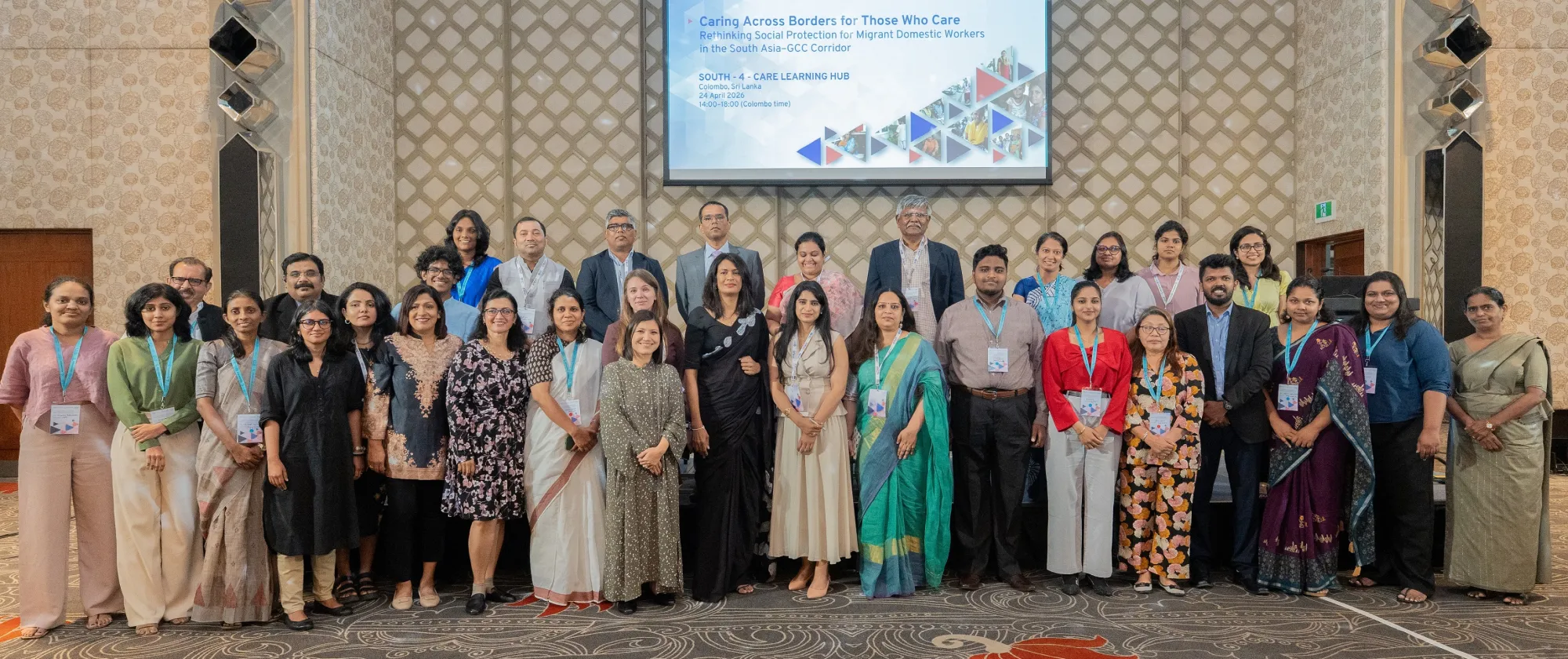
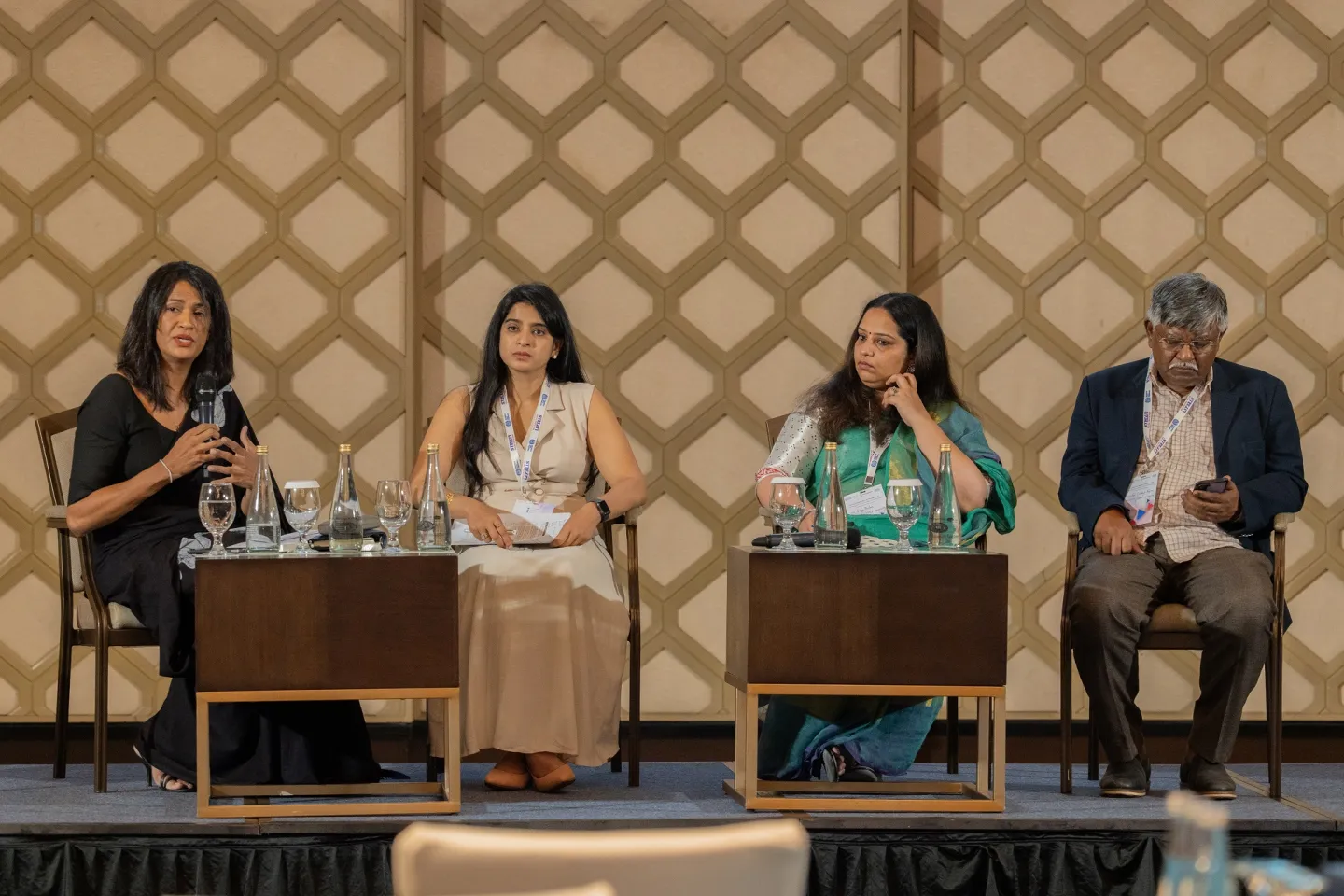
COLOMBO (ILO News) – A research side event organized by the ILO STREAM Programme (Extending Social Protection to Migrant Workers and their Families in the South Asia–Gulf Corridor) at the South-4-Care (S4C) Learning Hub explored “Caring across borders for those who care: Rethinking social protection for migrant domestic workers in the South Asia–GCC corridor” (24 April 2026). The event in Colombo brought together 60 researchers, policymakers, academics, civil society and development partners for the presentation of six new research papers. These examine the structural drivers of exclusion that leave migrant domestic workers without adequate social protection across one of the world’s most significant labour migration corridors and outline evidence-driven innovative pathways for the extension of coverage across the migration cycle. The discussions also underscored the critical role of continued research in informing and advancing this policy agenda.
Who cares for those who provide care? Gaps in social protection for migrant domestic workers.
Approximately 2.1 million migrant domestic workers work in GCC countries. The vast majority are women from South and Southeast Asia. In homes across the Gulf, they clean, cook and care for others. Their work keeps households running, sustains communities and, ultimately, powers economies. Care work is so essential that life simply cannot function without it. But the migrant women workers who perform much of this work remain undervalued and, all too often, invisible.
Migration can be a force for good – offering the chance of new opportunities, increased income, and autonomy for workers and their families. Yet, without adequate protection, crossing a border for work can come at enormous cost. “This topic could be not more relevant,” said Lisa-Tanita Greminger, Regional Advisor for Migration and Protection of the Swiss Agency for Development and Cooperation (SDC). “Migrant domestic workers sustain care systems across the world, yet too often they remain outside of the protection system themselves.”
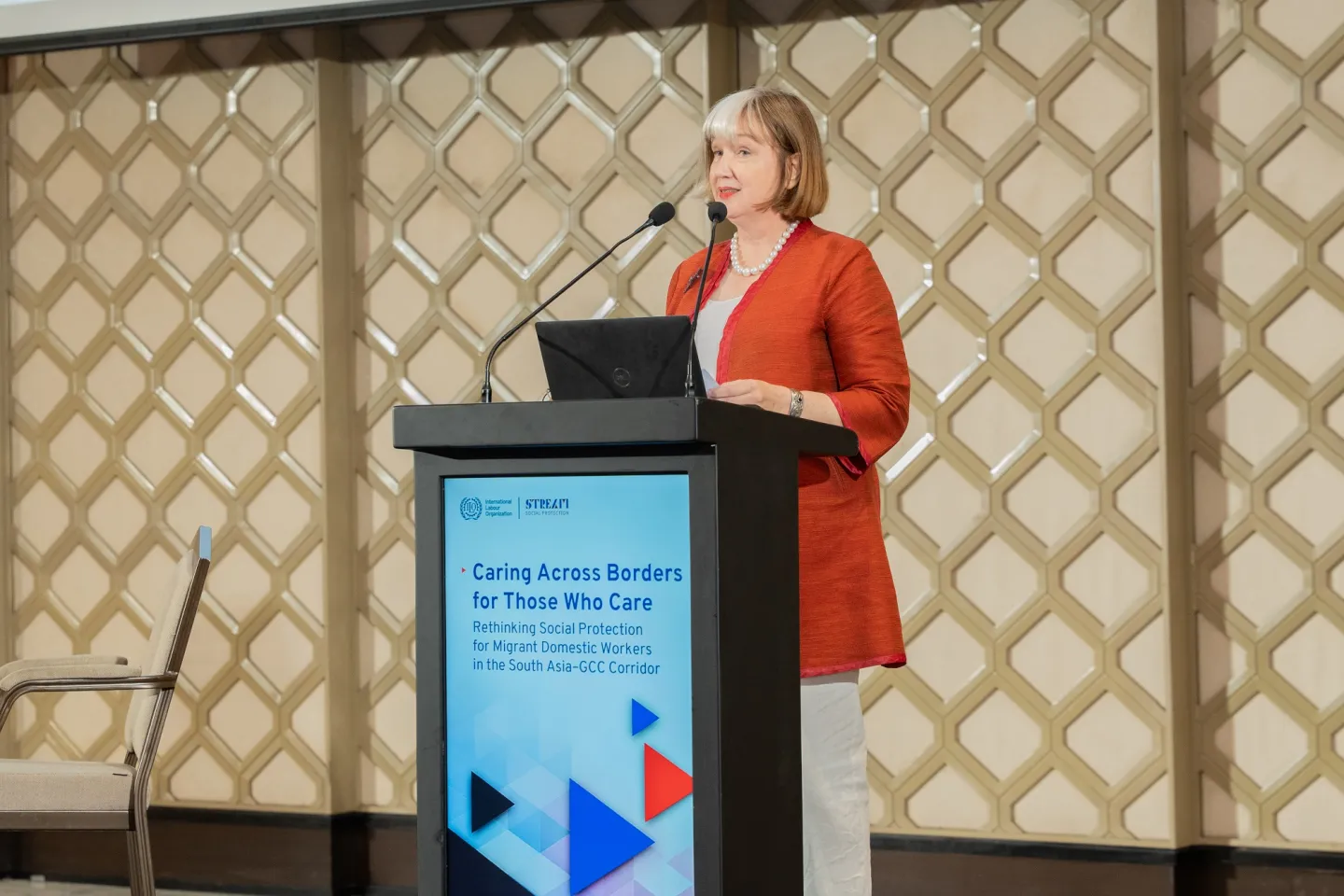
At every stage of the migration cycle, migrant domestic workers face interlinked and compounding challenges. Recruitment processes can involve high costs, limited information, and the potential for exploitation. Working inside private homes means limited visibility and protection – making domestic work a space where exploitation and abuse can go unseen and undetected. Many domestic migrant workers are not covered by labour laws, denied rest days and fair wages, and are dependent on their employers for income, housing and residency status. Under sponsorship systems such as Kafala, domestic workers’ visas are tied to their employers, limiting their freedom to leave abusive situations and cutting off access to justice. Even when migrant domestic workers return home, reintegration support and long-term protection tend to be limited. “Many women migrate for work while leaving behind their own children and families, often without adequate access to social protection or care services themselves,” highlighted Joni Simpson, Director of the ILO Country Office for Sri Lanka and the Maldives. This gives rise to what are increasingly recognized as transnational care chains – where the responsibility for care is shifted across borders, frequently without sufficient support at either end.
This is not accidental. It reflects deep structural inequalities in how domestic care work is understood and regulated. It is often treated as informal, private or outside standard labour frameworks. As a result, it is excluded from labour and social protection. Where social protection schemes do exist – whether in countries of origin, destination, or through bilateral arrangements – they are rarely designed with the realities of migrant domestic workers in mind. “For women in domestic work, whose employment relationships are often informal, tied to individual employers, and shaped by gendered power imbalances, this fragmentation in protection is especially acute,” said Joni Simpson. “Workers move across borders, and often across employers, but protection systems remain employer-liable or, at best, nationally-bound and poorly coordinated.”
This leads to the limited scope of protection, weak accessibility and interruptions in coverage, limited portability of benefits, and a real risk of workers being unprotected at each transition point – whether when changing employers, returning home, or moving between countries. Over time, these gaps accumulate into significant vulnerabilities. They also point to a broader challenge: there is a clear mismatch between how social protection systems are designed – around stable, formal and nationally-anchored employment – and the lived realities of migrant domestic workers – which are mobile, frequently irregular, deeply gendered, and cross multiple jurisdictional boundaries. Addressing this mismatch requires us to think differently.
This is especially vital as the demand for care work grows. By 2030, an estimated 2 billion people worldwide will require care. “The demand for care and labour shortages will continue to foster dependency on migrant domestic work to fill critical care gaps in many countries,” said Luca Pellerano, ILO Senior Technical Advisor on Social Protection and STREAM Programme Manager. “This will continue to shape the face of labour migration in the Gulf and South Asia for many years to come.” Encouraging developments are afoot across countries in the Gulf. These include the development of separate legislation for domestic work in countries such as Saudi Arabia, Kuwait, Qatar and the United Arab Emirates (UAE). Oman’s pioneering Social Protection Law has integrated domestic workers into national insurance for sickness and injury, moving the country towards universal coverage. Yet protections for domestic workers tend to be more limited in scope than provisions for other categories of workers. “There is momentum for reform in the Gulf, and these reforms can be transformational,” said Luca Pellerano. “But it is also important to recognize that this space still excludes domestic workers. They face barriers to exercising their social protection rights due to a number of intersecting factors – from limited awareness to a lack of agency and capacity to navigate systems, as well as the intersectional challenges they face on the grounds of gender and migration status,” said Luca Pellerano.
Thinking differently: Insights from research on protecting migrant domestic workers
The six papers presented at the ILO STREAM Programme’s S4C research side event are united by a common analytical purpose: to make visible the structural mechanisms through which migrant domestic workers – predominantly women from Bangladesh, India, Nepal and Sri Lanka – are systematically left without adequate social protection as they move across the South Asia-GCC migration corridor, and to explore options for progressive reform and priorities for further research. The research papers converge on two interlocking structural arguments: first, that domestic work has been framed as an “exceptional” labour regime, and second, that coordination failures persist between social protection systems.
The three papers presented during the event’s first session demonstrate how the first argument plays out across the migration cycle. These are:
- “Invisible costs in care chains: Social reproduction, migration policy failures and the lived realities of South Asian domestic migrant workers”, by Bhoomika Choudhury, lawyer, independent researcher and consultant, and Yukti Choudhary, business and human rights lawyer and consultant;
- “Gendered mobilities, care chains, and social protection gaps in origin countries: Kerala's migrant domestic workers in the GCC”, by Professor S. Irudaya Rajan, Chair of the International Institute for Migration and Development, and Dr Divya Balan, Assistant Professor of International Studies at FLAME University; and
- “Bangladeshi women domestic workers in the GCC: Accessing gender-responsive social protection and care across the migration lifecycle”, by Naheed Natasha Mansur, independent scholar and adjunct faculty member at Carleton University, Canada.
As the papers demonstrate, care and domestic work have been legally classified as private, informal, or categorically distinct from standard employment in both origin and destination countries. This is not an incidental feature of how these systems developed; it is the primary mechanism through which workers and their families have been, and continue to be, excluded from the rights and protections that other workers take for granted. The sponsorship system in the GCC, the near-universal exclusion of domestic workers from labour law coverage, and the persistent framing of care work as a familial or reproductive activity rather than productive labour, are all expressions of this exceptionalism.
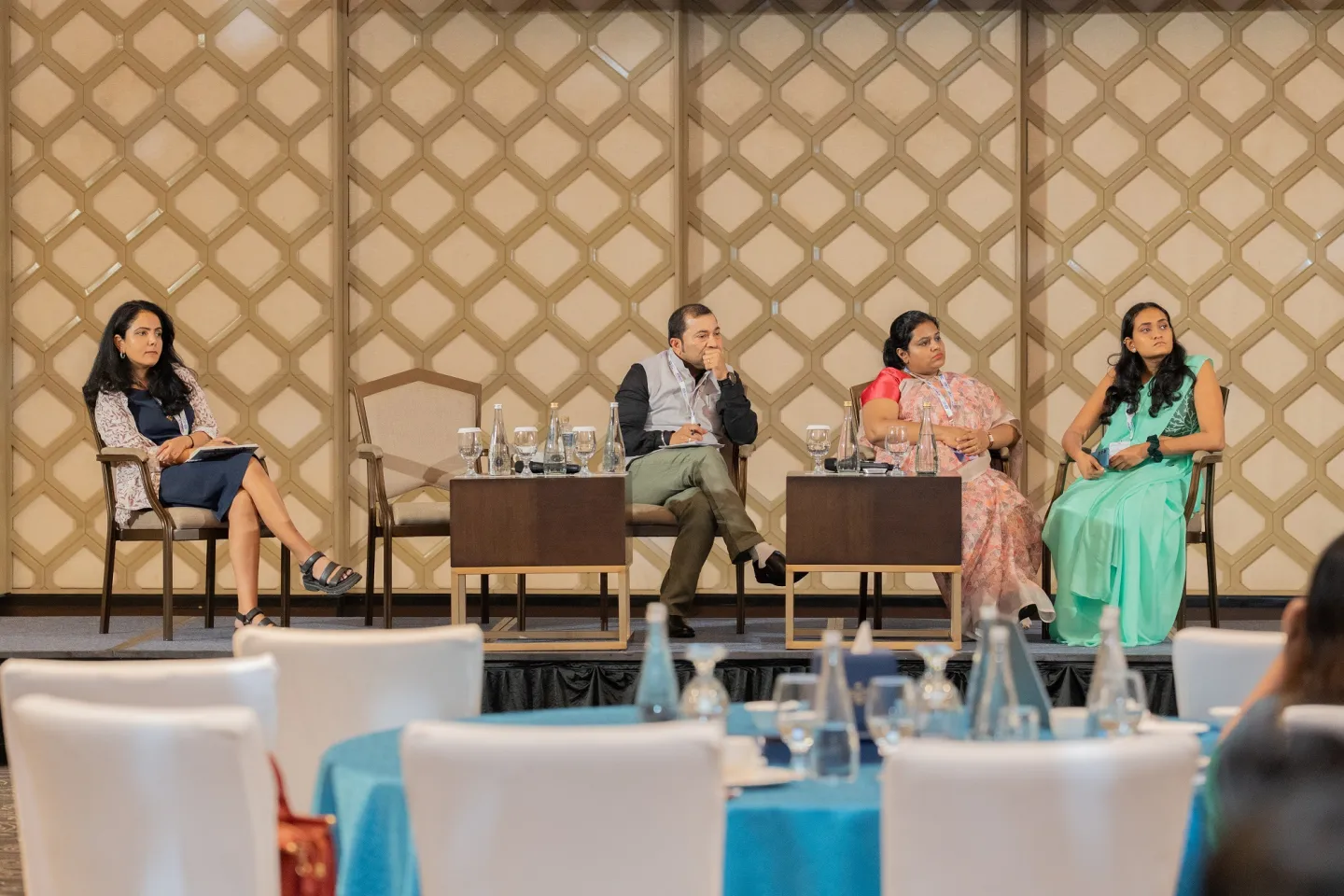
The event’s second session focused on coordination gaps between social protection systems and how institutional fragmentation translates into compounded vulnerability for migrant domestic workers, with the presentation of three papers:
- “Integrating domestic workers into Bahrain's end-of-service social insurance reform”, by Fatema Alhashemi, independent researcher;
- “An investigation into gaps of social protection for Sri Lankan domestic workers and their families: Focus on health services”, by independent researchers Janethree Kulawardhana and Dr Oshadhi Karunasekara; and
- “Governing the gig: Nepali domestic workers, labour markets, and the rise of care-based services in the UAE”, by Mrutuyanjaya Sahu, Assistant Professor and Head of the Department of Humanities and Social Sciences at Birla Institute of Technology and Science, and Francis Solomantine, Programme Coordinator of the Middle East Centre for Training and Development.
The papers reveal that, even where formal protections exist – whether in migrant welfare or social security schemes within countries of origin, or via social protection or insurance mechanisms in destination countries – they are structurally undermined by the lack of or weak coordination between systems on either side of the corridor. Workers move; protection systems do not. The result is exposure at every point of the migration cycle: upon departure, during employment, on return, and across the long arc of a working life that may span multiple contracts and multiple countries. Institutional fragmentation translates into compounded vulnerabilities for migrant domestic workers.
The insights from the six papers presented at the side event reframe the policy challenge before us. “The problem is not the absence of social protection or the absence of political will,” said Dr Bilesha Weeraratne, Research Fellow and Head of Migration and Urbanization Policy Research at the Institute of Policy Studies of Sri Lanka. Though both matter, “the problem is that there is a misalignment between the social protection offered and what is required by the migrant workers in the care sector.” Building on this reflection, Professor Jeevan Sharma, Chair of South Asia and International Development at the University of Edinburgh, emphasized that the issue is not only one of coverage, but also of how social protection systems are designed and for whom. “The challenge is not only to expand social protection coverage, but to realign systems with the realities of migrant workers’ lives and labour trajectories,” he noted. “Where formal systems fail to protect, workers are forced to rely on informal networks, families and personal sacrifices to fill the gap, often transferring the cost of care and protection onto those least able to bear it.”
Moving towards solutions: How do we ensure that those who provide care across borders are themselves protected and cared for?
Beyond articulating challenges, the side event explored practical solutions to bridge the gap between how social protection systems are designed and the needs of migrant domestic workers. “Today's discussion goes beyond pure diagnosis,” said Lisa-Tanita Greminger of the Swiss Agency for Development and Cooperation. “It asks what can be done: how can governments, social partners, researchers and development actors work together and make protection across borders more real for care workers?”
Participants emphasized that this requires a shift towards social protection systems that are rights-based, gender-responsive, and coherent across the entire migration cycle. This includes strengthening coordination both within and between countries of origin and destination; advancing the portability of benefits through stronger bilateral labour agreements and, over time, more coordinated corridor-level approaches; and ensuring that reforms address not only destination contexts but also conditions in countries of origin and upon return. It also calls for redesigning systems to reflect the lived realities of migrant domestic workers, moving beyond fragmented, employer-mediated arrangements towards inclusive national systems anchored in labour rights and aligned with international standards, including ILO Conventions No. 189 and No. 102. Addressing the structural drivers of exclusion – such as power imbalances, limited agency and gendered inequalities – remains central, as does exploring the role of digitalization in strengthening migrant domestic workers’ access to social protection, their organization and voice.
At the same time, participants underscored that advancing this agenda requires a stronger and more strategic role for research within the labour migration domain. There is a need to deepen evidence on how social protection systems operate across borders in practice. This is vital to better understand the cumulative and long-term impacts of fragmented protection on migrant domestic workers and their families, and to identify operational entry points for coordination between systems. Research can play a critical role in informing policy choices, grounding reforms in lived realities, and ensuring that responses avoid unintended consequences. Strengthening the interface between research, policy and practice will be essential to move from fragmented initiatives towards coherent, evidence-based solutions.
Implementing these recommendations is vital for making labour migration a positive experience for migrant domestic workers, their families, communities, and countries of origin and destination – creating opportunities for income, autonomy, upskilling, and the professionalization of care. This is the only way also to overcome negative experiences of domestic workers’ migration, ranging from protection risks like trafficking to exploitation in recruitment processes, the confiscation of documents, poor working conditions, and stressful separation from friends and family. “Social protection is a key lever to transition domestic work from a space of exploitation to a space of opportunity,” said Luca Pellerano, “Social protection has a fundamental role to play in ensuring that migration doesn't turn into an extractive system that depletes human capital and social resources, but rather is one that protects and enhances such resources at origin and destination.”
This is a key focus for the ILO STREAM Programme, which supports South Asian and GCC countries in advancing inclusive and sustainable social protection systems for migrant workers, including those in domestic work, and in strengthening cooperation and partnerships across borders. “By working together, across research, policy and practice, we can move closer to systems that truly recognize, value, and protect those who care across borders,” said Karina Levina, STREAM Technical Officer for Social Protection and Migration in South Asia.
About the ILO STREAM programme
STREAM is a multi-country, multi-partner initiative designed to expand inclusive, gender-responsive and rights-based social protection coverage for migrant workers and their families across the South Asia-GCC migration corridor. Implemented by the ILO in partnership and with funding from the Swiss Agency for Development and Cooperation, the Foreign Policy Instrument of the European Union, and the Ford Foundation, STREAM aims to create a world where every migrant worker – no matter their gender, status, or sector – can access the social protection they deserve to live and work in dignity.
Related content

Project
STREAM - Extending Social Protection to migrant workers and their families in the South Asia-Gulf Corridor
South-4-Care Learning Hub: Advancing Decent Work in the Care Economy in South Asia
Relevant projects
Project
STREAM - Extending Social Protection to migrant workers and their families in the South Asia-Gulf Corridor