

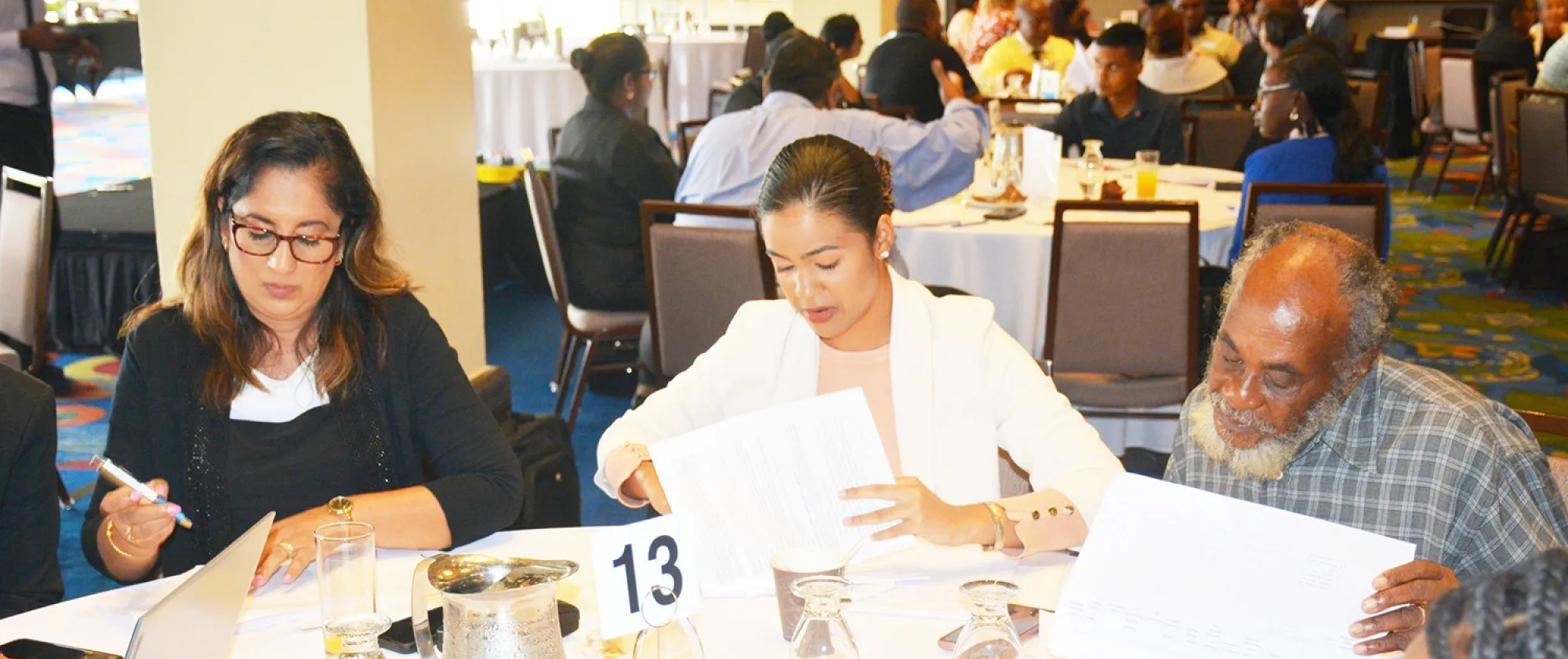
Representatives from 14 sectors across Trinidad gather to develop Hazardous Forms of Child Labour and Light Work Lists
Event organized by Ministry of Labour in collaboration with ILO Caribbean.
8 May 2024
Multi-partite stakeholders in Trinidad recently joined the Ministry of Labour for a national consultation aimed at determining hazardous activities that children should not participate in, and at clarifying what is light work for children.
During the session (8 May 2024), representatives from 14 sectors including Government, the private sector, non-governmental organizations, workers’ and employers’ organizations reviewed types of occupations and duties in each sector and assessed risk levels and provided insights for the development of light and hazardous work lists.
“As stewards of labour rights and social justice, it is incumbent upon us to take decisive action to protect our most vulnerable population – our children. The development of light and hazardous work lists demands a comprehensive approach that draws upon the collective wisdom, expertise, and experiences of all stakeholders present in this room,” said the Honourable Stephen Mc Clashie, Minister of Labour, during his opening remarks.
The Government committed to participants, that once the lists are finalized and made official, they will be available for use by employers to help identify appropriate work activities for persons under the age of 18 and ensure that they have access to healthy and safe working conditions. The lists are also expected to inform more effective policies and practices that target the worst forms of child labour across the country.
“These lists will categorize light and hazardous work, as currently, it is difficult for authorities to establish clear guidelines for what constitutes permissible or non-permissible work for children. This ambiguity can lead to inconsistencies in enforcement and interpretation of child labour laws,” said Ms Natalie Willis, Permanent Secretary at the Ministry of Labour.
The event was organized by the Ministry and featured technical contributions from Ms Resel Melville, ILO Caribbean Programme Officer for the Regional Initiative Latin America and the Caribbean Free of Child Labour. During her speech, Ms Melville emphasized why international labour standards are fundamental for the prevention and elimination of child labour.
"ILO Conventions and Recommendations that we discuss today including C138 on Minimum Age and C182 on the Worst Forms of Child Labour are integral to an international legal framework on human rights and children’s rights. These labour standards provide vital guidance that can be used to distinguish work that a child can do from unacceptable child labour that deprives them of their education and childhood,” explained Ms. Melville.
As a follow-up to the May 2024 workshop in Trinidad, the Committee will soon convene another consultation in Tobago where stakeholders from across the island’s sectors will contribute to developing these lists.
For more information about Trinidad and Tobago’s efforts to prevent and end child labour, please visit the Ministry of Labour website.