

EU-funded ILO PROSPER Project initiative
PROSPER Project advances stakeholder engagement and capacity building
Through workshops, stakeholder meetings, and training sessions in September 2025, the EU-funded ILO PROSPER Project reinforced community partnerships and local economic development in Belize.
30 September 2025
BELMOPAN, Belize (ILO News) - In September 2025, the EU-funded ILO PROSPER Project advanced its mission of strengthening community partnerships and building economic resilience in Belize through a series of collaborative activities that spanned multiple districts and involved diverse stakeholders.
On 13 September in San Ignacio Town, Ms. Tanisha Chavarria, Project Coordinator, and Ms. Kylah Ciego, Project Implementation and Monitoring Officer, met with the National Garifuna Council (NGC) Executive Committee to discuss the PROSPER Project. The meeting was marked by open dialogue and mutual interest, with the Council expressing strong support for the initiative and affirming their willingness to collaborate closely during the implementation phase. This commitment from the NGC represented a significant milestone, ensuring that cultural perspectives and community ownership will remain central to PROSPER’s activities moving forward.
The team continued its outreach in Punta Gorda Town on 18–19 September with support from the United Nations Department of Safety and Security (UNDSS). These sensitization meetings with key community stakeholders, including the Mayor, Police Department, Fire Department, and Ministry of Health provided an important opportunity to introduce the Punta Gorda office staff, share information about PROSPER’s objectives, and secure local support for coordination efforts. The warm reception and enthusiasm from these agencies reinforced the importance of collaboration and locally grounded action to ensure the Project’s work addresses community priorities effectively.
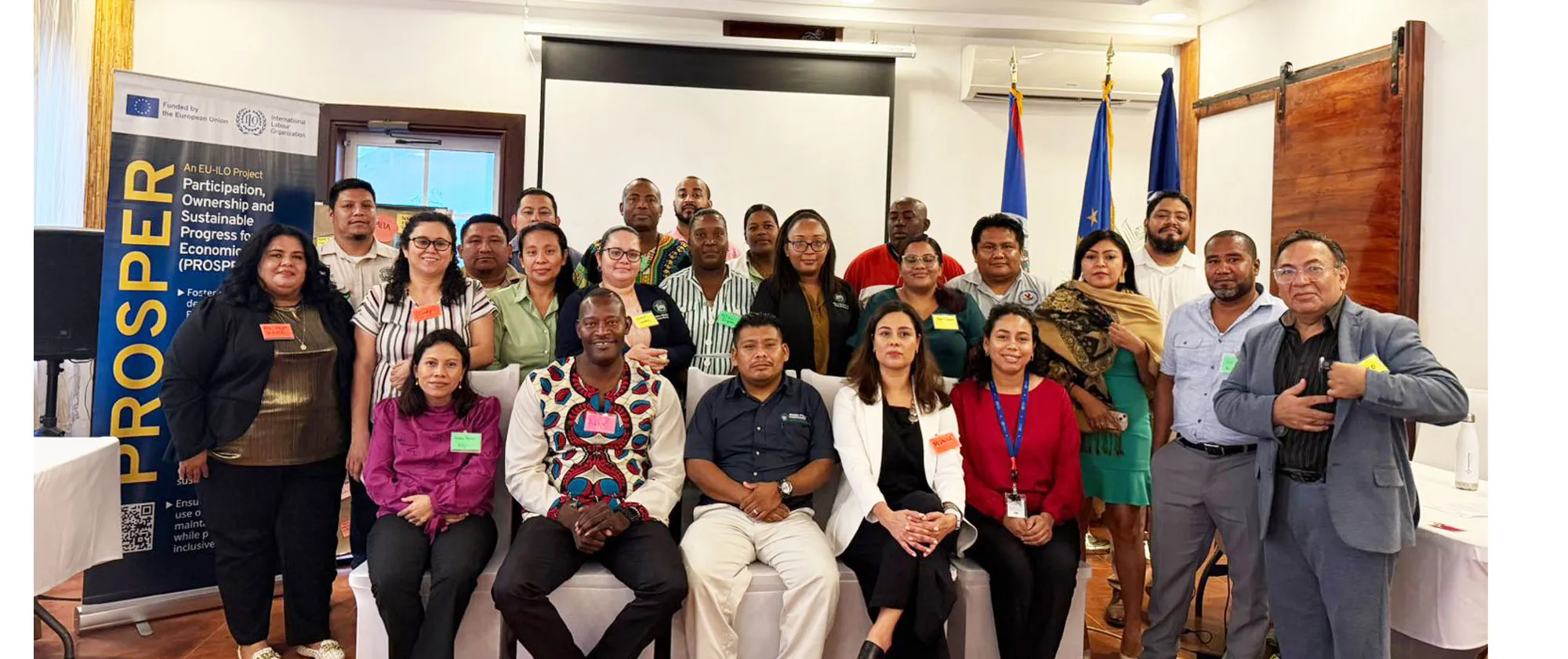
On 24 September, the Project convened a Local Economic Development (LED) System Workshop in Belmopan City. This Workshop was a crucial step in PROSPER’s institutional ecosystem analysis, designed to identify how policies can better support community-led Local Economic Development initiatives. Bringing together national and intermediate stakeholders, the Workshop focused on evaluating Belize’s institutional environment for LED. Facilitated by Mesopartner, participants engaged in participatory mapping exercises and group discussions to identify gaps, opportunities, and shared priorities for enhancing local economic development in Stann Creek and Toledo Districts.
Tanisha Chavarria, National Project Coordinator
This Workshop sits at the heart of the PROSPER Project's theory of change. While we are simultaneously building capacity at the grassroots level in the Stann Creek and Toledo District, today we focus on the institutional ecosystem that can either enable or constrain those local efforts. Your contributions today will help us understand how national and intermediate level policies, programmes, and institutions can better support LED initiatives across Belize.
Building on the momentum from the Workshop, the Project hosted a six-day Training of Trainers (ToT) on Local Economic Development in Placencia from 25–30 September. This intensive training introduced participants to the Participatory Appraisal of Competitive Advantage (PACA®) methodology and complementary tools, empowering stakeholders from Toledo and Stann Creek to diagnose local economies, lead participatory planning, and integrate sustainability, decent work, and gender-sensitive practices into LED initiatives.
Training participant
This training has been impactful in highlighting that communities already have the resources but with the knowledge of PACA, stakeholders are able to bring the competitive advantage that communities have to the forefront, and through collaboration determine ways for the promotion of business development to increase income and employment opportunities.”
Collectively, these activities demonstrate the EU-funded ILO PROSPER Project’s commitment to connecting communities, institutions, and local actors to build resilience and foster inclusive, sustainable development across Belize.