


Skill development
From project to progress: Weaving skills and partnerships for the future of Viet Nam’s Textile and Garment
Viet Nam’s textile and garment industry is stepping into a new chapter, working toward sustainability goals through strengthened collaboration and skills development.
4 July 2025
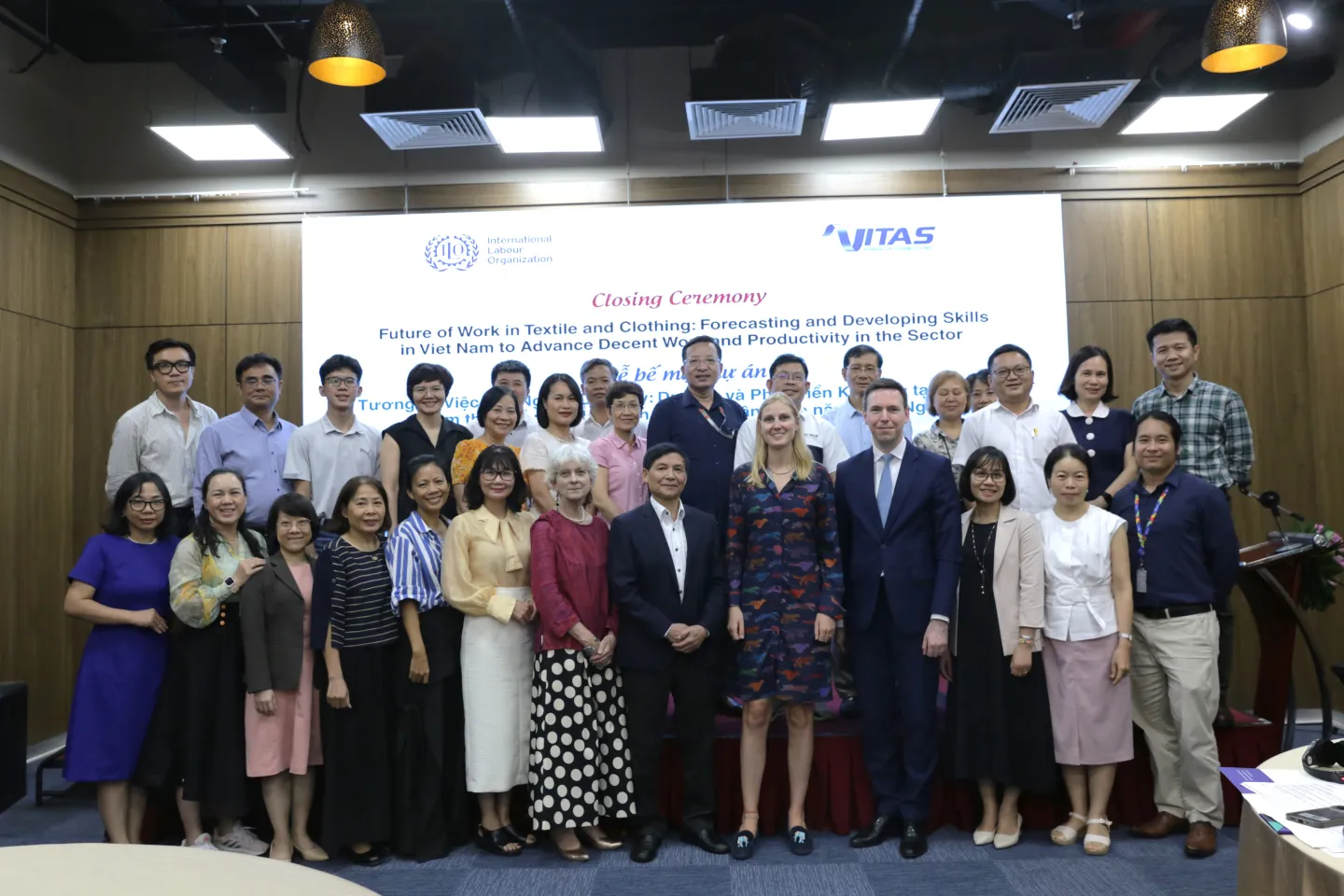
HA NOI, ILO News – Over 40 stakeholders gathered in Ha Noi for the Validation Meeting and Closing Ceremony of the project “Future of Work in Textile and Clothing: Forecasting and Developing Skills in Viet Nam to Advance Decent Work and Productivity in the Sector”, funded by the Governments of the Netherlands and Japan. Jointly organized by the International Labour Organization (ILO) and the Viet Nam Textile and Apparel Association (VITAS), the event marked a dual purpose of validating a new training handbook and celebrating the project’s achievements in promoting a sustainable, inclusive, and skills-driven textile and garment industry.
Advancing Skills for Sustainability
The heart of the event was the technical session dedicated to reviewing a training handbook aimed at bridging the gap between current education programmes and the evolving demands of the textile and garment sector - particularly in sustainable production.
Developed under the established working group on strengthening industry-training partnerships led by VITAS with ILO support, the handbook equips educators and training providers with practical tools to tools to better prepare students for the labour market while supporting enterprises in their sustainability efforts.
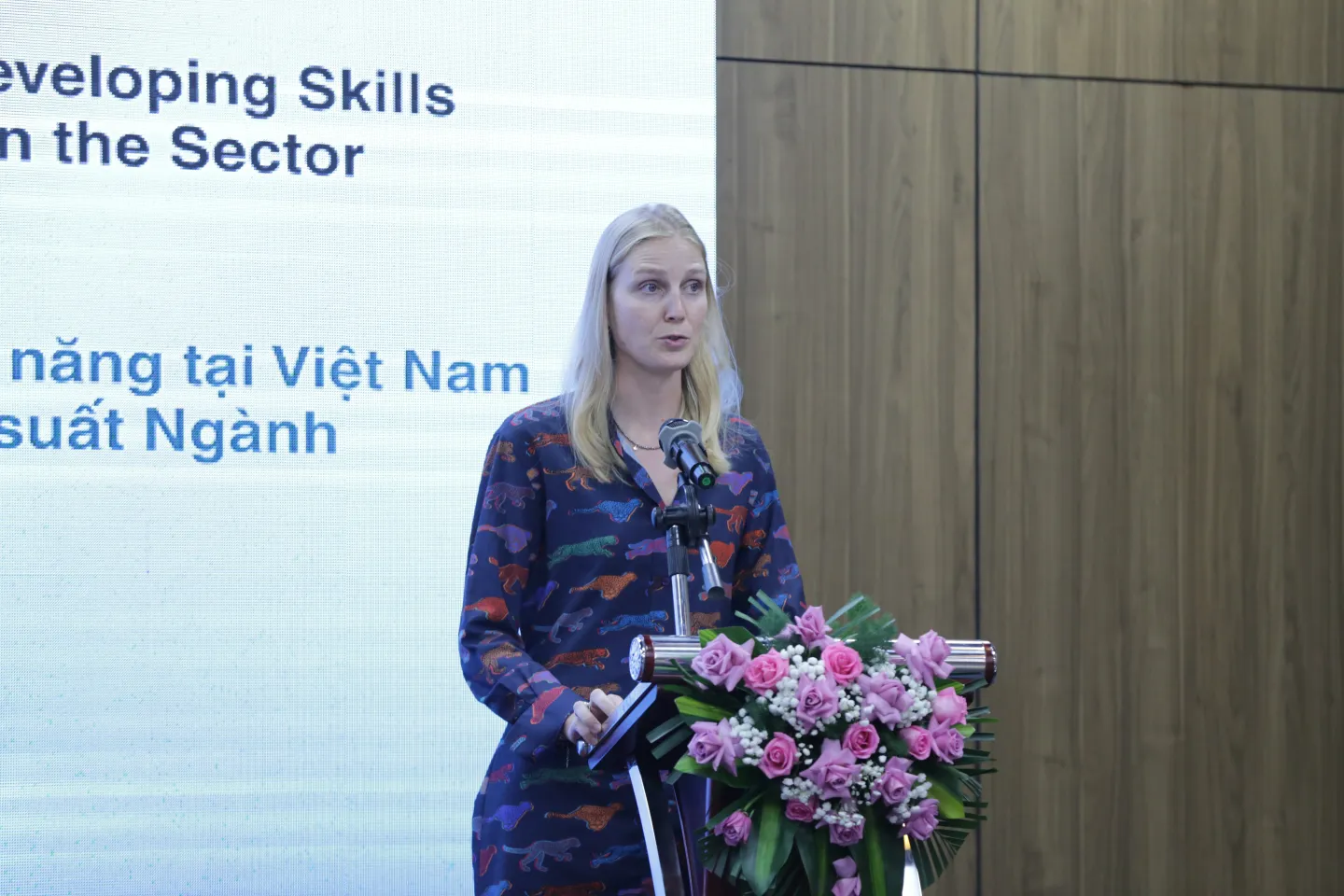
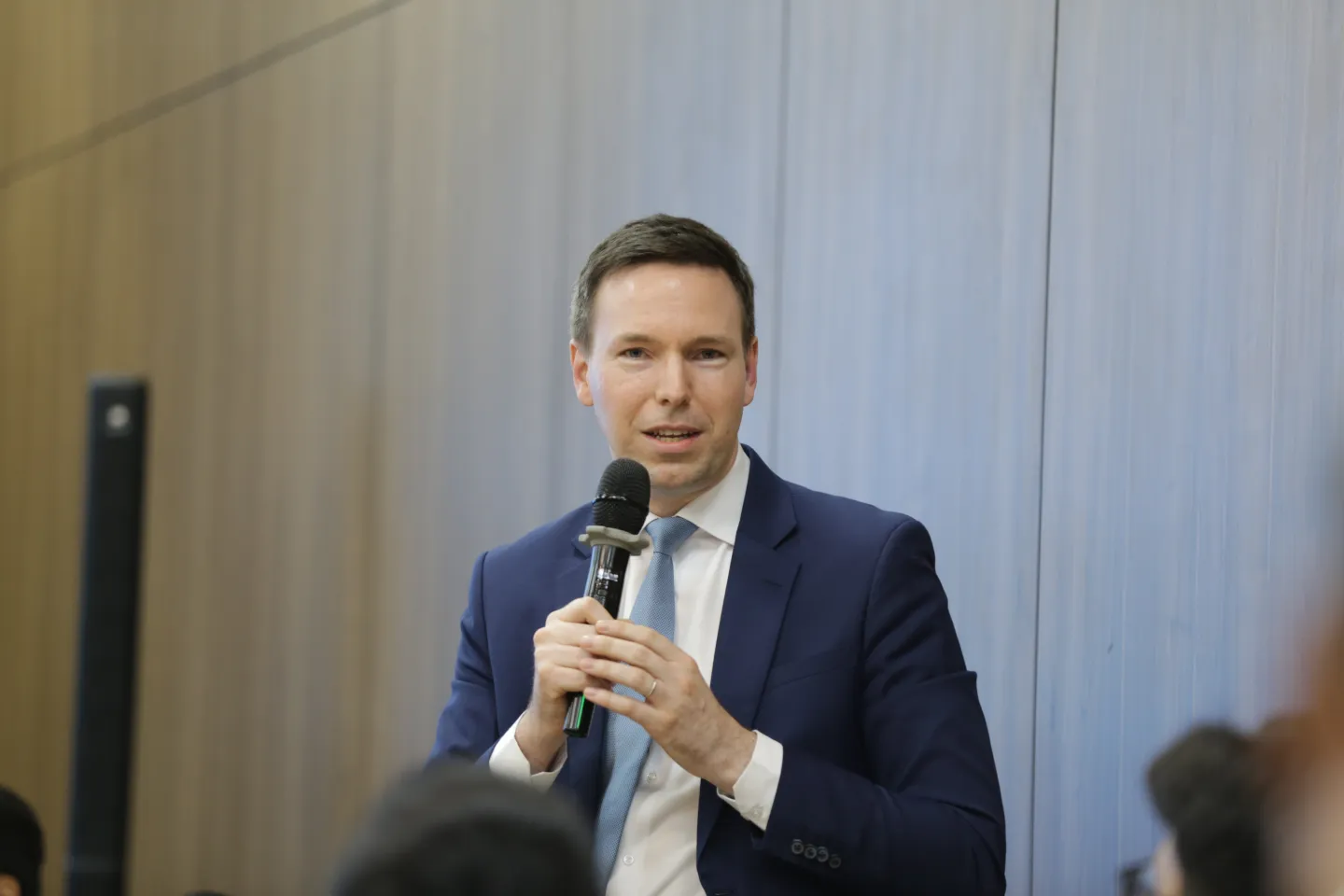
“Today’s meeting is more than a review. It’s about shaping a shared vision,” said Felix Weidenkaff, Employment and Labour Market Policy Specialist at the ILO Country Office for Viet Nam. “Stakeholders’ feedback ensures this handbook remains practical, inclusive, and aligned with sector needs.”
Truong Van Cam, Vice Chairman and Secretary General of VITAS, stressed the handbook’s dual value: “This handbook offers an important foundation for supporting address current skills gaps in sustainable production in the sector. Beyond this, building on the strong evidence generated by the project [*] in close collaboration with national partners and sector stakeholders, the working group will continue to serve as a crucial platform for dialogue, bringing together enterprises and training institutions to sustain the progress and jointly tackle new challenges in the textile and garment sector.”
Participants from government, training institutions, employers’ organizations, and development partners contributed valuable insights, further enhancing the handbook’s relevance and quality. The handbook will continue to evolve, serving as a “living” resource that responds to the changing needs of both education providers and businesses.
Celebrating achievements while inspiring future actions
Beyond its technical outcomes, the project has played an important role in fostering long-term partnerships and driving sustainable development in Viet Nam’s textile and garment industry.
Fleur Gribnau, First Secretary of Economic Affairs at the Dutch Embassy, highlighted the broader impact: “In 2024, the Netherlands emerged as Viet Nam’s largest trading partner within the EU, with textile and garment exports contributing over 10 per cent to the country’s total revenue from the sector. As the industry evolves towards advanced technologies and sustainability, investing in skills is not just an investment in the workforce, it’s an investment in the sector’s future. Special thanks to the ILO, tripartite partners, VITAS, training institutions, businesses, and development partners for making this project a success. Let’s keep the momentum going.”
Reinforcing this message, Pham Thu Lan, Trade Union national expert, observed the practical impact on workers and businesses: “This initiative has shown us what skills we lack, what we need, and how to bridge those gaps. I hope the ILO, the Embassies and national partners will continue to support Viet Nam’s sustainable transformation, ensuring our digital and green transitions are both equitable and effective.”
The project’s lessons also hold potential beyond the textile and garment sector. Nguyen Van Cuong, from the Ministry of Education and Training (MOET), stressed the broader applicability of the initiative: “I believe the outcomes achieved in this project can be adapted for other industries, especially those emerging sectors that require skilled workers. The Government of Viet Nam is also advancing policies and programmes to enhance vocational training and strengthen the workforce for future economic needs.”
At the institutional level, Luu Hoang, Head of the Textile and Garment Faculty at Hung Yen University of Technology and Education, remarked: “Thanks to the project, we gained valuable insights into the skills needed by enterprises. Based on its findings, we were able to revise our curriculum to better align with industry needs.”
A Collaborative Path Forward
Ingrid Christensen, ILO Viet Nam Country Director, emphasized the importance of continued collaboration to strengthen partnerships and adapting to new challenges,
“Looking ahead, lifelong learning, innovation, and adaptability remain essential. The working group led by VITAS will continue to play a key role in coordinating and advancing skills development. The ILO stands ready to support this ongoing journey toward a more inclusive and resilient world of work.”
Building on the strong foundation laid by this initiative, the ILO and its national partners reaffirmed their commitment to fostering a competitive, inclusive, and future-ready textile and garment industry in Viet Nam. Stakeholders agreed to continue promoting cooperation, decent work, and a skilled workforce, ensuring that the sector’s growth supports both economic progress and social development.
[*] particularly through the research report Skills for Trade and Economic Diversification - Analysis of the textile and garment industry in Viet Nam, its companion strategy document Towards a sector skills strategy for Viet Nam’s textile and garment industry: Priority skills needs, actions, and recommendations for education and training system, and the related brief.



Related content
Country portal
Viet Nam

Skills development
Future of Work in Textile and Clothing: Forecasting and Developing Skills in Viet Nam to Advance Decent Work and Productivity in the Sector