

Social protection
A preliminary study on the potential extension of Convention No. 102 ratification in Peru was presented
In the context of the Global campaign to promote the ratification of Convention No. 102, the International Labour Organization (ILO)’s Universal Social Protection Department, together with the ILO’s office for the Andean Countries, presented the preliminary report “Analysis of Peruvian social security legislation in the light of the Social Security (Minimum Standards) Convention, 1952 (No. 102)”.
12 July 2024
Lima ― Convention No. 102 is the first and, to date, only international treaty that envisages social security in a systemic manner and establishes both core principles and minimum protection benchmarks for the nine contingencies that constitute a comprehensive social security system.
During its ratification in 1961, Peru accepted five out of the nine branches (medical care, illness, old age, invalidity, and maternity benefits), availing itself of the temporary exceptions regarding mainly the number of persons covered.
In this context, the preliminary report analyses the national legislation and practice with the objective of informing the State about the progress on the possibility to renounce to these temporary exceptions; as well as to present the situation on the non-accepted branches of Convention No. 102, which are covered by national legislation and practice (employment injury, family, and survivors’ benefits), so that the State can take an informed decision on the extension of its initial ratification.
The report aims to present the situation of the non-accepted branches of Convention No. 102 that are covered by the national legislation and practice so that the State can take an informed decision on whether extending its initial ratification.
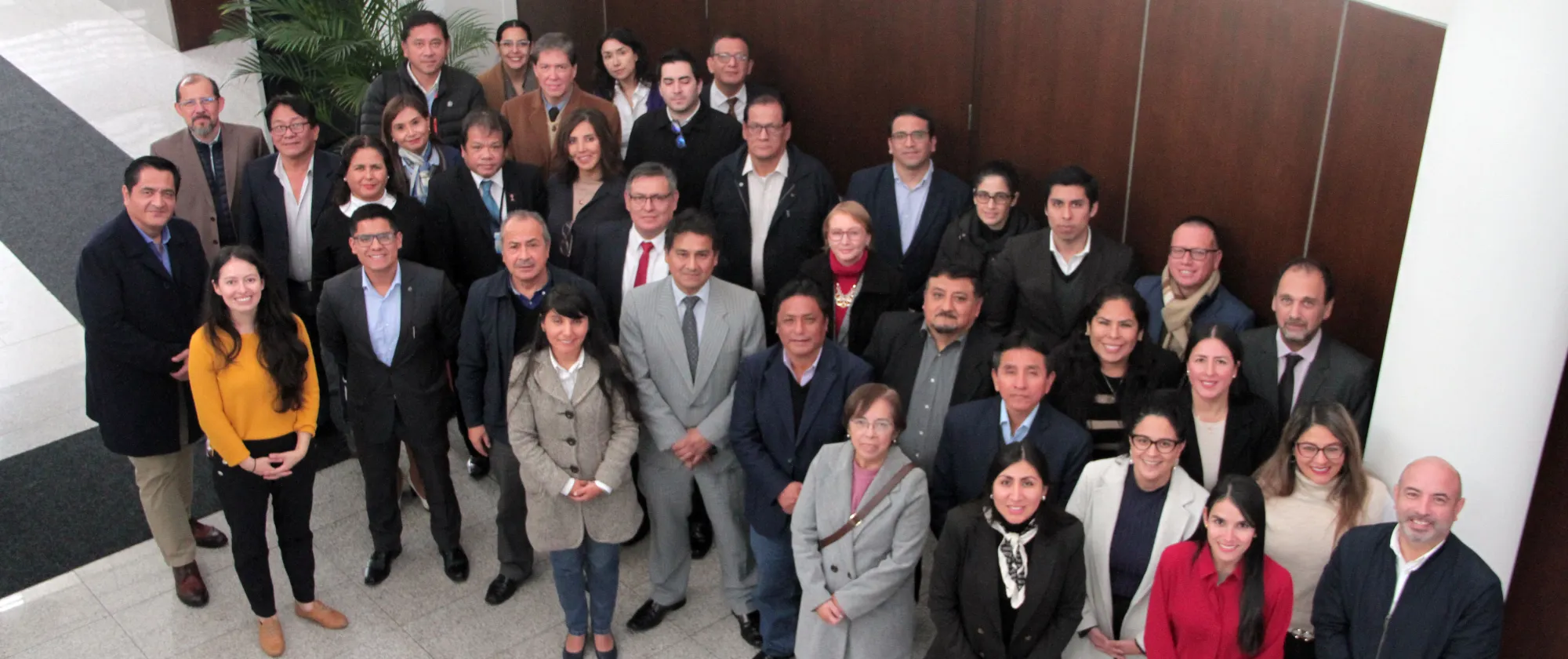
In this context, the ILO’s Universal Social Protection department and the ILO’s office for the Andean Countries carried out bilateral capacity-building workshops on Convention No. 102 and technical sessions to present the report’s preliminary results with representatives of the tripartite constituents.
Government, workers, and employers highlighted the relevance of Convention No. 102 as a key instrument to guide reforms that may lead to the establishment of comprehensive, solid, and sustainable social security systems.
These working sessions finalized with a tripartite workshop for joint dialogue and work, during which the constituents reviewed in detail the results of the preliminary report and identified points of convergence in order to advance on a potential acceptance of the employment injury, family, and survivors’ branches, as well as a possible renunciation of the temporary exemptions by Peru.
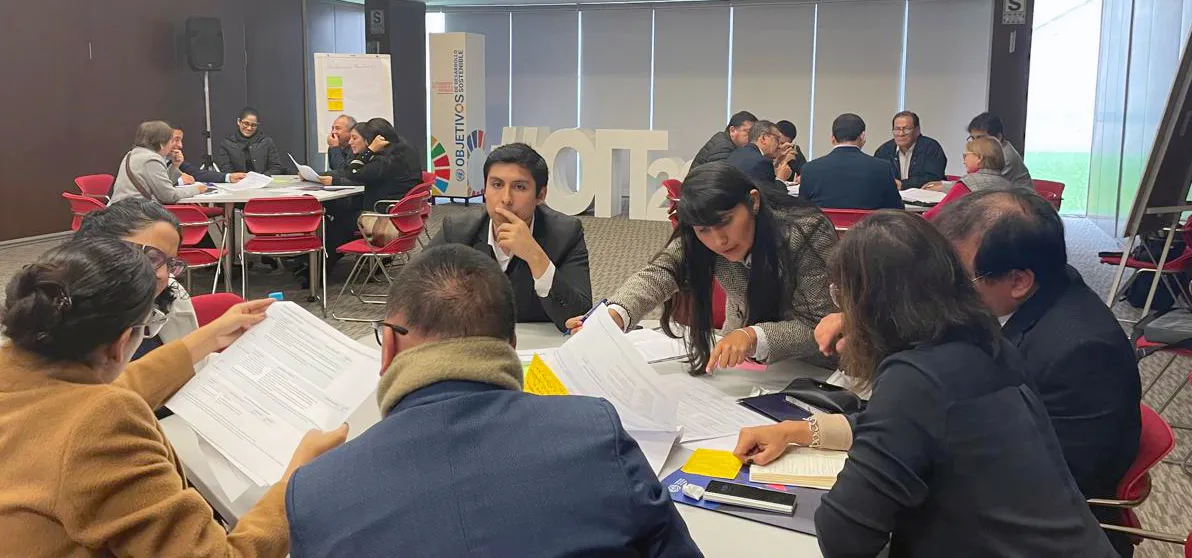
The sessions were attended by representatives of the Ministry of Labour and Employment Promotion (MTPE), the Ministry of the Economy and Finance (MEF), the Ministry of Social Development and Inclusion (MIDIS), the Superintendency of Health (SUSALUD), the Insurance Standardization Office (ONP), EsSalud, the Autonomous Workers’ Confederation of Peru (CATP), the Single Confederation of Workers of Peru (CUT), the General Confederation of Workers of Peru (CGTP), the Administrators Pension Fund Association (AAFP), the Insurance Companies Association of Peru (APESEG), the National Confederation of Private Business Institutions (CONFIEP), and the Institutional Providers of Health Services Association of Peru (APEPS).
In addition to reviewing the preliminary report, these sessions demonstrated the importance of social dialogue among the tripartite constituents, which provide guidance to the processes of improving social security systems, which should be based on agreements between the relevant national stakeholders.
The tripartite constituents highlighted the continued relevance and value of Convention No. 102 as a key instrument to guide reforms that may lead to the establishment of comprehensive, solid, and sustainable social security systems.
Related content

Global Ratification Campaign on Convention No. 102
Social protection
A tripartite revision of the preliminary study regarding social protection floors in Colombia was carried out