Forced labour
Only 1.3% of employers registered contracts for domestic workers throughout the country
The law that defines the labor status of domestic workers, and recognizes their rights and benefits, has been in force for four years, but there are still obstacles to its enforcement. These women are exposed to arbitrary dismissals, salary cuts and even psychological or sexual aggression. They are mainly migrants from the provinces who are concentrated in Lima and do not have documents that can prove a labor relationship in case of possible abuse.
30 July 2024
This report was produced by Kevin Huamani as part of the 2nd edition of the practical workshop 'Reporting on Forced Labour and Other Forms of Slavery', organized by the ILO through the BRIDGE Project in Peru. The report was published on Wayka platform. The ILO was not involved in the creation, development, fact-checking, or evaluation of this journalistic piece. The opinions, conclusions, and statements expressed are the sole responsibility of the authors and do not necessarily reflect the views, positions, or policies of the ILO.
Yadhira is a young worker from the province of Abancay, in Apurimac. She is one of the many migrants who come to Lima from the provinces in search of a better job opportunity. In 2015, she entered to work in a house in La Molina, under the modality "bed inside", now called "with residence", and which implies staying in the employer's house 24 hours a day. Her working day was from Monday to Saturday, from 7 a.m. to 9 p.m., and she was forbidden to serve herself the same food she prepared for the owners of the home. Her first salary was S/1,200, in theory, because the employment agency that contacted her with the family discounted her S/480 for finding her the job.
Today, this charge is illegal. Law No. 31047, Law of Domestic Workers, approved in October 2020, prohibits in Article 14 the economic harm to workers and furthermore prevents the intermediation of domestic workers' agencies or any labor outsourcing.
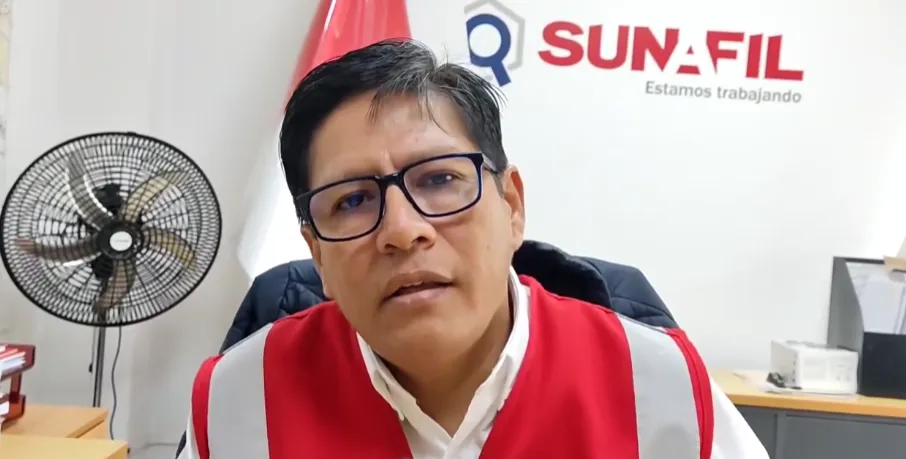
"The law prohibits canceling any type of stipend in favor of these entities that recruit personnel (domestic workers) who perform these tasks. On the contrary, the same norm warns that, if this happens, we should denounce them", explains Hernán Murgas Solórzano, Lima regional intendant of the National Superintendence of Labor Inspection (Sunafil).
Murgas says she has heard of agencies that claim not to be such but in practice function as such: they recruit people, train them and wait for hiring requests in exchange for a future fee, which is equivalent to half or a full salary for the worker. "Domestic worker recruiters should not even charge for tests and medical examinations. If they want to make this charge, they should sign some kind of contract, a civil contract for example , which is not forbidden either, but it should state in that document what services the agency is going to provide," she added.
Law No. 31047 requires the signing of a contract between the employer and the employee where the terms of the service to be rendered and the corresponding social rights and benefits are guaranteed. A model of this document can be downloaded from the portal of the Ministry of Labor and then registered by the entity. The regulation establishes that the remuneration cannot be lower than the minimum wage and the calculation of overtime must follow the rules of the general labor regime of the private activity. Likewise, the employer is obliged to deliver a payment slip containing the amount of remuneration and the contributions and discounts applied.
They are also entitled to paid rest, holidays and vacations. Article 9 of the law states that female workers must receive a bonus for Independence Day and Christmas, equivalent to a monthly salary, and have access to social health insurance and the pension system.
In the case of hourly employees, benefits are due to those whose total working day divided by days worked averages no less than four hours a day. However, there is still a large gap between what should be given according to the law and what actually happens in society.
Yadhira, for example, is now a domestic worker on Saturdays and Sundays, and some holidays, as requested by her employers. "We have agreed (with the employer) from 7 a.m. to 7 p.m., but it's not like that. At 6 a.m. I'm already in the kitchen working, making breakfast, and at 10 p.m. I'm going into my room. I don't have another job and I can't stand it," explains the 33-year-old worker. The young woman sleeps at her employers' house because of the distance from her home, but staying here means that the owners interpret that she is at their disposal.
Yadhira says she does not know in depth what the law regulating the work she does says. "I've only heard something. It says there are vacations and so on. My boss tells me that I am not entitled to anything. I've been working with her for two years and I don't have any benefits. I don't have insurance, Christmas, July 28th or anything."
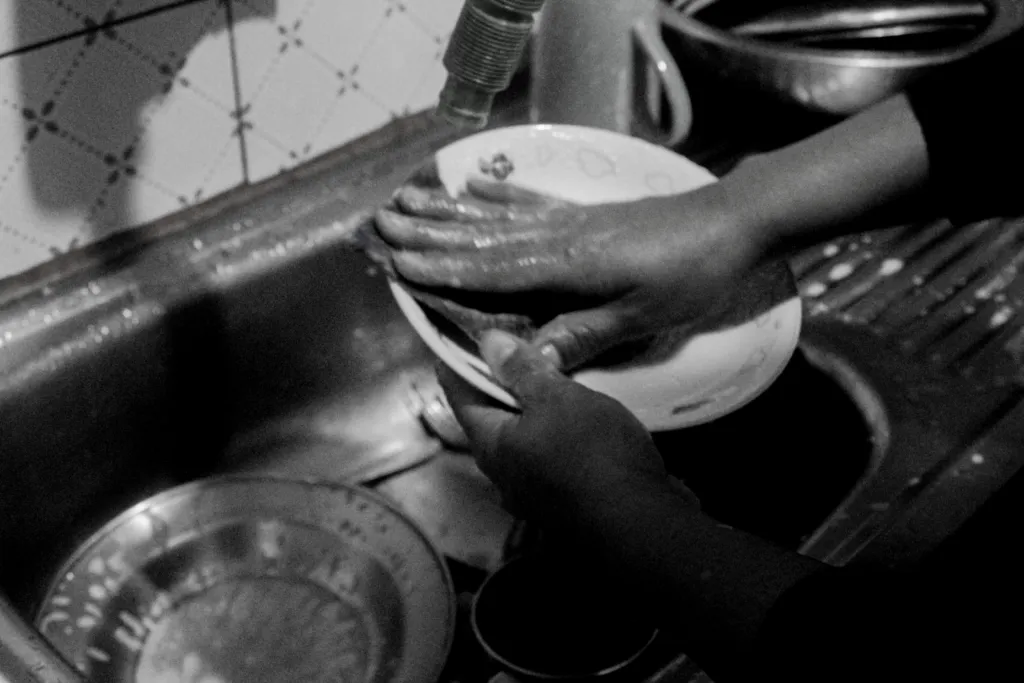
Behind closed doors
"Working at home means closing the door and no one knows what goes on inside," says Paulina Luza, general secretary of the National Union of Household Workers of Peru (Sintrahogarp). The leader participated in the recent 112th International Labor Conference in Geneva, Switzerland, held between June 3 and 14. There she vindicated the role of domestic workers in society and their importance in the care economy. For the union leader, domestic workers' agencies are like a noose that keeps domestic workers in precariousness. "They place domestic workers and move them for up to three months during the year and generate job instability for them."
Informality among domestic workers is an ongoing problem almost four years after the approval of Law No. 31047. According to data from the Ministry of Labor (MTPE), as of 2023 there were 5,573 formal contracts for domestic workers throughout the country. However, the National Household Survey 2022 indicates that by 2022, the economically active employed population (EAP employed) dedicated to domestic and care work was 406,438 people. In other words, 98.7% of workers in this sector would be working informally, with verbal contracts, without respect for their schedules, lack of benefits, insurance and exposed to mistreatment.
The International Labor Organization (ILO) defines fair recruitment as a worldwide initiative that seeks to improve worker recruitment practices. Precisely, one of its principles establishes that workers should not pay "recruitment commissions" or any other concept. It also emphasizes that while there are more intermediaries in the hiring process, there is more risk that facts contrary to the equitable hiring take place.
Sunafil does not have the authority to directly inspect the recruitment and recruitment of domestic workers by employment agencies, since its function is to analyze the link between the employee and the direct employer, in this case, the person or family that requires the service. According to Article 14 of the Domestic Workers Law, the Ministry of Labor is responsible for monitoring employment agencies, requiring their registration, issuing sanctions in cases of non-compliance, and preventing possible cases of exploitation or trafficking.
At the time this report went to press, the Ministry of Labor had not responded to a request for an interview to provide more information on the monitoring and dissemination of workers' rights.
However, for a domestic worker in an informal situation, reporting any type of abuse, mistreatment, lack of payment or precarious working conditions is an almost impossible task.
Hernán Murgas, from Sunafil, points out that there are three basic requirements that must be accredited in order for the tax and even judicial authorities to intervene. These are to have a permanent remuneration, to demonstrate subordination and the direct provision of the service. "It would be good if the workers have means of proof such as photos, Whatsapp messages or witnesses, otherwise we are left with zero", comments the intendant with respect to the evidence that the workers must present to support their complaint and that the sanctioning process of Sunafil can be executed.
Murgas recommends reporting abuses when the worker maintains the labor relationship with the employers and not after a dismissal. According to the authority, complaints can be made in a confidential manner. Under this modality, the visit of an inspector can be arranged in order to locate the worker at her work center and thus, a report can be drawn up to certify the conditions under which the domestic worker works. Finally, he commented that Sunafil enabled the application for mobile devices "Sunafil En Tus Manos" (Sunafil In Your Hands) so that workers can make their complaints virtually. It should be noted that the platform allows maintaining the confidentiality of the identity and sending photos or other files as support.
Obdulia Guevara Neyra, Organizing Secretary of the Union of Household Workers of the Lima Region (Sinttrahol), states that Sunafil can take up to more than a year to decide whether or not a complaint proceeds or not, precisely because of the issue of the evidence that must prove the labor relationship between the parties.
For Guevara, it is key to carry out dissemination campaigns on the Domestic Workers Law so that they know their rights, and their employers know their obligations. "It was said that [the Ministry of Labor] was going to carry out three annual dissemination campaigns for workers and employers but they have not been done. Last year, at our demand and that of the ILO, only one campaign was carried out," she explains.
She recognizes that unionization has been very important because it has allowed her to know her rights and learn about ILO Convention 087, which refers to freedom of association and the protection of the right to organize, in order to dialogue with the State about better working conditions. Without this organization, he says, they would be more vulnerable.
"To this day, a domestic worker is not able to tell her employer that the law allows her to work 8 hours and that if there are overtime hours they must be recognized (...) If she is hired to clean, wash and tidy up, she cannot be a nanny or take care of an elderly person. The needs of an elderly person and that of a baby are different and demand a lot of attention that generates stress. The mental health of the domestic worker is also affected," adds Guevara Neyra.
Women migrant workers
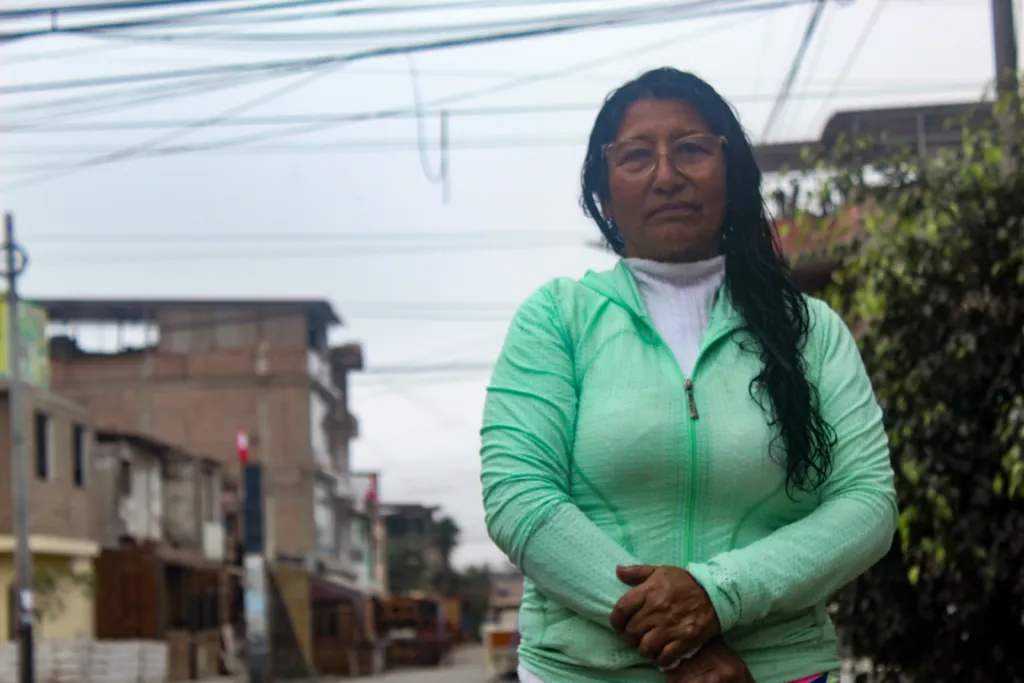
According to figures from the National Institute of Statistics and Informatics (INEI) in 2016, of the 98% of women domestic workers reported that year, just over half were migrant women who had moved from rural areas to larger urban centers. Therefore, to speak of labor abuses and violence against domestic workers is also to count the violations that girls and women who migrate because of poverty and extreme poverty have suffered for decades. This was the case of Práxides Ochoa Vargas, a 64-year-old woman from Apurímac, who agreed to talk to Wayka about what it was like for her to live as a domestic worker in Lima since she was 13 years old. She arrived in the capital without documents and without schooling, because her father believed that only boys should go to school.
When she turned 19, she found a job where she was finally offered a room of her own and a schedule to attend school. However, after completing a year of work, her employers prevented her from continuing her studies because she had to take care of the new children who had arrived at the home. "I spent my life working for nothing, I stayed working 8 years in that house, I didn't learn anything. It was a loss," says Práxides, among several other memories of discrimination and violence she has from those years.
Abuses against migrant workers are not a thing of the past. On May 13, the media reported on a 19-year-old woman who almost threw herself off a building in one of Piura's wealthiest districts to avoid being abused by her employee's son. The police arrived on the scene to rescue her and the Ministry of Women's Affairs requested protective measures on her behalf.
The young woman is a migrant from Huancabamba, one of the ten poorest districts in Piura, where monetary poverty reaches 33% of the population and 12% of adolescents are already mothers, according to the 2022 Demographic and Family Health Survey.
Weak enforcement, lack of opportunities and poverty, plus the resulting migration, keep domestic workers in a highly vulnerable situation. Although the approval of the law is a great step forward for them, Obdulia Guevara is aware that there are still pending issues.