

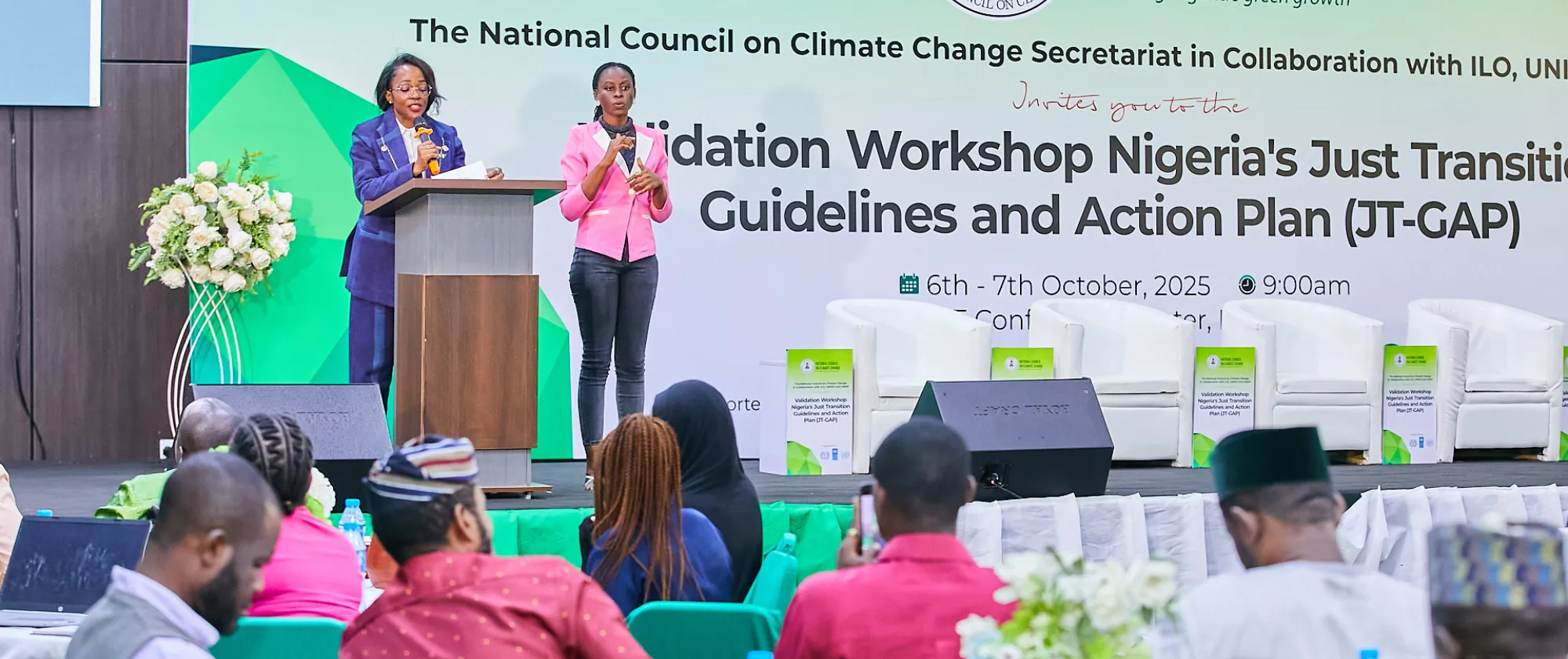
Nigeria Validates Just Transition Guidelines, Paving the Way for an Inclusive Climate Future
Nigeria takes a bold step towards a greener future—ensuring everyone has a seat at the table in the country’s climate journey.
27 October 2025
Abuja, Nigeria: Nigeria has advanced its commitment to climate justice and inclusive growth by validating it’s Just Transition Guidelines and Action Plan (JT-GAP)—a national framework that guides the country’s shift to a low-carbon, climate-resilient economy.
The National Council on Climate Change (NCCC) hosted a two-day workshop in October 2025, with strong support from the International Labour Organization (ILO), UNIDO, and UNDP. The event gathered stakeholders from across Nigeria—government officials, workers, employers, youth, women, persons with disabilities, and the private sector—to shape a roadmap that places people at the canter of climate action.
On day one, participants reviewed the JT-GAP’s key pillars: just and inclusive energy transition, green job creation, and the integration of health, gender, and social protection. These discussions ensured the framework reflects the lived realities and aspirations of Nigerians.
Day two featured the formal validation ceremony, welcoming high-level representatives from federal ministries, the House Committee on Environment, UN agencies, development partners, and state governments.
Barr. Tenioye Majekodunmi, Director-General of the NCCC, reaffirmed Nigeria’s commitment to achieve net-zero emissions by 2060, while protecting vulnerable communities.
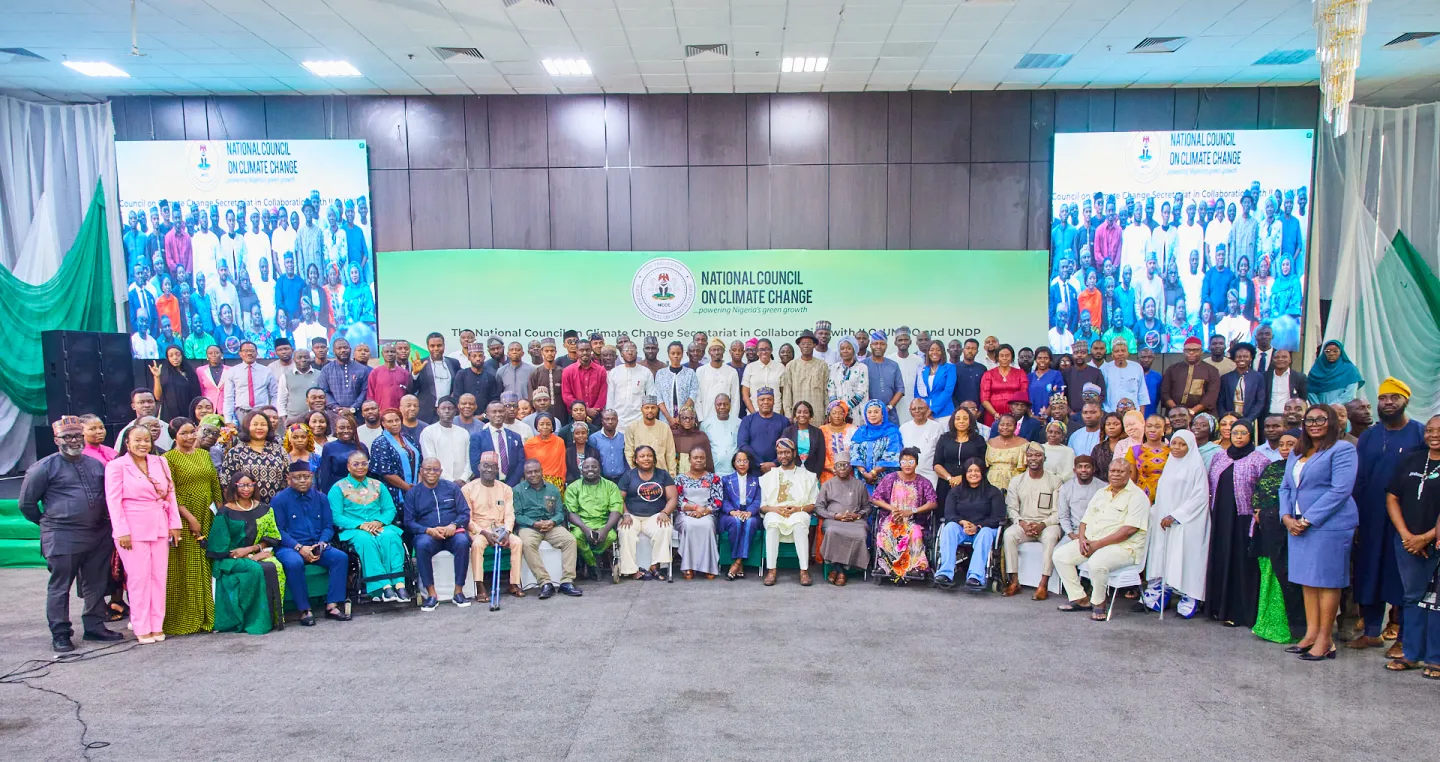
Mr. Guite Diop, Project Manager and Chief Technical Adviser for the ILO’s Free Movement of Persons and Migration in West Africa (FMM II), represented the ILO Country Director for Nigeria, Ghana, Liberia, Sierra Leone, and ECOWAS. He highlighted the JT-GAP’s alignment with Nigeria’s development goals and underscored the ILO’s commitment to a people-centered transition—one that creates decent jobs, supports sustainable livelihoods, and includes migrant workers, whose contributions the ILO recently documented in an assessment.
Key voices such as Hon. Terseer Ugbor, Engr. Abdul Idris, Princess Zahrah Mustapha Audu, and representatives from Lagos, Imo, Edo, and Cross River States shared practical insights on enabling state-level implementation and unlocking private sector support.
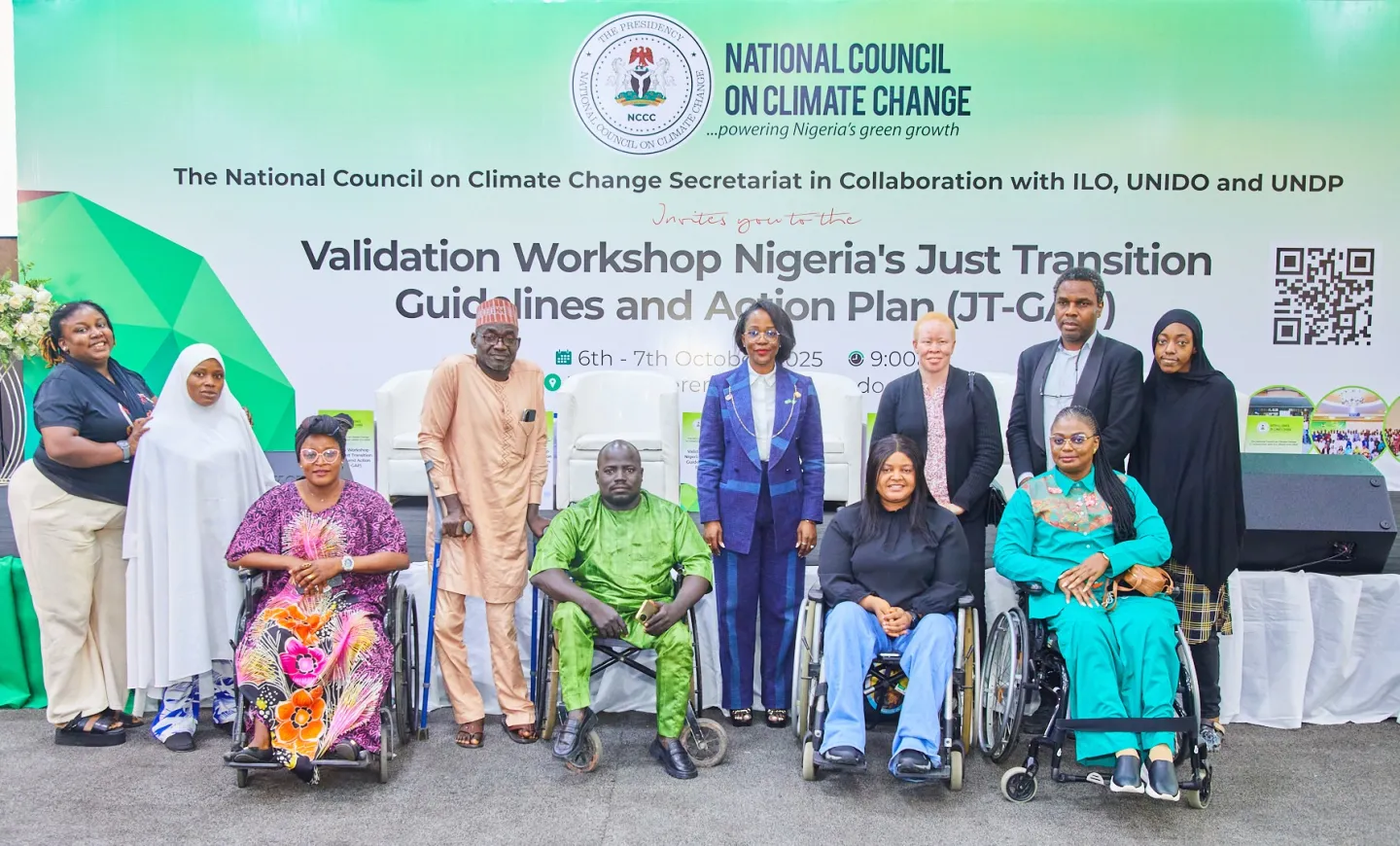
With the JT-GAP now validated, Nigeria moves forward with a clear and inclusive path to operationalize a just transition. The framework lays the foundation for expanding access to climate finance, implementing the country’s updated Nationally Determined Contributions (NDC 3.0), and building a future where no one is left behind.