

Nigeria unites to equip youth for jobs, innovation and prosperity
Government, employers, workers, youth and development partners join forces to expand future-ready skills, decent jobs and entrepreneurship opportunities in Nigeria's growing digital and green economies.
7 August 2026
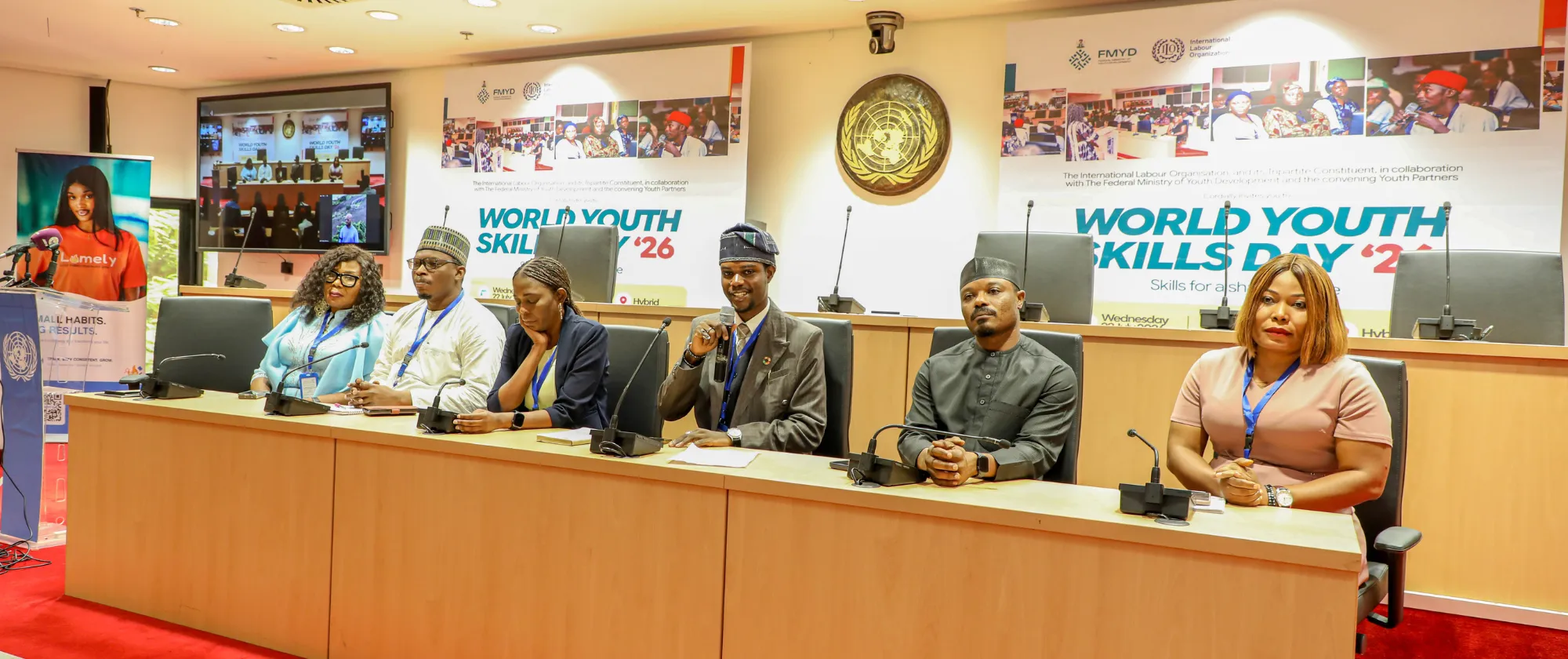
ABUJA, NIGERIA (ILO News) – The International Labour Organization (ILO), together with the Federal Ministry of Youth Development, the Federal Ministry of Labour and Employment, employers' and workers' organizations, development partners and youth-led groups, marked World Youth Skills Day 2026 in Abuja on 22 July under the theme "Skills for a Shared Future." The event reaffirmed a shared commitment to equipping young Nigerians with the skills, opportunities and support needed to secure decent work, drive innovation and contribute to inclusive and sustainable economic growth.
Bringing together policymakers, employers, workers' representatives, development partners, academia and young people, the celebration emphasized the need to turn national employment and youth policies into practical opportunities that improve employability, productivity and livelihoods. Participants agreed that investing in youth skills is key to unlocking Nigeria's demographic dividend and preparing the workforce for technological change, digital transformation and the green transition.
Dr Vanessa Phala, Director of the ILO Country Office for Nigeria, Ghana, Liberia, Sierra Leone and Liaison Office for ECOWAS, who was represented by Inviolata Chinyangarara stressed that "Preparing young people for the future of work is a collective responsibility. By investing in future-ready skills and strengthening partnerships that connect learning with decent work, we can ensure that no young person is left behind while advancing inclusive and sustainable development."
Preparing young people for the future of work is a collective responsibility
Vanessa Phala, Director of the ILO Country Office for Nigeria, Ghana, Liberia, Sierra Leone and Liaison Office for ECOWAS
Opening the event, the Federal Ministry of Youth Development affirmed that "investing in the skills of young people is essential for building an inclusive, productive and sustainable future," reaffirming its commitment to implementing the National Youth Policy and the Nigeria Youth Employment Action Plan (NIYEAP). Discussions highlighted ongoing reforms, including implementation of the revised National Employment Policy, renewal of the National Youth Policy, redesign of NIYEAP, and efforts to better align education and technical and vocational training with labour market needs. Together, these initiatives aim to create jobs, strengthen workforce competitiveness and promote inclusive growth.
Delivering a goodwill message, the Federal Ministry of Labour and Employment noted that "skills are no longer merely instruments for obtaining employment; they are the foundation for innovation, economic growth and social inclusion." The Ministry also reaffirmed its commitment to strengthening employment services, labour market information systems and partnerships that connect young people with decent work.
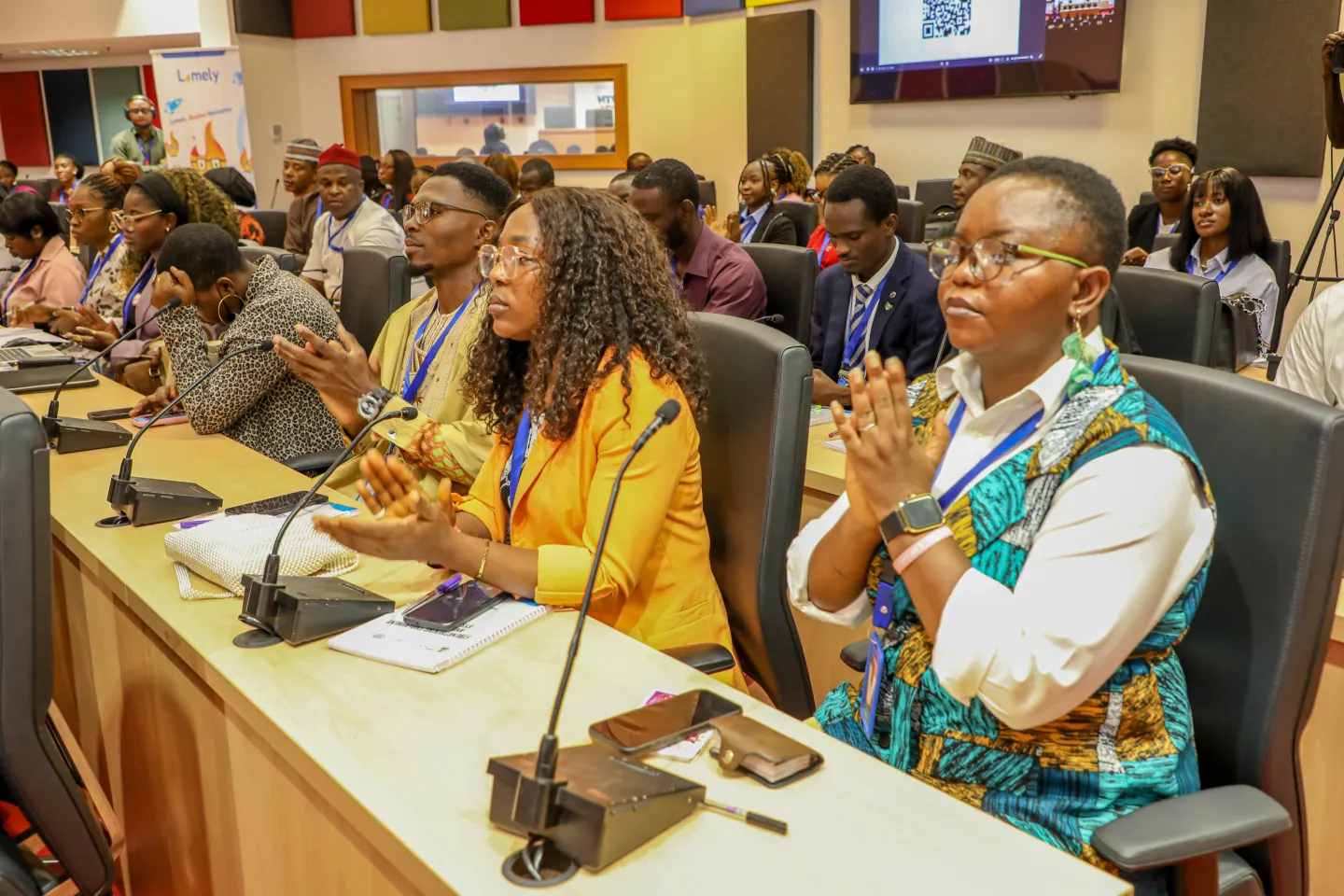
A key outcome of the event was renewed commitment to ensuring that young people help shape the policies and programmes designed for them. Through dialogue sessions, youth participants shared their experiences, identified barriers to employment and skills development, and proposed practical solutions to improve access to quality training, apprenticeships, career guidance and work-based learning.
Participants also emphasized preparing young Nigerians for emerging opportunities in renewable energy, climate-smart agriculture, artificial intelligence, digital services and the circular economy. The National Council on Climate Change encouraged young innovators, technicians and entrepreneurs, saying "the green economy offers vast horizons for your talents," while reaffirming support for youth-led climate action and green entrepreneurship. Special attention was given to young women, persons with disabilities, rural youth, migrants and young people Not in Education, Employment or Training (NEET). Stakeholders called for targeted measures to ensure that no one is left behind and that every young person can contribute to Nigeria's economic and social development.
Representing youth-led organizations, Akin Akinbisola, Founder and Executive Director of the Youth Employ & Development Initiative, encouraged participants to "learn, connect, ask bold questions, build meaningful partnerships," and work together to shape the future of work.
The event also showcased the importance of social dialogue in building responsive, demand-driven skills systems. Employers highlighted stronger industry engagement in curriculum development and workplace learning, while workers' organizations emphasized quality jobs, skills certification and lifelong learning as foundations for sustainable employment.
As World Youth Skills Day 2026 concluded, stakeholders called for sustained collaboration to transform commitments into measurable results. By expanding practical learning opportunities, strengthening partnerships and promoting evidence-based policymaking, Nigeria is advancing efforts to build a skilled, innovative and resilient workforce capable of driving inclusive prosperity for current and future generations.