

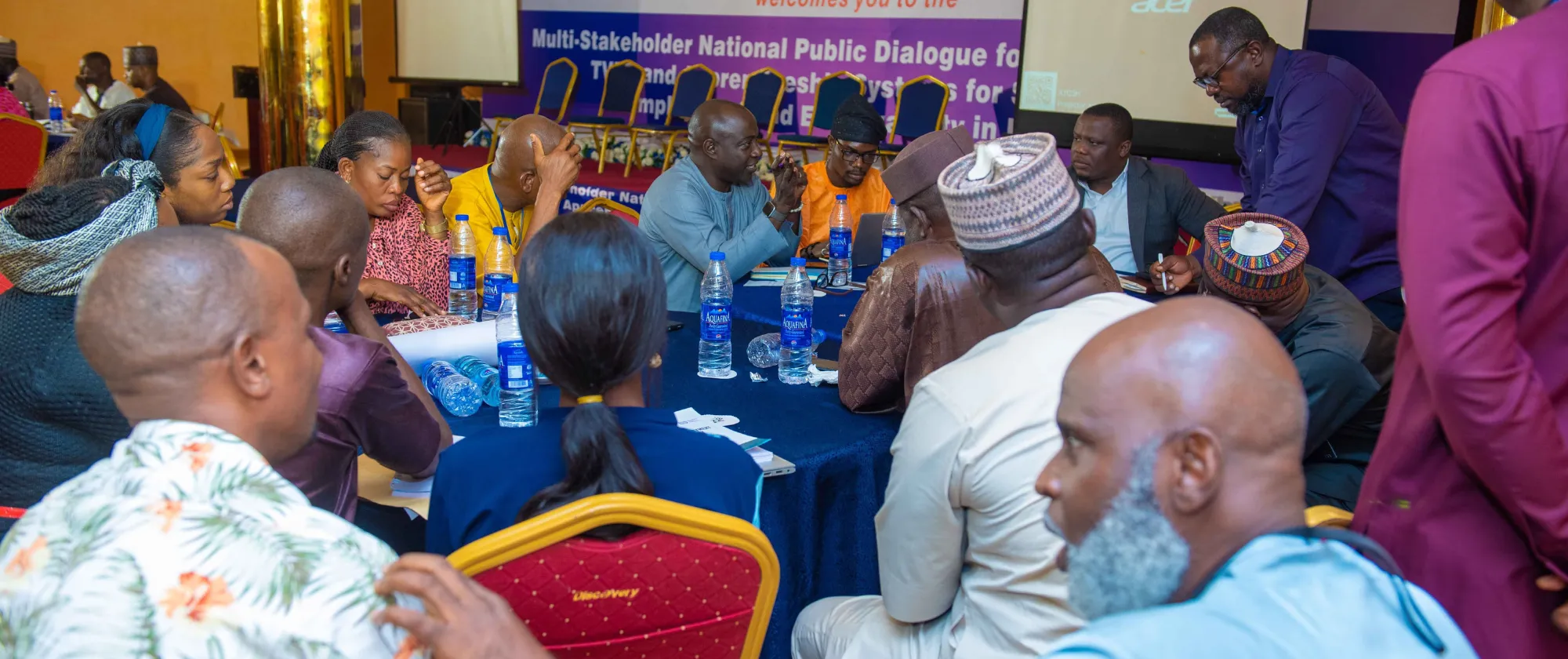
Nigeria Takes Bold Steps Toward Decent Work Through Skills Reform
The Federal Ministry of Labour and Employment, in partnership with the International Labour Organization (ILO) and Deutsche Gesellschaft für Internationale Zusammenarbeit (GIZ) initiated a national dialogue to reshape Nigeria’s skills development system—opening doors to better jobs and brighter futures for young people, women, and persons with disabilities.
27 October 2025
Abuja, Nigeria: A major milestone in Nigeria’s journey toward inclusive and sustainable employment was marked when the Federal Ministry of Labour and Employment (FMLE), with support from the ILO and GIZ, hosted a two-day National Dialogue focused on reforming the country’s skills development system.
The event, held under the ILO SEESIN Project within the framework of GIZ SKYE II Programme, gathered relevant stakeholders from government, employers’ and workers’ organizations, development partners, and civil society organizations. Participants shared a common goal to strengthen Nigeria’s Technical and Vocational Education and Training (TVET) and apprenticeship systems to be more inclusive, responsive, and aligned with the evolving needs of the labour market, ensuring decent work for all.
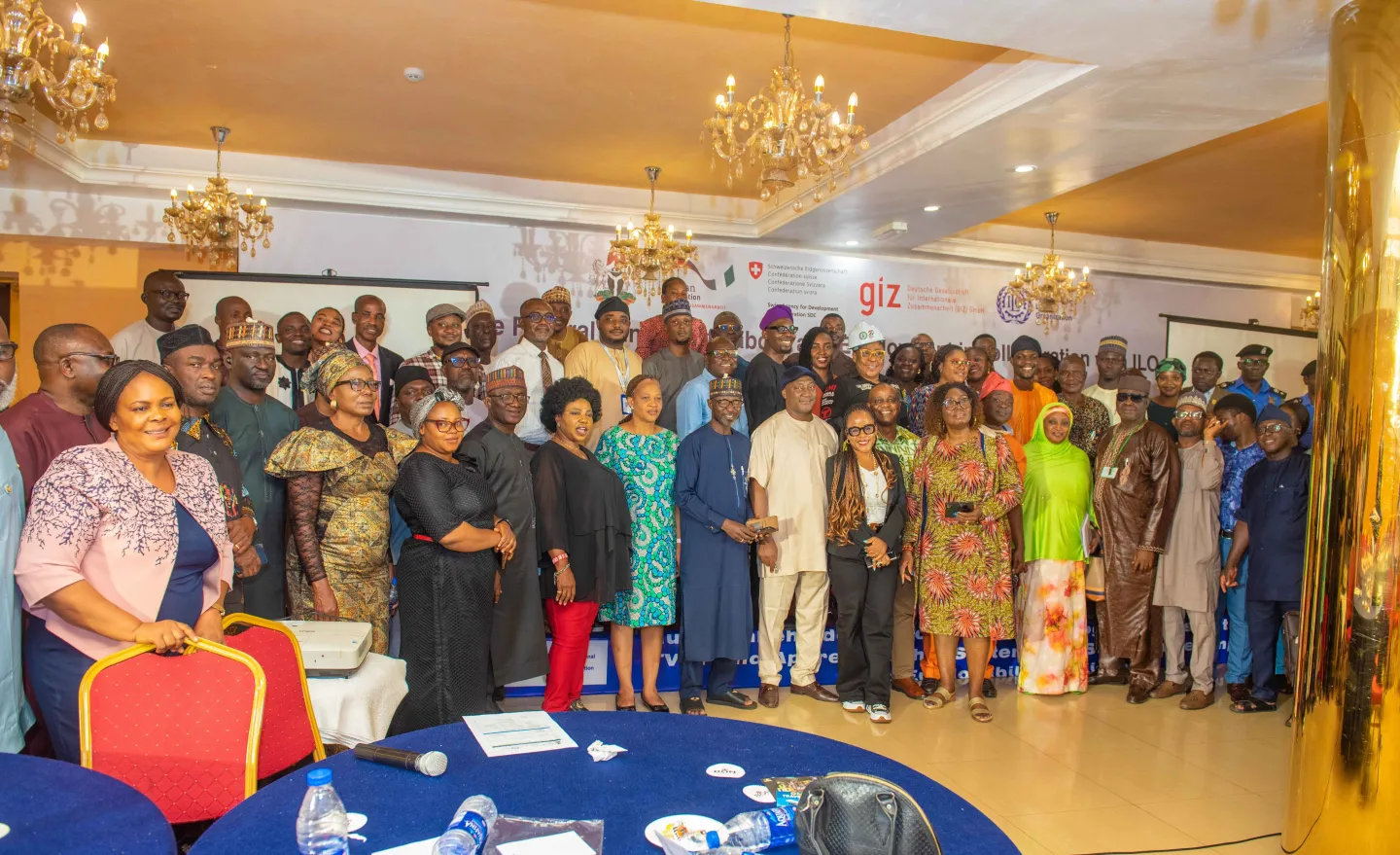
Opening the dialogue, Mrs. Ngozi Anukwu, Director of Social Security at FMLE, highlighted the power of collaboration in driving change. She called for stronger partnerships across sectors to improve funding, increase private sector involvement, and ensure that skills development reaches those who need it most especially youth, women, and persons with disabilities.
Delivering a goodwill message on behalf of Ms. Vanessa Phala, ILO Country Director for Nigeria, Ghana, Liberia, Sierra Leone and Liaison Office for ECOWAS, Mrs. Emeka-Anuna, Senior Programme Officer, reaffirmed the ILO’s commitment to supporting Nigeria’s efforts. She pointed to ILO Recommendation No. 208 as a key guide for building quality apprenticeships and promoting decent work, equity, and certification standards.
Mr. Terlumun Amile, GIZ’s Employment and Promotion Policy Advisor, praised the initiative as a turning point in aligning Nigeria’s apprenticeship systems with global best practices. He emphasized the importance of linking training to real labour market needs and national development goals.
From the National Board for Technical Education (NBTE), Engr. Bashir Datti Amin spoke about ongoing efforts to strengthen the National Skills Qualifications Framework and expand Recognition of Prior Learning—ensuring that people’s existing skills are valued and certified.
Labour and employer representatives also voiced strong support. Comrade Eustace James of the Nigeria Labour Congress (NLC) described the dialogue as a timely response to unemployment and skills mismatch, while Ms. Judith Tietie of the Nigeria Employers’ Consultative Association (NECA) stressed the private sector’s role in connecting education with employment.
Representing the Honourable Minister of State for Labour and Employment, Dr. Tiza Shakaa reaffirmed the government’s commitment to institutionalizing TVET and apprenticeships as a strategy for inclusive growth and youth empowerment.
The dialogue featured expert insights from Mr. Karim Toumi, ILO Skills Specialist, and Mr. Frank Kwasi Adetor, ILO National Project Coordinator in Ghana, who shared lessons from West Africa and Ghana’s reform journey.
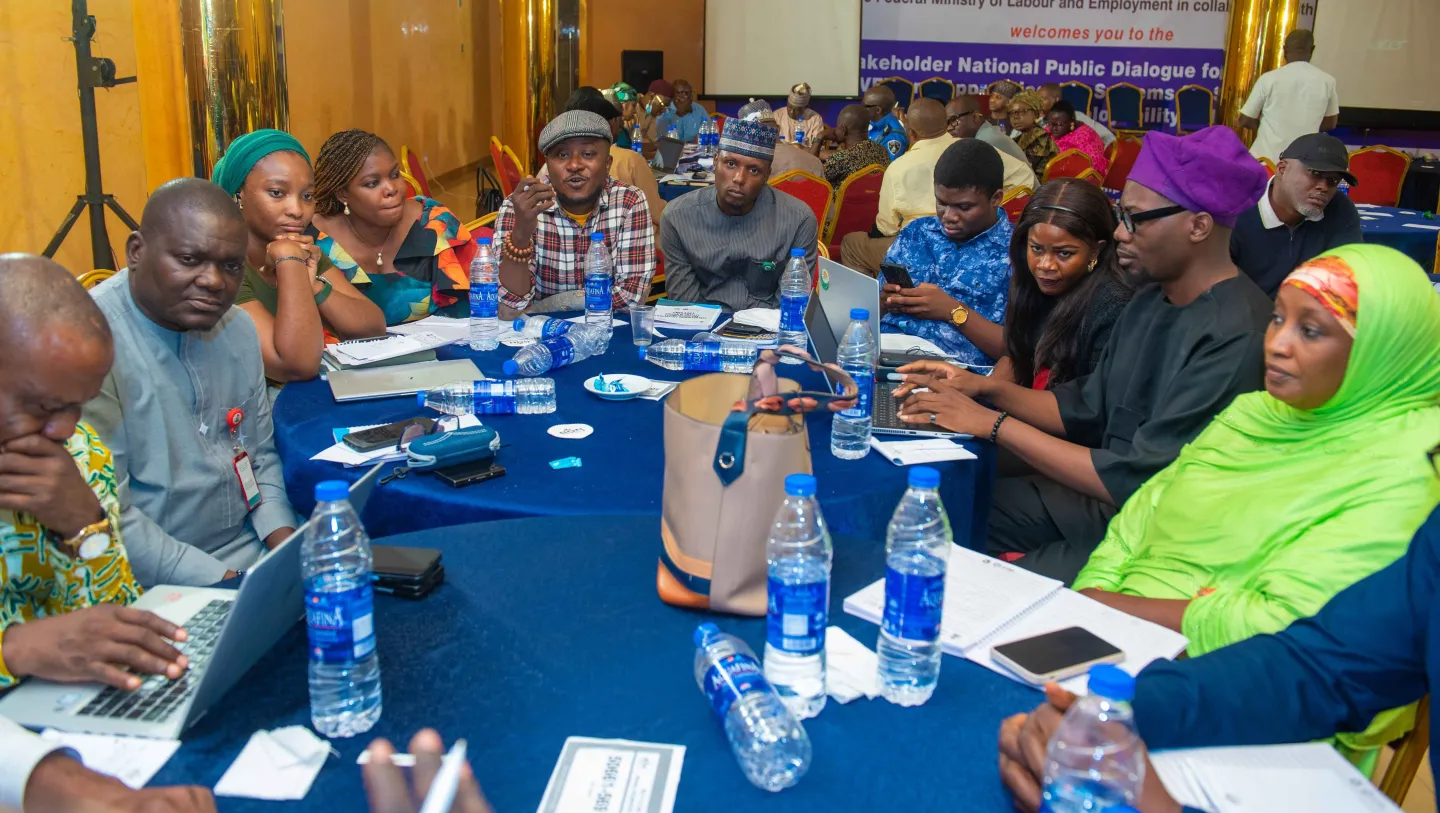
Participants engaged in panel discussions and innovation labs, exploring themes such as gender and disability inclusion, policy coherence, certification harmonisation, sustainable financing, and the integration of green and digital skills.
The event closed with a strong call to action: operationalize the National Skills Council Bill to improve governance and accountability in Nigeria’s skills sector.
The ILO pledged continued support through technical assistance, policy dialogue, and capacity building reinforcing Nigeria’s 2025 National Employment Policy and its vision for decent work and inclusive growth.