

Nigeria Strengthens Commitment to Decent Work Through Tripartite Workshop on ILO Reporting
A landmark five-day workshop in Keffi, Nasarawa State, has empowered Nigerian stakeholders to draft the country’s first reports on four critical ILO conventions, marking a major step toward safer, fairer, and more inclusive workplaces.
13 October 2025
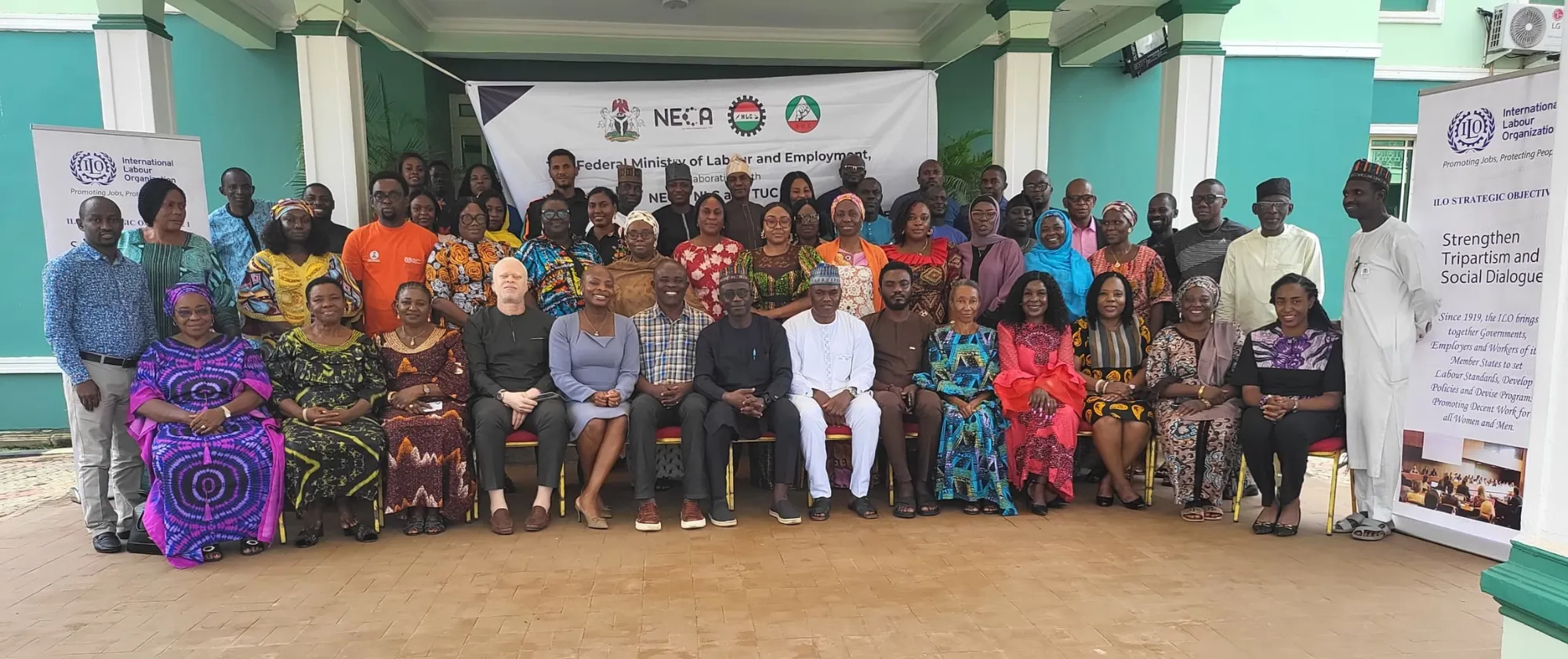
Keffi, Nasarawa State: In a significant stride toward fulfilling its international labour obligations, Nigeria successfully convened a five-day Tripartite Workshop aimed at drafting its first reports on four key International Labour Organization (ILO) Conventions: C143 on Migrant Workers, C181 on Private Employment Agencies, C187 on Occupational Safety and Health, and C190 on Violence and Harassment in the Workplace.
Organized by the Federal Ministry of Labour and Employment in collaboration with the ILO, the workshop brought together over 30 institutions, including government ministries, employers’ organizations, and workers’ unions. The initiative responded to Nigeria’s ratification of the conventions in 2021 and 2022 and its constitutional obligation under Article 22 of the ILO Constitution to report on their implementation.
The workshop’s impact on beneficiaries was profound. Participants gained hands-on experience in drafting evidence-based reports, deepened their understanding of international labour standards, and built a network for sustained collaboration. For many, it was the first opportunity to engage directly with ILO experts and contribute to shaping Nigeria’s labour governance framework.
Stakeholders highlighted the relevance of the conventions to Nigeria’s socio-economic realities. With over 1.3 million Nigerians working abroad, Convention 143 addresses the urgent need for safe migration and protection against trafficking. Convention 190 responds to alarming statistics, including reports that over 35% of Nigerian women have experienced workplace harassment. Convention 181 tackles the widespread use of informal recruitment channels, while Convention 187 supports the development of occupational safety structures, especially for MSMEs, which make up over 96% of Nigerian businesses.
The workshop facilitated the drafting of Nigeria’s first reports on these conventions, identifying legislative and policy gaps, and recommending strategic actions for compliance. Participants emphasized the importance of credible, data-driven reporting and called for sustained capacity building, improved inter-agency collaboration, and timely submission of future reports.
ILO representatives commended Nigeria’s commitment and reaffirmed support for the country’s efforts to align with global labour standards. The Honourable Minister of Labour and Employment, in his keynote address, underscored the importance of equipping focal officers with the technical skills needed to produce high-quality reports and strengthen Nigeria’s standing within the ILO system. The ILO tripartite partners and other key stakeholders took part in the training and drafting of the report.
The workshop concluded with a strong call to action: institutionalize tripartite collaboration, enhance enforcement mechanisms, and maintain the momentum through continuous dialogue and technical support. As Nigeria prepares to submit its first reports, the workshop stands as a testament to the power of inclusive engagement and the country’s resolve to promote decent work for all.