

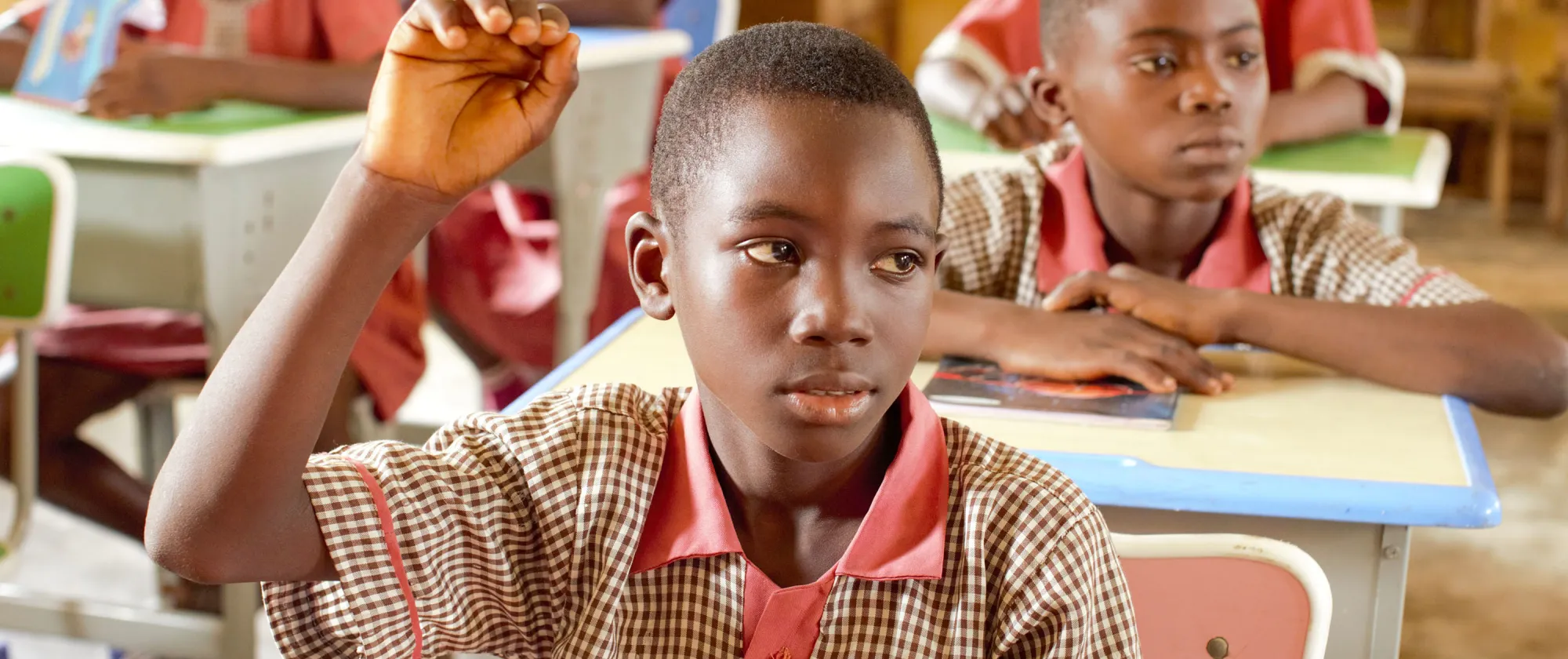
Nigeria strengthens child labour action through new evidence and continuous monitoring
Nigeria is shifting from periodic child labour surveys to routine data generation, enabling more targeted interventions that protect children, support families and improve educational outcomes.
12 August 2026
ABUJA, NIGERIA (ILO News) – Nigeria has taken a significant step towards eliminating child labour with the validation of the 2024 National Child Labour Survey Report, equipping government and partners with updated statistics to target interventions, allocate resources and strengthen protection for children.
More than 140 representatives of government, employers’ organizations, civil society, development partners, statistical offices, children, and young people participated in person and online in the national validation meeting held on 21 July 2026 at the UN House in Abuja.
The validation marks a major shift in Nigeria’s approach to monitoring child labour. The National Bureau of Statistics (NBS) has integrated a Child Labour Module into the Nigeria Labour Force Survey, transitioning from occasional stand‑alone surveys to routine, sustainable, and cost‑effective data collection.
Consistent data collection and analysis will enable early detection of emerging risks, compare trends across states and sectors, and better target labour inspections, education, social protection, and livelihood support. Stronger evidence should help more children leave hazardous work, remain in school and benefit from improved protection.
“Behind every statistic is a child- a boy or girl whose laughter, learning, and future depend on our decisions. This report gives us clarity; now we must act with courage and compassion.” said Dr Vanessa Phala, Director of the ILO Country Office for Nigeria, Ghana, Liberia and Sierra Leone and Liaison Office for ECOWAS.
This report gives us clarity; now we must act with courage and compassion
Vanessa Phala, Director of the ILO Country Office for Nigeria, Ghana, Liberia and Sierra Leone and Liaison Office for ECOWAS.
The International Labour Organization (ILO), through the EU-funded FMM (West Africa) II Project and the ACCEL Africa II project, funded the Government of the Netherlands, supported the analysis. The National Bureau of Statistics and the Federal Ministry of Labour and Employment led the analytical work with ILO technical support.
The findings will support implementation of National Action Plan for the Elimination of Child Labour (2026–2030) by informing inspections, education interventions, social protection, support to vulnerable families and responsible business conduct across supply chains. They will also contribute data and lessons to the ECOWAS Regional Action Plan for the Elimination of Child Labour, strengthening regional learning and accountability.
“Child labour remains one of the greatest obstacles to the realization of children's rights and sustainable national development. I therefore encourage participants to critically examine the survey findings, provide constructive observations, and validate the report based on technical merit.” said Dr Kamil Shoretire, Permanent Secretary of the Federal Ministry of Labour and Employment.
NBS reaffirmed its commitment to credible, policy-relevant statistics. The Nigeria Employers’ Consultative Association highlighted employers’ role in promoting responsible business conduct and decent work. ECOWAS emphasized the importance of reliable national evidence for stronger regional accountability and child protection systems.
Participants reviewed hazardous work, school attendance, geographic disparities, and sectoral patterns. Under the Alliance 8.7 campaign, led by Mr Alliance (Permanent Secretary, Federal Ministry of Labour, and Employment), they raised red cards against child labour, demonstrating collective commitment to protecting children from exploitation. Children and youth representatives emphasized education, awareness, poverty, and protection as essential to preventing child labour.
Nigeria now moves from validation to finalization, publication, dissemination, and implementation. By shifting from periodic measurement to routine findings generation, the country is strengthening its ability to identify risks early, allocate resources, measure results, and improve accountability—helping more children remain in school, reducing exposure to hazardous work and strengthening vulnerable families.
Relevant projects

Support to Free Movement of persons and Migration in West Africa, Phase II (FMM West Africa II)
Accelerating action for the elimination of child labour in supply chains in Africa (ACCEL Africa)