

Nigeria Moves to Expand Social Protection to Informal Economy Workers
Nigeria has convened a high-level national dialogue to accelerate the extension of social protection to millions of informal economy workers, reaffirming government commitment and strengthening partnership with the ILO, employers, and workers’ organizations to build an inclusive, resilient, and dignified future for all.
8 December 2025
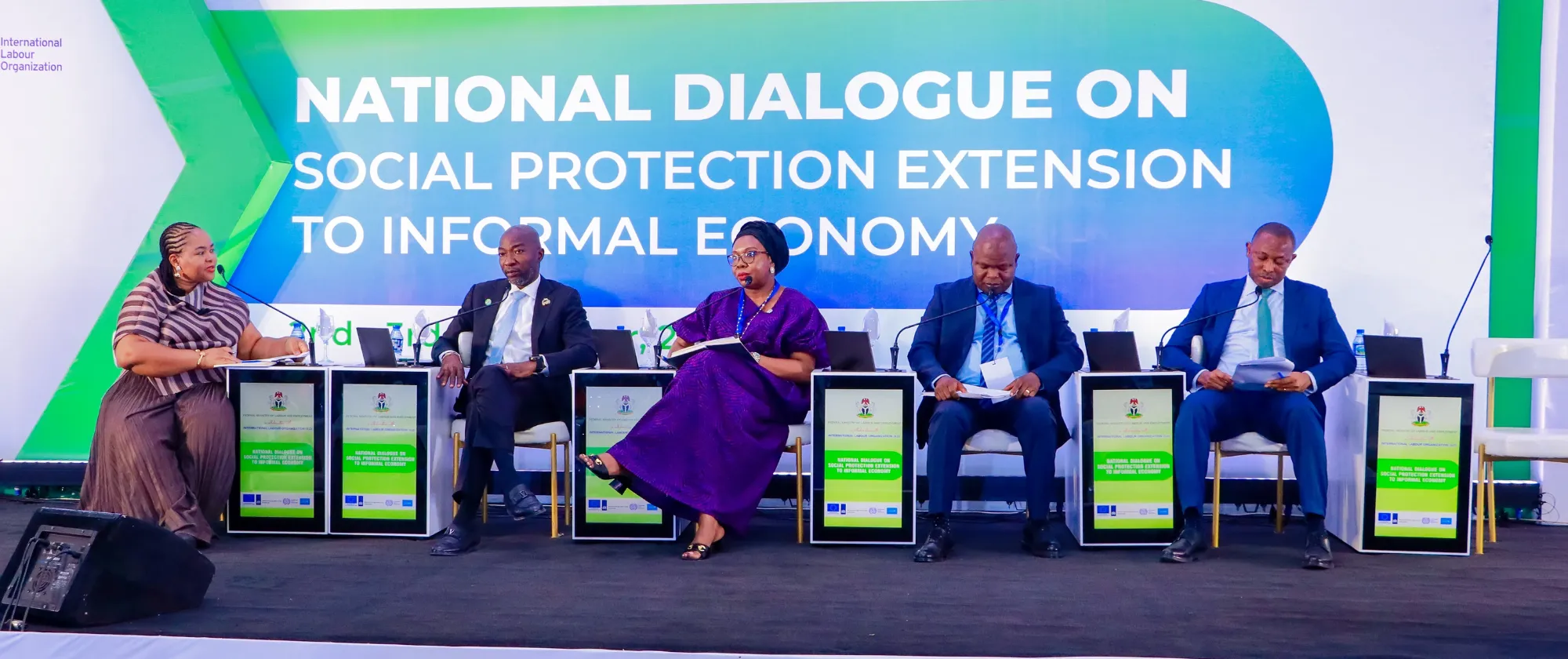
Abuja, Nigeria – With the support of the EU-funded FMM (West Africa) II Project and the SUSI Project, the Federal Government of Nigeria through the Federal Ministry of Labour and Employment, in collaboration with the International Labour Organization (ILO) and development partners, has concluded a landmark two-day multi-stakeholder National Dialogue aimed at extending social protection to informal economy workers, who make up most of the country’s labour force. Held at the NAF Conference Centre, Abuja, the dialogue brought together government officials, employers and workers’ organizations, development partners, and civil society to chart a concrete roadmap toward universal coverage.
Delivering the keynote address, the Honourable Minister of Labour and Employment, Dr. Muhammadu Maigari Dingyadi, underscored the urgency of expanding social protection to more than 60 million Nigerians who currently lack pensions, health insurance, maternity protection, or employment injury compensation. “We cannot build a just, equitable, or resilient Nigeria when such a large portion of our workforce is left vulnerable,” he said, stressing that social protection is a human right and a state responsibility.

He highlighted ongoing government initiatives—including the expansion of the National Health Insurance Authority (NHIA), reforms to the Nigeria Social Insurance Trust Fund (NSITF), the Micro-Pension Plan, and pilot schemes with the ILO, UNICEF, and the World Bank—to widen inclusion for informal workers. He called for coordinated national action and a sustainable financing strategy to scale up coverage.
The Honourable Minister of State for Labour and Employment, Barrister Nkeiruka Onyejeocha, welcomed participants and reaffirmed the Ministry’s commitment to building “a more inclusive, secure, and equitable labour landscape for millions who contribute daily to Nigeria’s growth.” She described the dialogue as a defining moment for shaping a fairer future for informal workers.
In In his remark Mr. Jha, Shailendra ILO Chief Technical Adviser representing Dr. Vanessa Phala, Director of the ILO Office for Nigeria, Ghana, Liberia, Sierra Leone and ECOWAS, noted that 85.2% of Nigerians currently lack social protection, calling the initiative “a critical step toward closing persistent gaps.” She outlined priority reforms such as expanding legal coverage, simplifying contribution systems, removing administrative barriers, and strengthening compliance. She reaffirmed the ILO’s support through technical expertise, evidence generation, and global best practices.
Workers’ and employers’ organizations added strong perspectives. The Nigeria Labour Congress (NLC) described the dialogue as “long overdue,” urging that informal workers - particularly women, transport workers, traders, and artisans - take centre stage in the reforms. The NLC stressed the need for gender-responsive benefits, better service quality, and simplified registration to address affordability, trust, and access challenges.
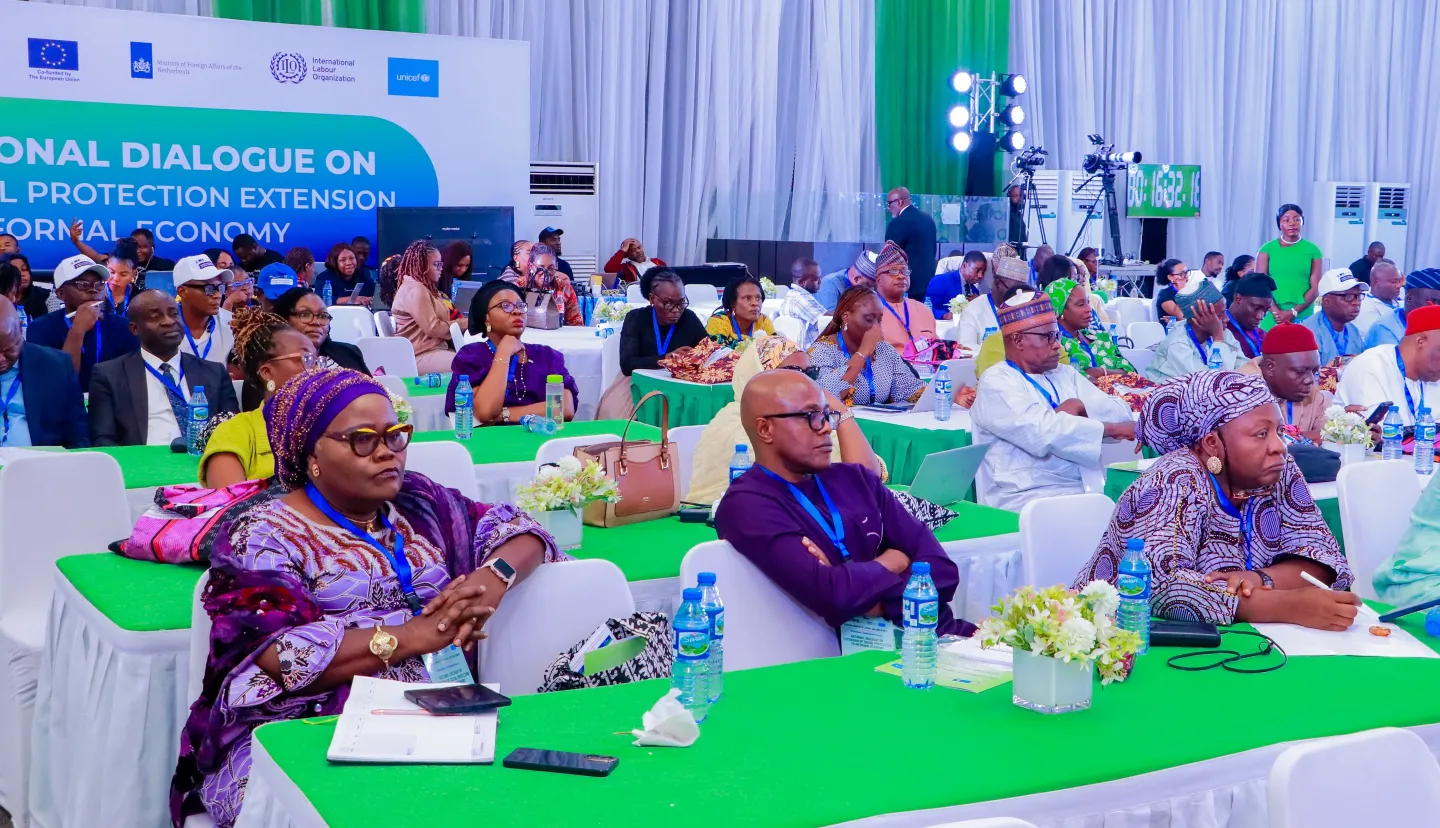
The Nigeria Employers’ Consultative Association (NECA) emphasized employer readiness to collaborate with government and the ILO in designing sustainable financing mechanisms. NECA highlighted the importance of predictable policies, digital contribution systems, and stronger institutional coordination to build trust and ensure effective implementation.
Technical sessions led by the ILO and national experts highlighted global best practices, emphasizing simplified administrative processes, flexible payment mechanisms, and targeted subsidies for low-income workers. A panel featuring NSITF, NHIA, National Pension Commission (PenCom), and Sierra Leone’s National Social Security and Insurance Trust (NASSIT) underscored technology-driven registration, improved service delivery, and state-level engagement as essential for expanding coverage.
The dialogue concluded with the adoption of a communiqué and a national roadmap outlining priority policy actions. The ILO praised the Government of Nigeria for its leadership and reiterated its commitment to supporting the country in building a resilient, inclusive, and rights-based social protection system that leaves no worker behind.
Relevant projects

Support to Free Movement of persons and Migration in West Africa, Phase II (FMM West Africa II)