

Nigeria launches landmark industrial relations policy to boost jobs, protect workers, and strengthen economic stability
A new tripartite policy framework - championed by government, employers and workers – promises stronger labour relations, enhanced worker protections, improved business confidence, and a more stable and productive economy.
7 May 2026
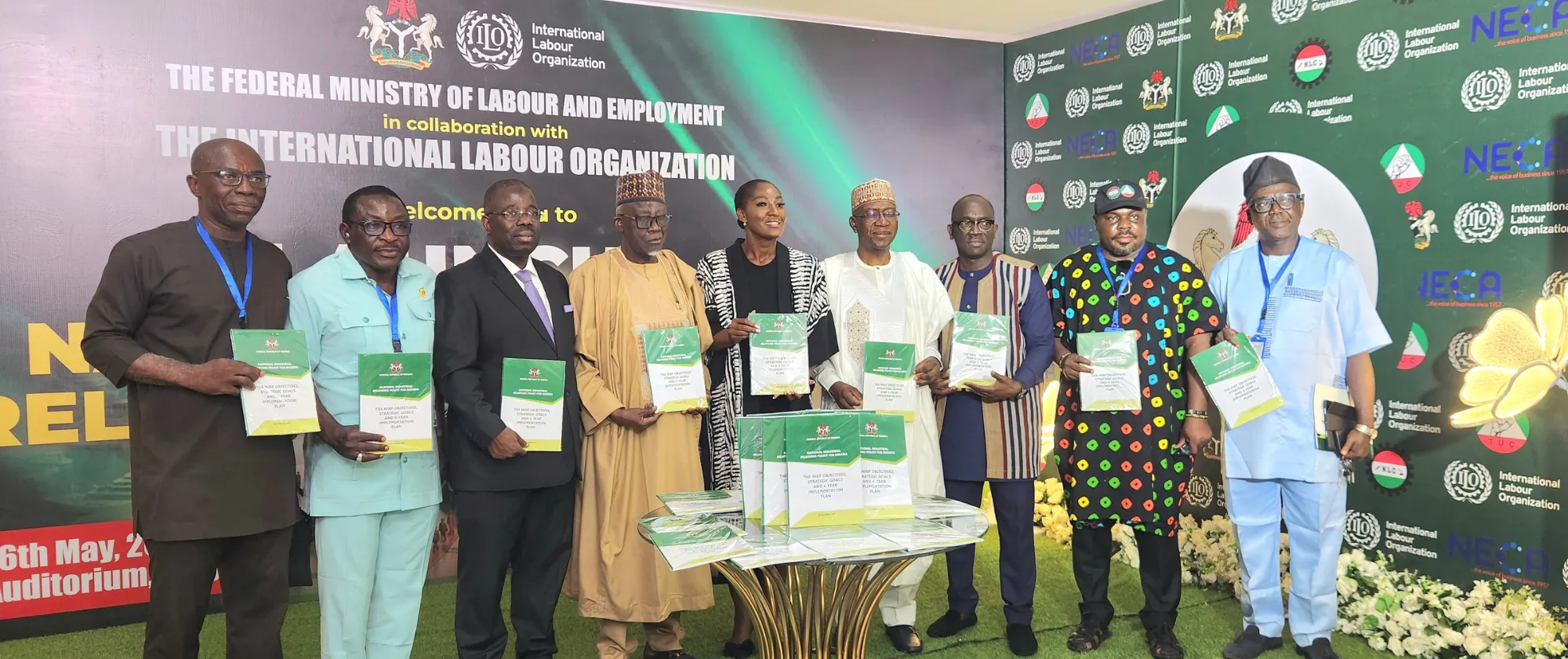
The Government of Nigeria, in partnership with the International Labour Organization (ILO) and social partners, on 6th May 2026, officially launched the country’s first National Industrial Relations Policy (NIRP), a landmark initiative set to transform labour relations, promote decent work, and drive inclusive economic growth.
The Policy was launched by the Honourable Minister of Labour and Employment, Muhammad Maigari Dingyadi, alongside the ILO Director for Nigeria, Ghana, Liberia and Sierra Leone, Vanessa Phala, in the presence of leaders of employers’ and workers’ organizations, including the Nigeria Employers’ Consultative Association (NECA), the Nigeria Labour Congress (NLC), and the Trade Union Congress (TUC).
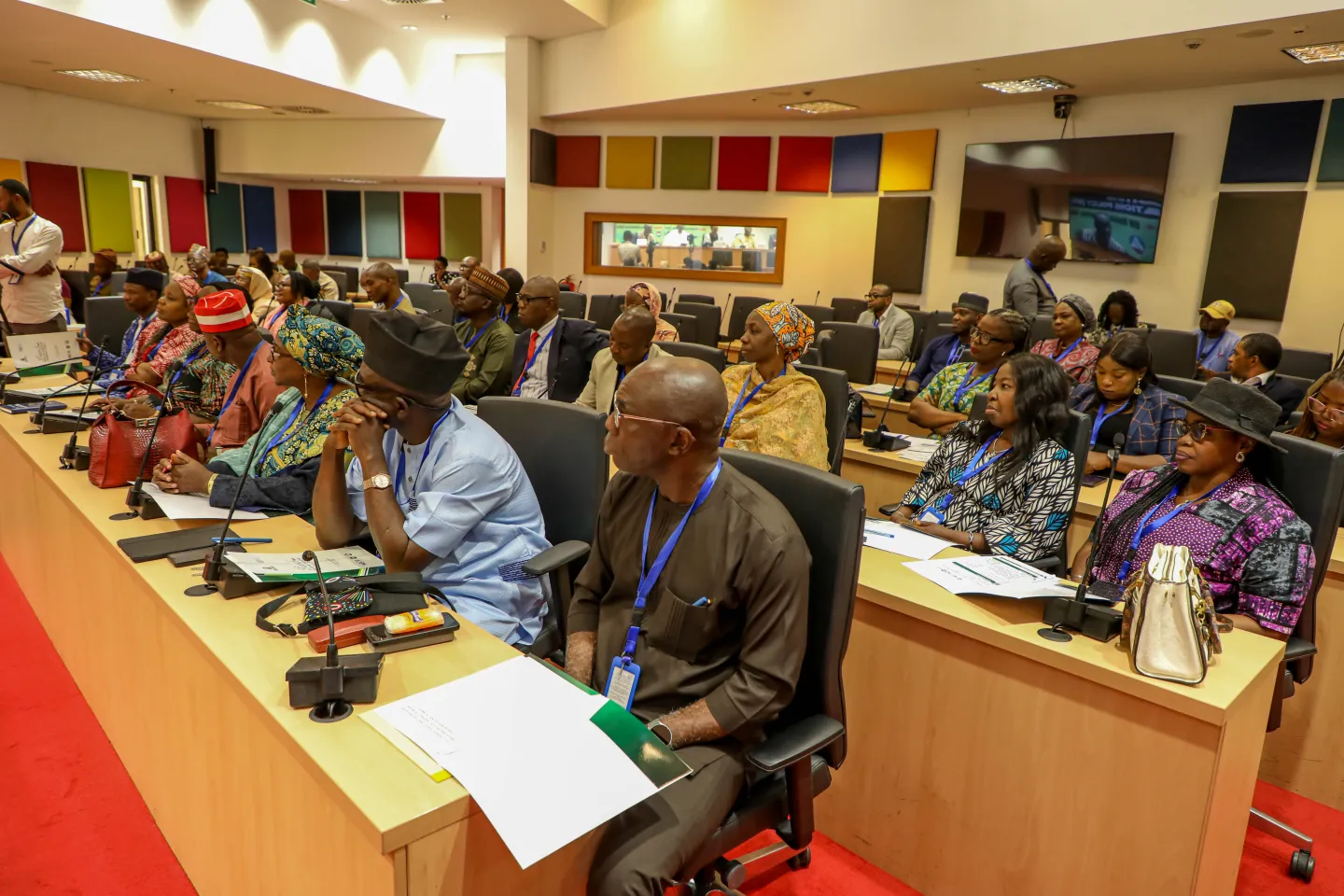
Developed through an extensive and inclusive tripartite process, the NIRP reflects a shared national vision for a modern, responsive and equitable industrial relations system. It provides a unified framework to strengthen labour governance, improve dispute resolution, and foster a culture of dialogue and cooperation.
Launching the Policy, Minister Dingyadi underscored its significance as a turning point for Nigeria’s labour landscape. “This Policy provides the compass,” he said, noting that for decades, industrial relations in Nigeria operated without a comprehensive guiding framework. He emphasized that the NIRP is built on the pillars of social dialogue, rights at work, and productivity and competitiveness, adding that “industrial harmony is not the absence of conflict, but the presence of institutions and trust to manage it.”
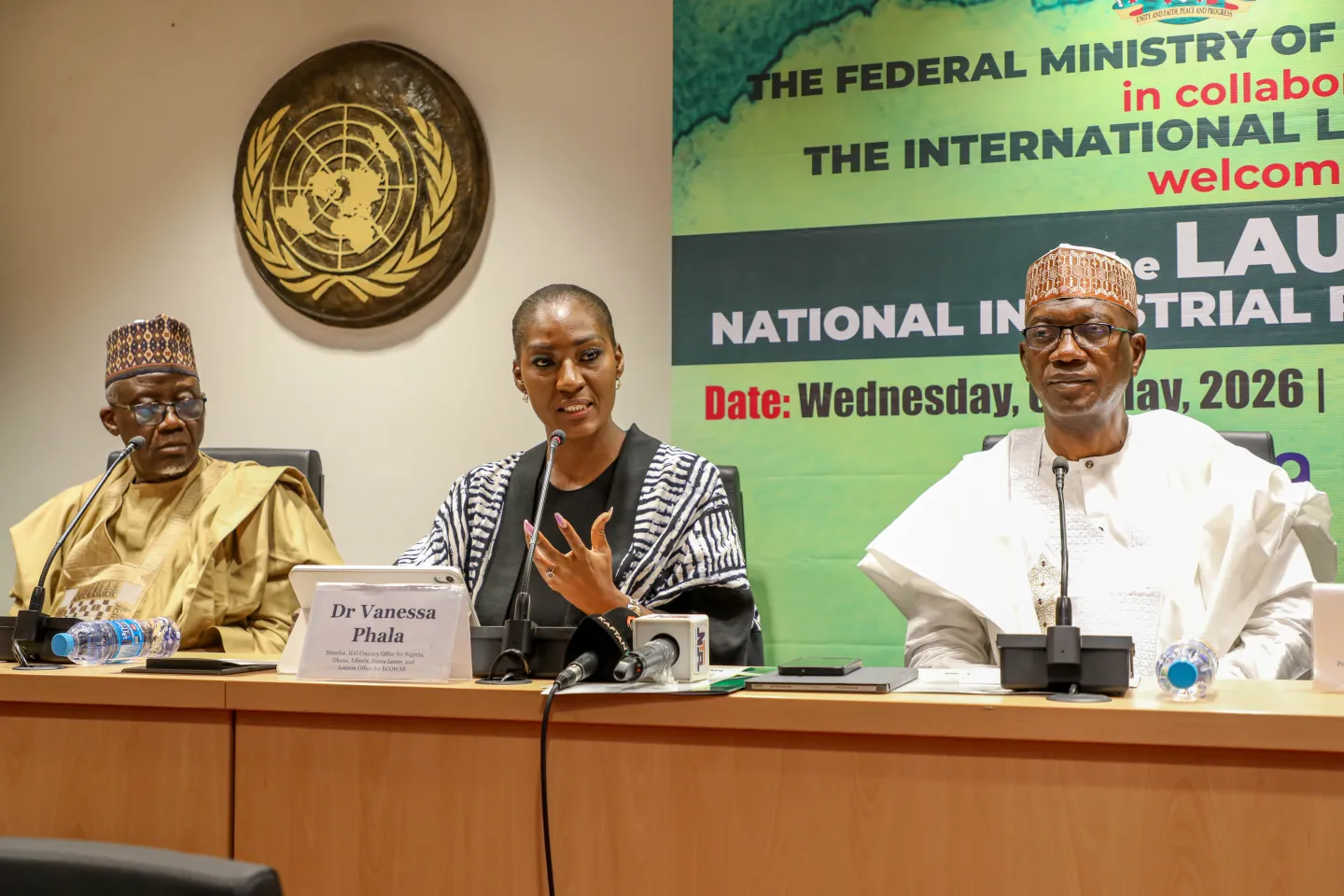
ILO Director Vanessa Phala described the Policy as “a transformative milestone” and commended the Government of Nigeria and social partners for their sustained commitment to dialogue. She stressed that the NIRP is “a co-created policy” shaped through broad consultations and consensus, reflecting Nigeria’s socio-economic realities and priorities. According to her, the Policy provides a forward-looking framework that balances economic performance with social justice, while strengthening institutions and promoting trust among stakeholders.
Delivering Tangible Benefits for Workers
For workers, the NIRP reinforces fundamental rights and aims to improve working conditions, job security, and dignity at work. The Policy reaffirms key principles such as freedom of association, collective bargaining, and non-discrimination, in line with international labour standards.
President of the Nigeria Labour Congress, Joe Ajaero, represented by Assistant General Secretary Echezona Asuzu, welcomed the Policy but stressed the importance of implementation. “This policy must not end as a document but translate into real improvement in workers’ welfare and industrial peace,” he said, emphasizing that its true value would be measured by its impact on workers’ lives.
Similarly, President of the Trade Union Congress, Festus Osifo, represented by Secretary-General Nuhu Toro, expressed “guided optimism,” noting that while the Policy is a positive step, it must address pressing challenges such as low wages, unsafe workplaces, and violations of workers’ rights.
Enhancing Stability and Competitiveness for Employers
For employers, the NIRP offers a predictable and stable industrial relations environment that supports productivity, investment, and enterprise growth. By promoting structured dialogue and strengthening collective bargaining processes, the Policy reduces the likelihood of disruptive industrial conflicts and fosters long-term business sustainability.
Director-General of NECA, Adewale Smart-Oyerinde, highlighted the importance of aligning labour frameworks with evolving global trends, including digital and flexible work arrangements. He emphasized that strong institutions and continuous dialogue are essential to managing the complexities of modern labour markets and ensuring competitiveness.
Strengthening Governance and National Development
For government, the NIRP serves as a strategic instrument to improve labour market governance, strengthen institutions, and support national development priorities. The Policy promotes social dialogue as a cornerstone of economic stability, helping to create a conducive environment for job creation, investment, and inclusive growth. It also introduces mechanisms such as strengthened labour advisory councils, capacity-building programmes, and an industrial relations observatory to monitor and address workplace disputes proactively. Dingyadi reiterated the government’s commitment to implementation, calling on all stakeholders to embrace the Policy as a shared responsibility. “With this Policy, we are choosing dialogue over disruption, partnership over protest, and progress over polarization,” he said.
A Forward-Looking Framework for the Future of Work
The NIRP goes beyond traditional labour concerns by addressing emerging challenges such as technological change, environmental transitions, and the future of work. It positions Nigeria to adapt to global shifts while safeguarding workers’ rights and promoting economic resilience.
As the country moves into the implementation phase, the ILO has reaffirmed its commitment to supporting Nigeria through technical assistance, partnerships, and knowledge sharing.
The National Industrial Relations Policy stands as a unifying framework that balances the interests of workers, employers, and government—laying a strong foundation for a more inclusive, productive, and harmonious world of work in Nigeria.