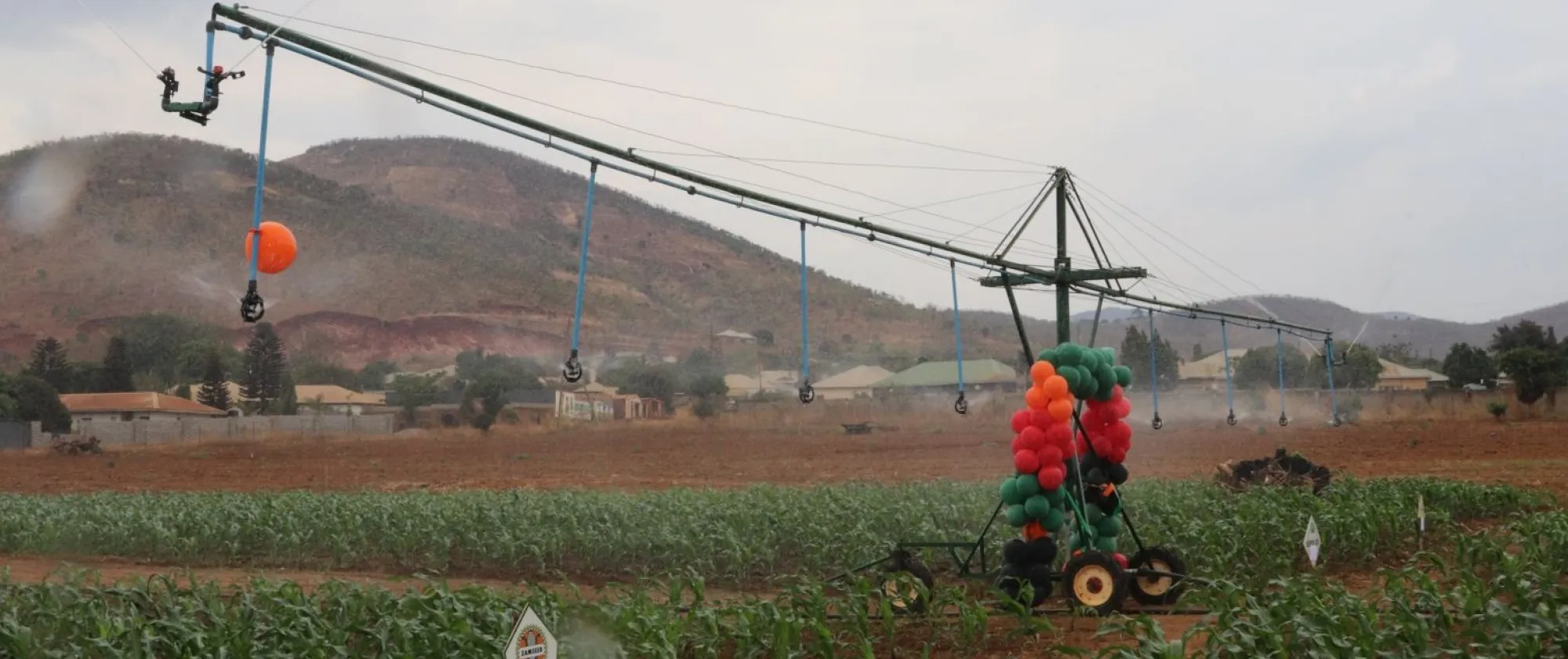
New solar irrigation facility to drive skills, food security and jobs in Zambia
Funded by the European Union and implemented by the ILO, a new solar-powered irrigation facility at Chipata Trades Training Institute will strengthen agricultural skills training, support food security and create employment opportunities for young people in Eastern Province.
30 September 2026
CHIPATA, Zambia (ILO News) – Zambia’s efforts to promote climate-smart agriculture and skills development received a boost with the handover of a solar-powered irrigation system worth US$40,770 (about K786,845) to the Chipata Trades Training Institute (CTTI).
The investment, funded by the European Union through the Skills Development for Increased Employability (SDEP) programme and implemented by the International Labour Organization (ILO), will provide students with practical training in modern irrigation technologies while strengthening skills for Zambia’s agriculture sector.
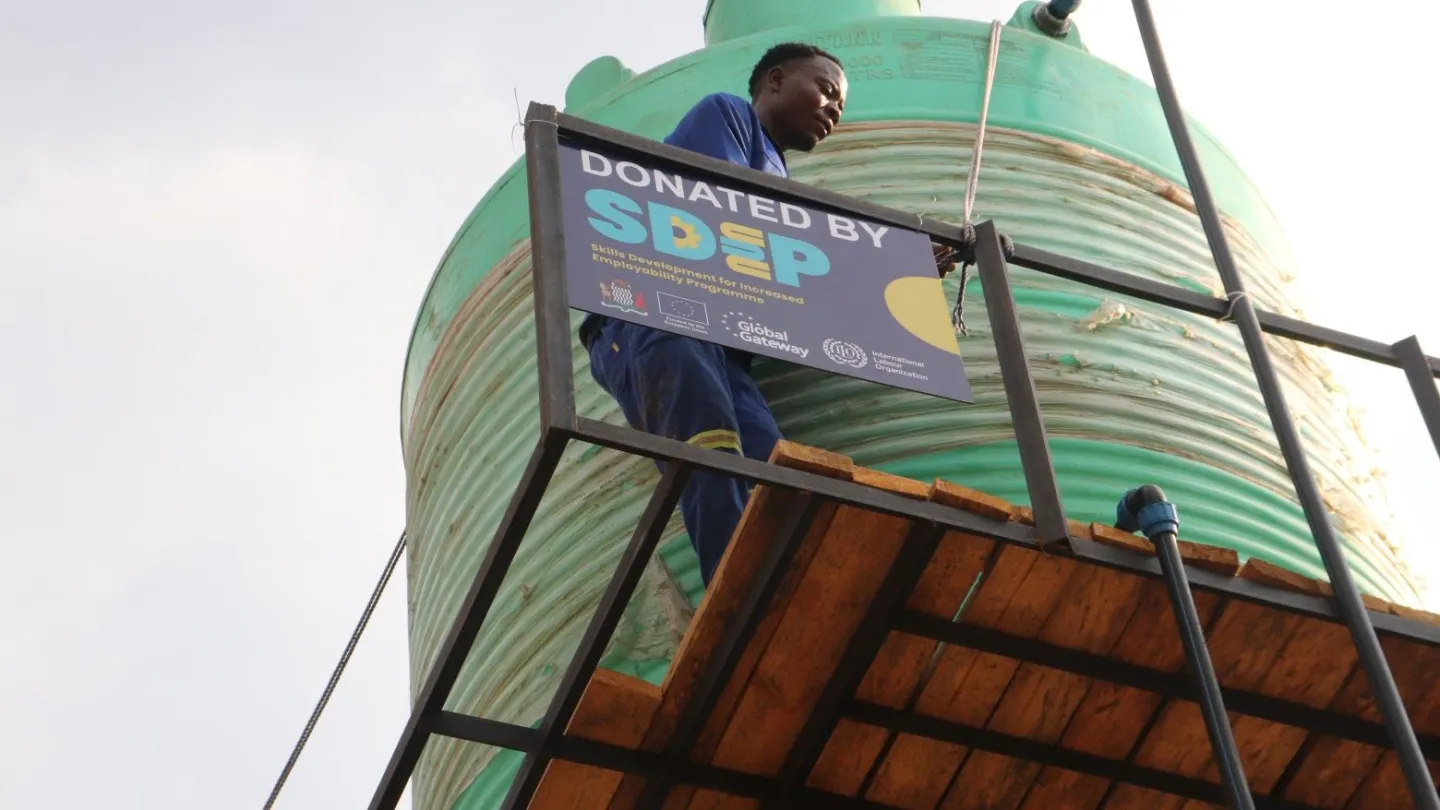
Officiating at the handover ceremony, Permanent Secretary in the Ministry of Technology and Science, Dr. Brilliant Habeenzu, said the project demonstrates how Government, development partners, industry and training institutions can work together to strengthen skills development and drive economic transformation.
He said the investment supports Zambia’s Vision 2030, the Eighth National Development Plan and the Grow Zambia Agenda, all of which require a workforce equipped with skills in irrigation, mechanisation, renewable energy and agricultural production.
“We are not commissioning ornaments. We are putting solar, water and irrigation technology at the disposal of an institute that can train irrigators, horticulturalists and solar technicians while increasing agricultural production,” Dr. Habeenzu said.

Representing EU Ambassador to Zambia Her Excellency Ms. Karolina Stasiak, Ms. Paola Gosparini, Senior Programme Manager for Private Sector Development at the European Union Delegation to Zambia, said the investment would equip young people with practical skills for climate-smart agriculture.
“This equipment, together with new irrigation practices and crop diversification, represents an important shift towards smarter and more resilient agriculture that is crucial for protecting farmers from climate shocks,” Ms. Gosparini said.
She noted that the project strengthens the link between training and employment while promoting resilient food systems, sustainable livelihoods and greater opportunities for young people.

Earlier, ILO Country Office Director for Zambia and Malawi, Mr. Wellington Chibebe, said the initiative would help young people acquire skills needed to improve agricultural productivity, strengthen food security and build resilience to climate change.
“This investment is about more than irrigation equipment. It is about equipping young people with the practical skills needed to drive agricultural productivity, strengthen food security and build resilience to climate change,” Mr. Chibebe said.
He noted that agriculture remains Zambia’s largest employer and stressed the importance of investing in industry-relevant skills to support productivity, job creation and sustainable economic growth.
Mr. Chibebe said the ILO is supporting Zambia’s transition to Competency-Based Education and Training (CBET) through instructor training and curriculum development in crop production, agribusiness, seed production, irrigation systems and livestock production.

Zambia Congress of Trade Unions Secretary General Dr. Joy Beene welcomed the investment, saying skills development must lead to employability, productivity and decent work.
“We are not merely handing over irrigation equipment. We are handing over an opportunity for young people to acquire practical skills. A certificate must represent competence, training must lead to employability, and skills must lead to productivity,” Dr. Beene said.
He called for stronger apprenticeships, work-based learning and continuous upskilling to help workers remain competitive in a changing labour market.

Representing the Zambia Federation of Employers (ZFE), Vigil Malambo said the project strengthens the link between training and the workplace by giving students practical experience with modern irrigation systems.
“What is being handed over today is more than irrigation equipment. It is an investment in skills, young people, productivity and Zambia’s future workforce,” Mr. Malambo said.
He urged closer collaboration between training institutions and employers to expand internships, apprenticeships and workplace learning opportunities.

His Royal Highness Chief Jumbe of the Kunda people of Mambwe District welcomed the investment, describing it as an important contribution to agricultural development, skills training and livelihoods in the area.
He said the irrigation system would help young people acquire practical skills while supporting climate-resilient farming and increased productivity in local communities.

The Skills Development for Increased Employability Programme, funded by the European Union and implemented with support from the ILO, seeks to strengthen the relevance and quality of skills development in Zambia by better aligning training with labour market needs and expanding opportunities for young people to acquire practical, industry-relevant skills for employment and entrepreneurship.