

ILO News
New market in Chambellan strengthens livelihoods in Grand’ Anse Haiti
A new public market in Chambellan improves working conditions and supports local producers. The joint ILO and WFP initiative links decent work with food security and economic recovery.
10 March 2026
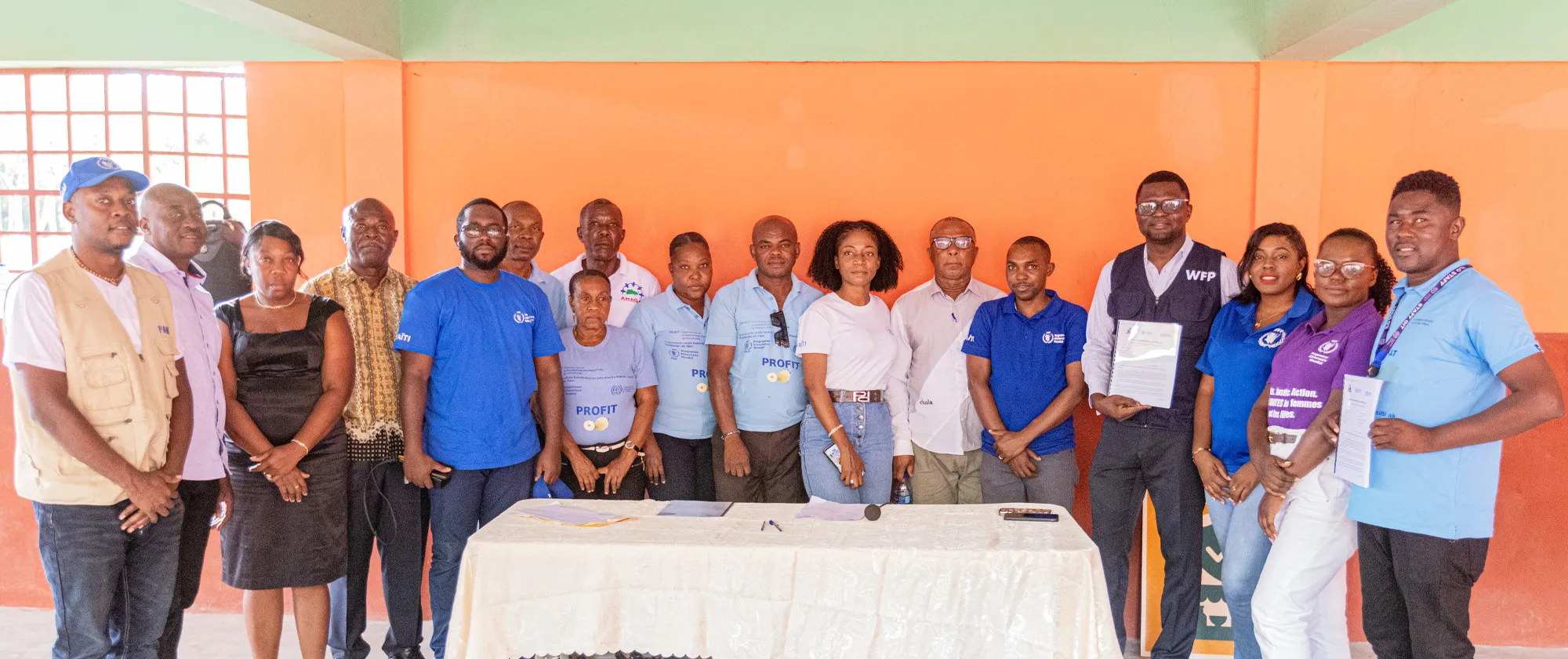
GRAND’ANSE, Haiti (ILO News) - On 10 March 2026, the International Labour Organization (ILO) and the World Food Programme (WFP/PAM) officially inaugurated a modern public market in Chambellan in Haiti’s Grand ‘Anse department. The reconstruction of the market was carried out as part of a strategic partnership aimed at linking employment creation, decent work and food security within a broader local economic recovery framework. More than just a physical structure, the Chambellan Market already generates 52,000,000 gourdes in revenue, according to a survey conducted at the start of the project. It is a long-term investment in community resilience and sustainable development.
Improving working conditions
For many vendors in Chambellan, daily market activity is their main source of income. An important objective of the reconstruction project was to improve the working conditions of these traders. The new facility provides a safer, more organized and hygienic environment for vendors to operate, contributing to dignity at work and enhanced income stability.
“For many of us, this market is our livelihood and our future,” said Jean Fritznel Odan, representative of the Chambellan Market management committee. “We finally have a safe, clean and dignified place to work. It brings more customers and it gives our community hope for building a better life together, based on higher and more stable incomes.”
Supporting local producers
At the same time, the market plays a critical role in fostering local economic development. Farmers and small entrepreneurs now have a structured and accessible space to display and sell their agricultural and artisanal products. This strengthens local value chains and helps increase consumer confidence in locally produced food, which in turn contributes to more stable incomes for small-scale producers.
Jobs and community participation
Through the UN2UN cooperation mechanism, WFP’s mandate to strengthen food systems and enhance food security was effectively combined with the ILO’s expertise in employment-intensive infrastructure and decent work standards.
The project created approximately 500 direct and indirect jobs during the construction phase, with local workers playing a direct role in the market’s reconstruction. This employment-intensive approach ensured that income and skills remained within the community. It also encouraged community participation, with beneficiaries trained on earthquake and hurricane-resistant standards by ILO, thereby reinforcing local ownership of the infrastructure and supporting longer-term sustainability.
Building resilience in Grand’Anse
Given Grand’Anse’s vulnerability to economic shocks and natural disasters, strengthening the local markets is essential for stabilizing livelihoods and ensuring food availability. The establishment of a market management committee, tasked with ensuring the proper day-to-day operation of the market in a sustainable manner, further strengthens local ownership by embedding the infrastructure within municipal governance structures.
“This new market marks a turning point for Chambellan’s local economy,” said Mr. Guichard Bonet, Mayor of Chambellan. “It creates opportunities for farmers, traders and small businesses to grow, while improving food safety and public health. We expect it to attract more activity, strengthen local trade and transform the town into a more vibrant and resilient economic centre.”
The inauguration of the Chambellan public market stands as a tangible example of how coordinated United Nations action can deliver integrated, community-centred solutions that advance decent work, strengthen food systems, and stimulate inclusive local economic growth in Haiti.