

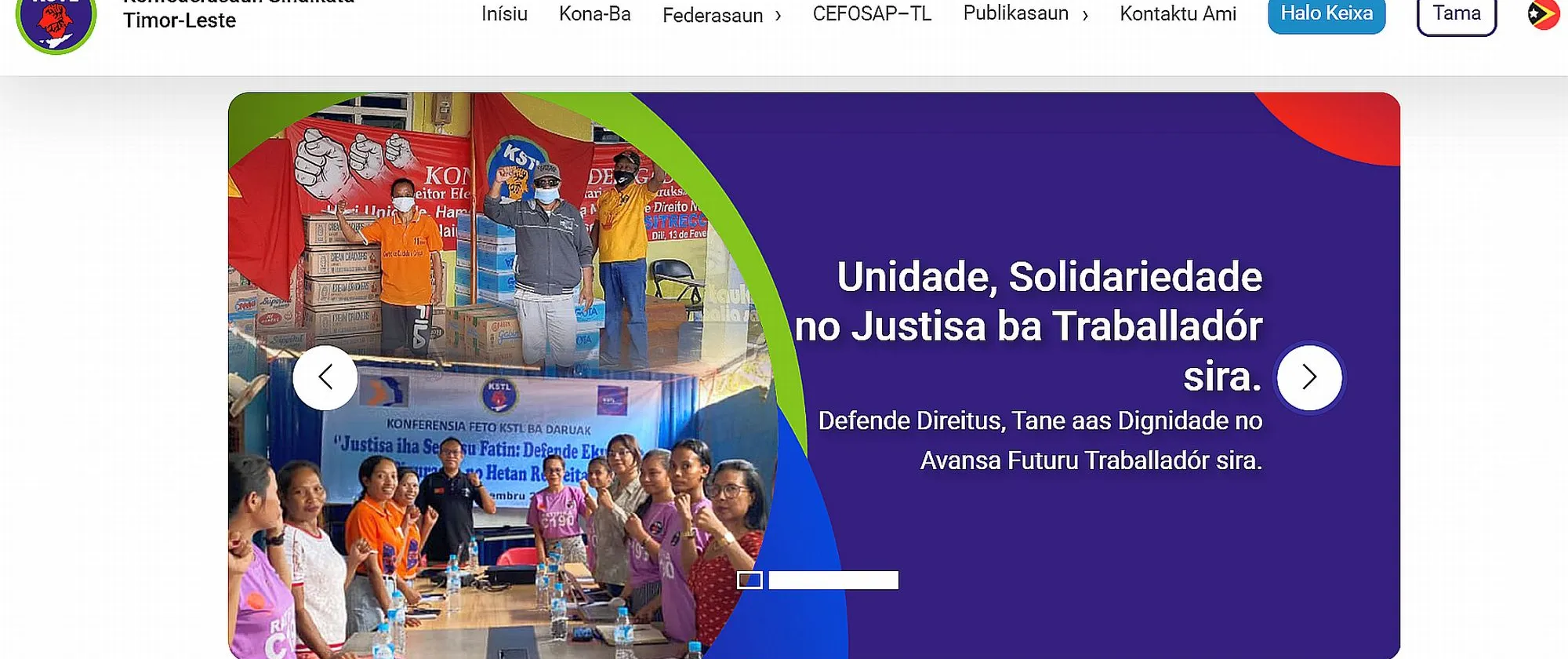
New digital system strengthens workers’ access to grievance support in Timor-Leste
With support from the ILO, a leading trade union in Timor-Leste launches a new digital grievance system to help workers raise concerns, track their cases and access more timely and effective support.
10 September 2026
DILI, Timor-Leste (ILO News) – The Timor-Leste Trade Union Confederation (KSTL), with support from the International Labour Organization (ILO), launched its digital Grievance Management System (GMS) in Dili on 3 September. The new system aims to make it easier for workers to raise concerns and for trade unions to record, track and follow up cases.
The launch included a live demonstration by KSTL and the General Workers Union of Timor-Leste (SJT-TL), which will serve as administrators of the system. Participants were shown how grievances can be recorded, managed and followed through the platform.
Until now, workers’ grievances have often been handled through face-to-face conversations, telephone calls, WhatsApp and other informal channels. While these channels remain important for reaching workers, the lack of a central system has made it difficult to keep consistent records, track the progress of cases and ensure regular follow-up.
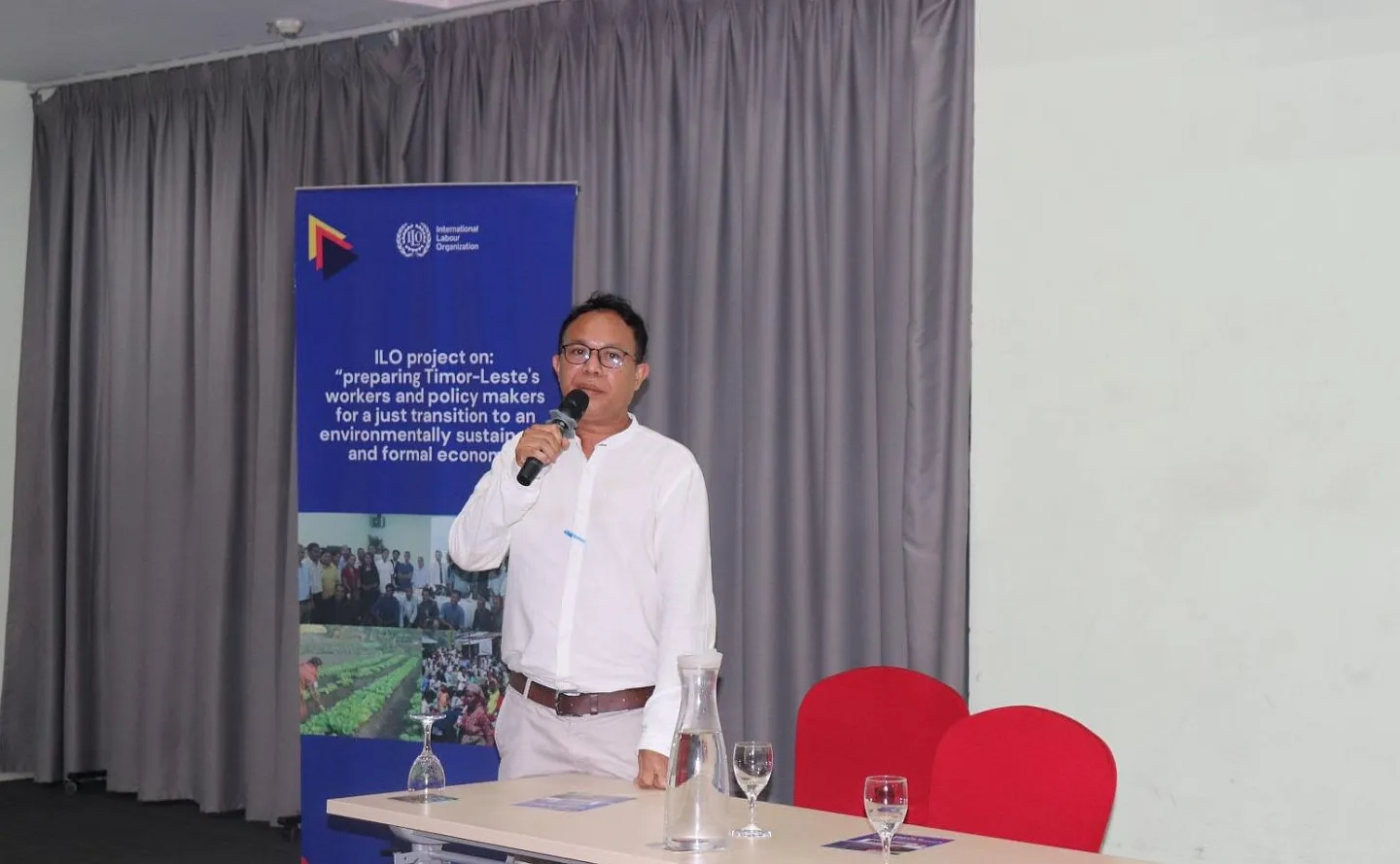
Almerio Vila-Nova, President of KSTL, described the launch as an important step in KSTL’s efforts to better represent workers. He thanked the ILO for supporting the development of the system and said the GMS would help KSTL manage workers’ concerns across the country.
Today, we are witnessing an important milestone for KSTL. The GMS will strengthen the way we receive, manage and follow up workers’ grievances across Timor-Leste, while helping us as an umbrella organization representing workers in the country to better fulfil our role in promoting social justice, decent work and the protection of workers’ rights.
From workers’ concerns to action
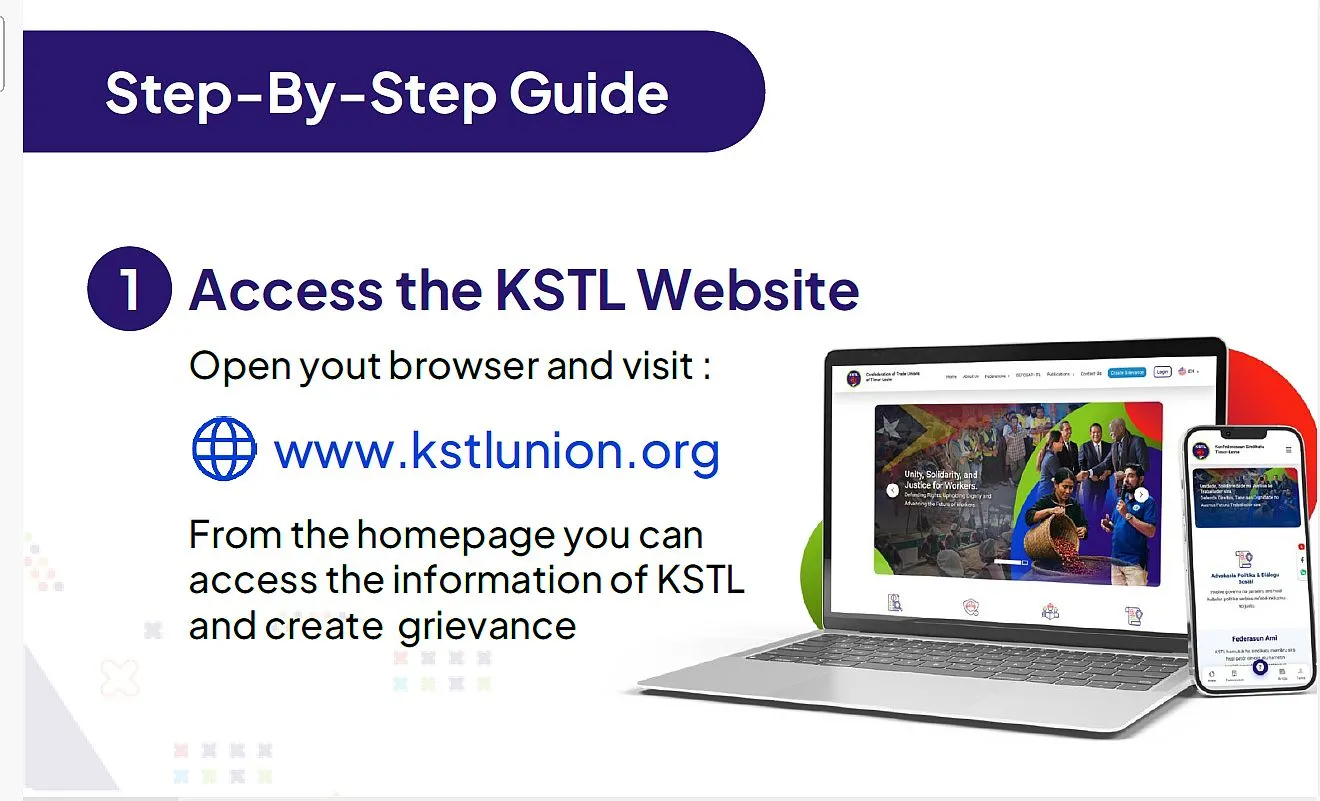
The GMS was developed through close consultation with KSTL and its federations. The process included focus group discussions, field observations, system design and testing, as well as training for users. Consultations and field observations in Baucau and Ermera municipalities also helped identify some of the practical and geographical challenges workers face when trying to raise grievances and seek support.
Based on these findings, the GMS provides KSTL and its federations with one digital platform to record and manage cases. It will help them keep better records, track the progress of grievances and follow up cases more consistently from the time they are reported until they are resolved.
Over time, the information collected through the system can also help KSTL identify common problems faced by workers. This can provide useful evidence for discussions with the Government and employers and help KSTL improve the support it provides to its members.
The launch of the GMS marks an important milestone in KSTL’s efforts to strengthen worker representation and improve access to effective grievance resolution.
Simrin Singh, ILO Country Director for Indonesia and Timor-Leste
Speaking on behalf of the Secretariat of State for Vocational Training and Employment (SEFOPE), Paulo Alves, Executive Director of the National Employment Strategy Secretariat, welcomed KSTL’s initiative and highlighted the role of digital technology in improving services. He said the online system could help KSTL handle workers’ grievances more effectively while supporting wider efforts in Timor-Leste to make better use of digital tools.
Representing employers, Franquelino da Costa Freitas, Vice President of the Chamber of Commerce and Industry of Timor-Leste (CCITL) for Employment, Youth and Professional Training, congratulated KSTL on the launch. He also reaffirmed CCITL’s commitment to continuing its cooperation with KSTL through bipartite social dialogue.
Simrin Singh, ILO Country Director for Indonesia and Timor-Leste, congratulated KSTL and its federations and stressed the importance of making the new system a practical and trusted tool for workers. “The launch of the GMS marks an important milestone in KSTL’s efforts to strengthen worker representation and improve access to effective grievance resolution,” Simrin said.
Ravindra Chanaka Samithadasa, ILO Senior Workers’ Specialist, emphasized that the value of a grievance mechanism lies in giving workers a trusted way to raise concerns and have them addressed fairly. He highlighted its role in protecting workers’ rights, improving labour relations and supporting safer and more productive workplaces.
“A grievance mechanism is about ensuring that workers have a trusted avenue to raise their concerns and that those concerns are addressed through a fair, transparent and credible process. We look forward to seeing the GMS contribute to more timely and accountable grievance resolution, stronger labour relations and a stronger voice for workers across Timor-Leste,” he said.
Taking the system closer to workers
The launch is the first step in a wider effort to introduce the GMS across Timor-Leste. KSTL plans to train municipal and field coordinators and raise awareness of the system among workers in both the formal and informal economies, public-sector workers, local authorities and other stakeholders.
As the system is rolled out, KSTL will also work to strengthen communication and referral networks at the municipal level. The aim is to ensure that workers not only know about the GMS but can also get help to access and use it. Activities are planned across Timor-Leste’s eastern, central and western regions.
The initiative is part of the ILO’s wider support to strengthen workers’ organizations, social dialogue and workers’ access to grievance and legal remedy mechanisms in Timor-Leste. It is supported through the ILO’s Regular Budget Supplementary Account (RBSA) intervention, Preparing Timor-Leste’s Workers and Policymakers for Just Transition and the Formal Economy, which promotes stronger social dialogue, better access to services and legal remedies and progress towards a more formal and inclusive economy.
We look forward to seeing the GMS contribute to more timely and accountable grievance resolution, stronger labour relations and a stronger voice for workers across Timor-Leste.
Ravindra Chanaka Samithadasa, ILO Senior Workers’ Specialist
Related content

RBSA Project
Preparing Timor-Leste's workers and policy makers for just transition and the formal economy
Relevant projects
RBSA Project
Preparing Timor-Leste's workers and policy makers for just transition and the formal economy