

New community spaces create jobs and strengthen social cohesion in Jordan through ILO–Germany partnership
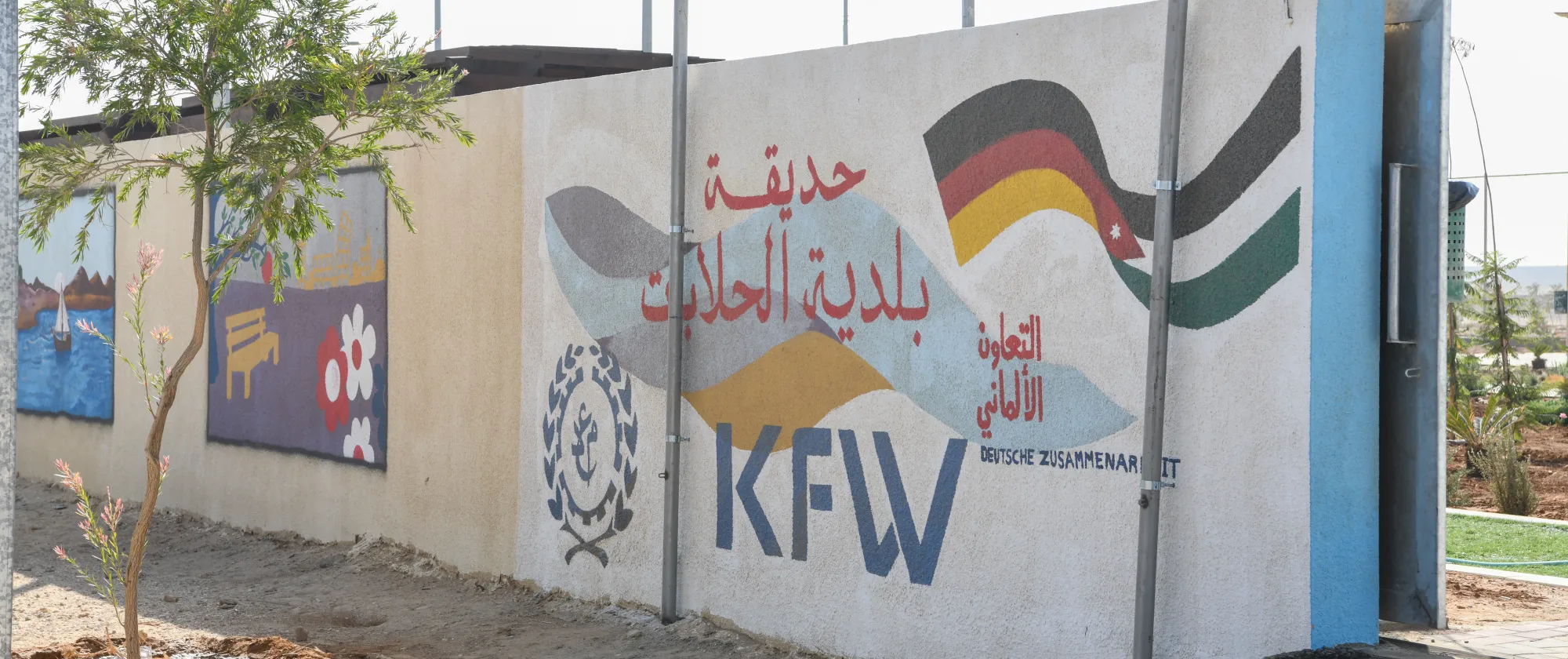
The Hallabat Municipality Park and Playground and Bergish Community and Educational Centre promote decent work, community wellbeing and social inclusion, with funding from Germany through the KfW Development Bank under the ILO Employment Intensive Investment Programme.
30 October 2025
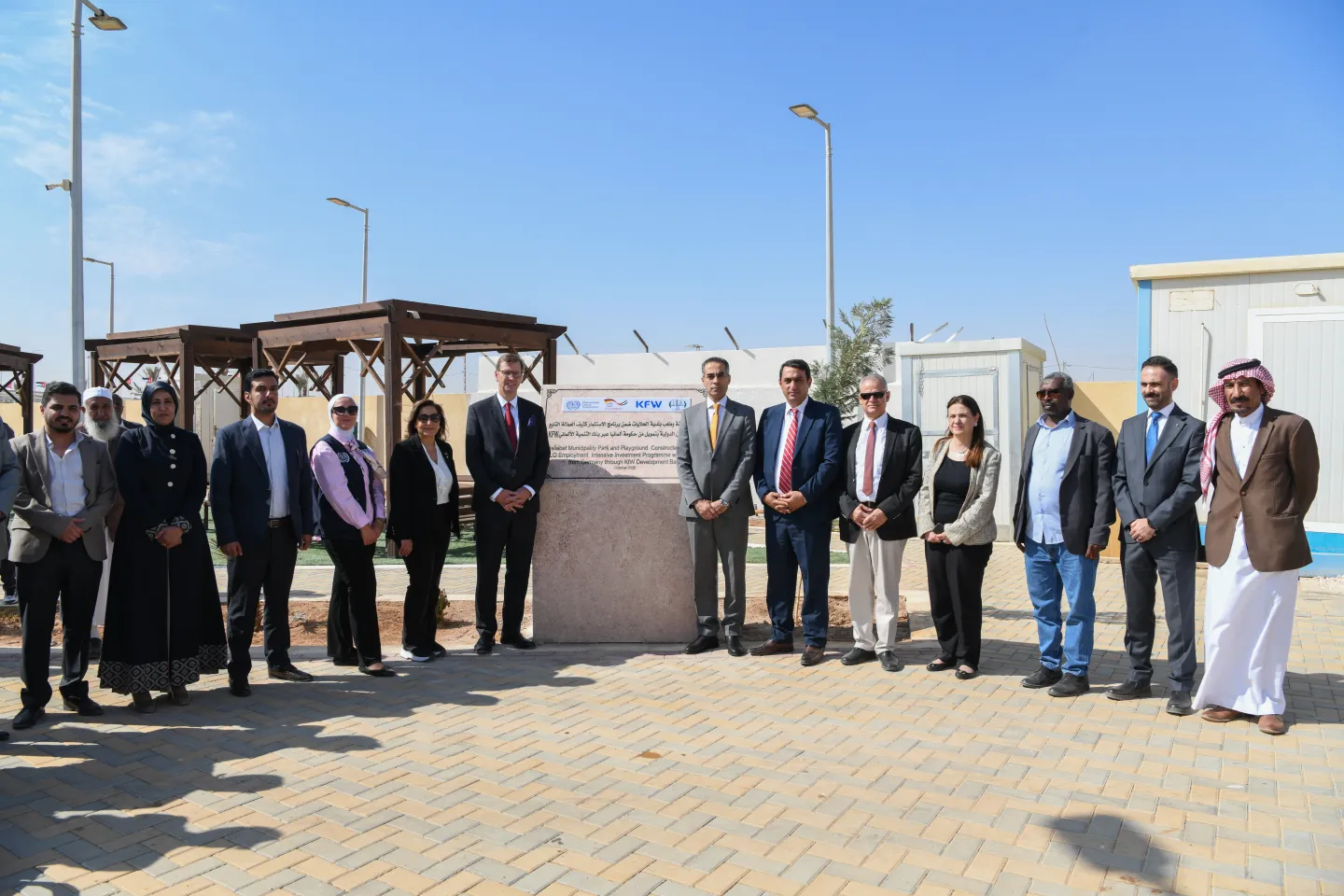
Hallabat and Irbid (ILO News) – The municipalities of Hallabat, located east of the Zarqa Governorate, and Bergish in the Irbid District, the International Labour Organization (ILO) and Germany’s KfW Development Bank celebrated the inauguration of two community infrastructure projects that combine job creation with local development. The new public spaces will provide safe, accessible and inclusive areas for learning, recreation and community engagement, benefiting both Jordanian and Syrian families.
Implemented under the ILO’s Employment Intensive Investment Programme (EIIP), the initiatives demonstrate how public works can simultaneously create jobs, enhance local infrastructure and support sustainable livelihoods for both Jordanians and Syrian refugees.
In Hallabat, a newly constructed Municipality Park and Playground offers family-friendly outdoor areas that strengthen wellbeing and encourage social cohesion. During the construction phase, the project created 105 jobs, generating approximately 9,900 working days equally shared between Jordanians and Syrian refugees, with 30% participation by women and 5% by persons with disabilities.
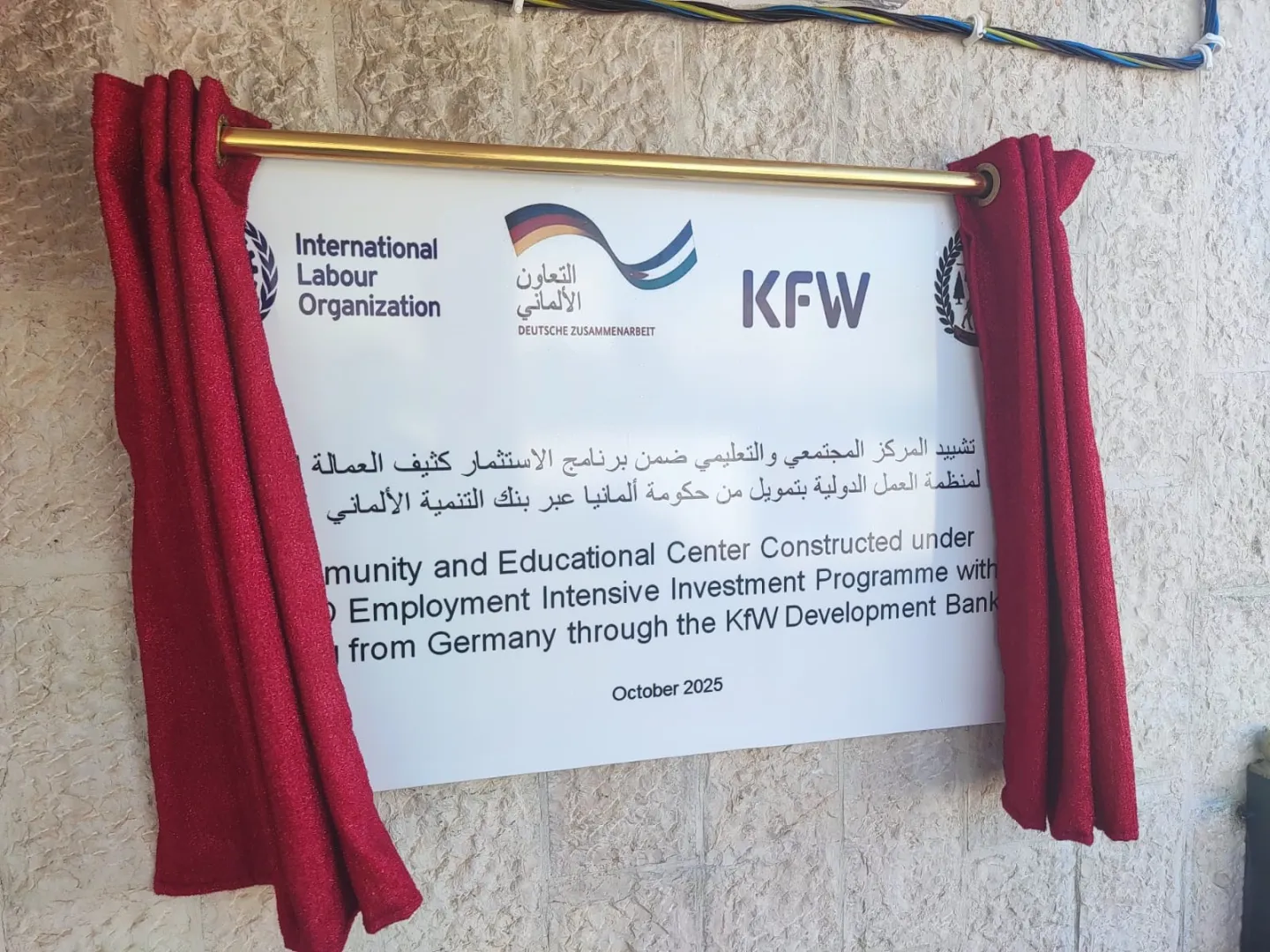
In Bergish, the inauguration of a Community and Educational Centre will serve as a hub for lifelong learning, youth engagement and community activities. The project created 100 jobs, generating approximately 9,600 working days, also equally distributed between Jordanians and Syrian refugees, and with 30% participation by women and 5% by persons with disabilities.
Together, the two initiatives provided 205 decent job opportunities and more than 19,500 working days through labour-based infrastructure development.
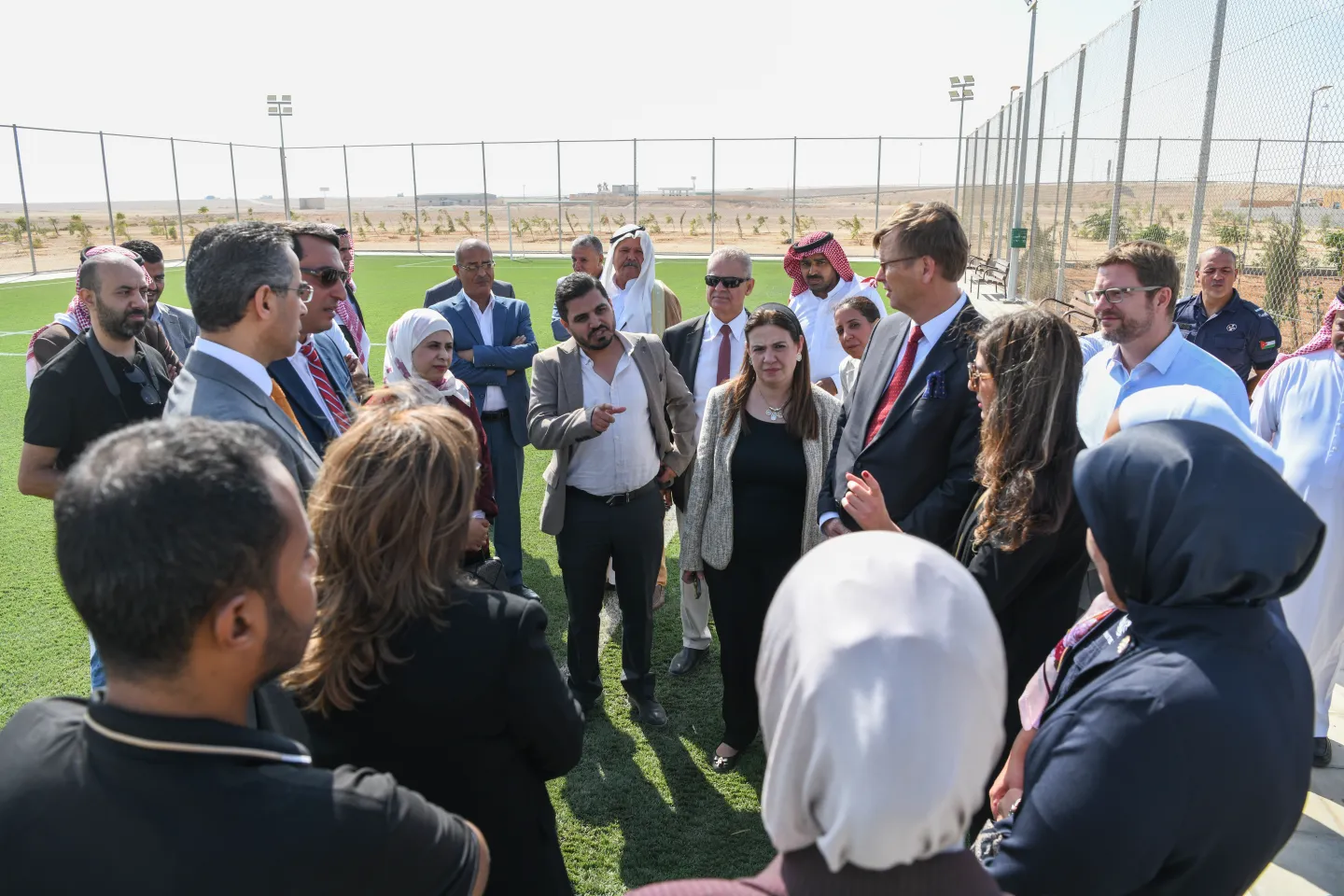
H.E. Dr. Nidal Abu Orabi, Secretary General for Administrative and Financial Affairs, Ministry of Local Administration, emphasized the importance of municipal-level investments, stating: “The partnership between the Ministry of Local Administration and the International Labour Organization has grown since the very first phase of the programme, now reaching more than 45 municipalities across Jordan. These projects stand as a model of collaboration creating decent jobs for Jordanians and Syrian refugees alike, with strong participation of women and persons with disabilities, while relying on local resources and labour-intensive methods. Through a transparent and competitive selection process, municipalities have implemented a wide range of initiatives from libraries, training centres, and parks to green spaces, roads, and community areas all designed to improve infrastructure, empower youth, and promote sustainable and environmentally conscious development.
The project included a capacity-building programme for government officials and private sector contractors to strengthen their skills in managing labour-based and locally resourced projects. The Ministry remains deeply grateful to the Federal Republic of Germany through KfW Development Bank for its generous support, and to the ILO for its continued technical partnership in turning this shared vision into lasting progress for our communities.”
Speaking at the event, H.E. Dr. Bertram von Moltke, the German Ambassador to Jordan emphasized the value of partnership and inclusion, stating: “This project shows how investing in people through decent work can transform communities. The Hallabat Park & Bergish Community Centre not only provide a place for families to gather and children to play, but also serve as a symbol of resilience, cooperation, and hope.”
The ILO and KfW have been working closely with several Jordanian ministries and municipalities under the EIIP to promote labour-intensive methods, providing short-term income, on-the-job training, and long-term skills that improve employability and support Jordan’s Economic Modernization Vision and Sustainable Development Goals”.
ILO Jordan Country Coordinator and Senior Regional Employment Policy Specialist for Arab States Amal Mowafy noted the transformative role of employment-focused infrastructure: “Linking public employment with local development and social inclusion ensures that every investment not only creates jobs and builds infrastructure - a park, a road or a centre - but also builds people’s skills, dignity and prospects,” Mowafy said. “These initiatives strengthen social cohesion, empower women and persons with disabilities and create green, sustainable spaces that reflect Jordan’s Economic Modernization Vision and the Sustainable Development Goals.”
“What makes this model truly unique is that it brings together government, donors, and local authorities in a spirit of shared responsibility,” Mowafy added. “Through the Employment-Intensive Investment Programme, we are working together to create pathways for Jordanian and Syrian workers alike to earn a decent income, learn practical skills and contribute to their communities’ growth and to an inclusive economy where no one is left behind. Through this project, approximately 205 job opportunities were created, generating 19,500 workdays equally shared between Jordanians and Syrians. Of these opportunities, 30% were allocated to women and 5% to persons with disabilities".
"I am proud to have taken part in this project. In addition to earning an income to support my family, I gained new practical skills and learned the importance of maintaining public green spaces. This project brought Jordanians and Syrians together to work with cooperation and mutual respect."
said Khitam Abu Ghabeet, Semi-Skilled Worker, Hallabat Municipality.

The inauguration was attended by representatives from Bergish and Hallabat Municipalities, the ILO and the KfW Development Bank, along with community members who participated in and benefited from the projects.
Hallabat and Bergish are part of a broader effort under the Employment Intensive Investment Programme that will see 15 community infrastructure projects established across Jordan in 2025, each designed to generate employment, enhance local resilience and contribute to inclusive growth.
The Employment Intensive Investment Programme (EIIP) in Jordan, implemented by the ILO with funding from Germany through KfW, supports the creation of decent work through labour-based infrastructure development, community services and skills training. Since its inception, the programme has generated thousands of work opportunities for both Jordanians and Syrian refugees while contributing to climate action, local development and gender equality.
Related content

Project
Employment Intensive Investment Program EIIP Jordan, Phase VI

Country Portal
Jordan
Relevant projects
Project
Employment Intensive Investment Program EIIP Jordan, Phase VI