

Decent Work Country Programme
Montenegro and ILO embark on new programme to pave way for decent work in the country
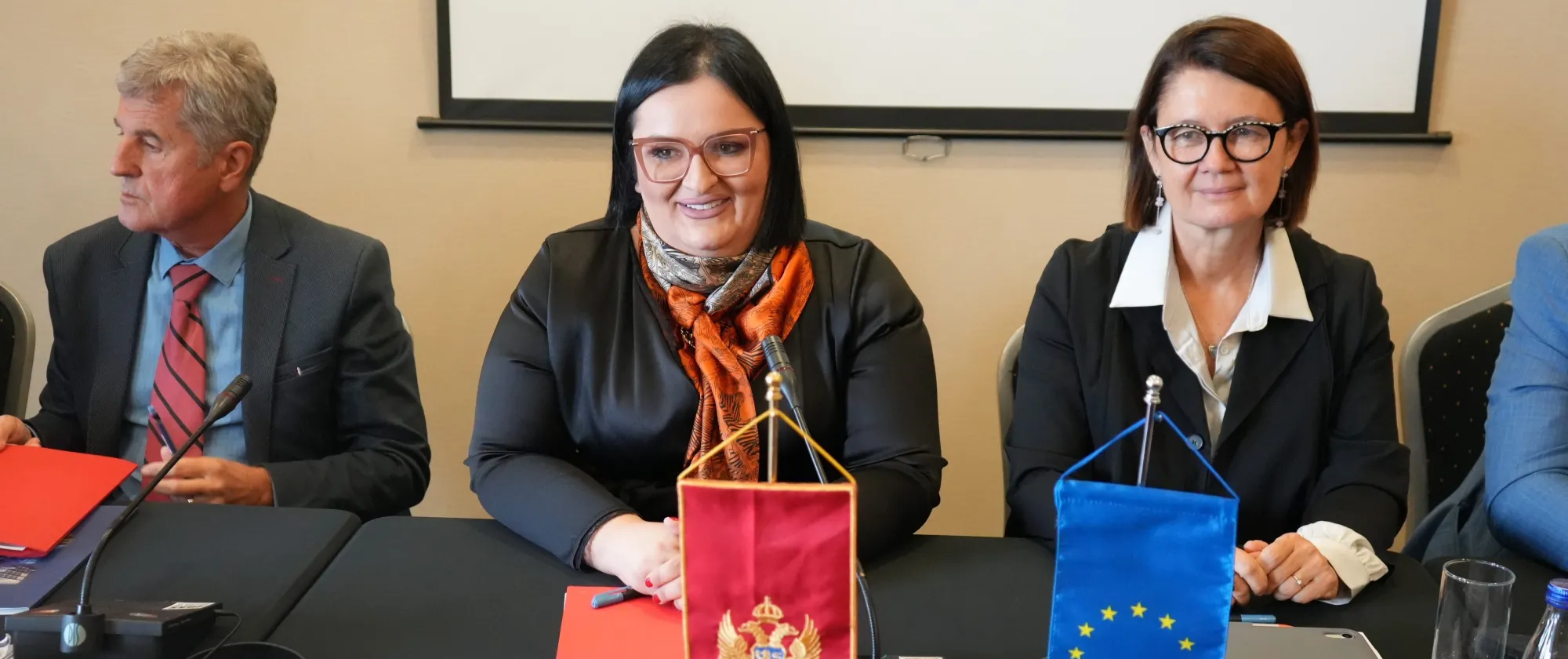
On 18 September, 2024, the Minister of Labour, Employment, and Social Dialogue, Naida Nišić, the Director of the ILO Office for Central and Eastern Europe, Claire Harasty, the President of the Employers' Union of Montenegro, Slobodan Mikavica, the General Secretary of the Confederation of Trade Unions of Montenegro, Duško Zarubica, and the General Secretary of the Union of Free Trade Unions of Montenegro, Srđa Keković, signed the Memorandum of Understanding for the Decent Work Country Programme for 2024-2027.
19 September 2024
The Decent Work Country Programme (DWCP) represents the main planning framework for providing ILO support to member countries. It serves as a plan guiding the ILO's work in the country in line with the priorities and goals agreed upon with the Government of Montenegro, the Employers' Union of Montenegro, the Union of Trade Unions of Montenegro, and the Union of Free Trade Unions of Montenegro.
The two priorities of the programme for the 2024-2027 period are the promotion of inclusive and productive employment and the improvement of working conditions for all workers in Montenegro.
This DWCP is the third consecutive programme concluded by Montenegro and is the result of extensive tripartite consultations. Its goal is to overcome key labour market challenges, such as long-term unemployment, youth and women’s unemployment rates, informal employment, and emigration, while also enhancing social dialogue, strengthening occupational safety, and improving labour rights.
As part of this programme, the Government of Montenegro, in collaboration with social partners and the ILO, will work toward achieving the following outcomes:
- Improving the effectiveness of the Employment Agency of Montenegro
- Enhancing support programmes for enterprises, strengthening digital capacities, inclusivity, and the responsiveness of the skills development and lifelong learning system
- Aligning new labour legislation with international labour standards and relevant EU legal frameworks
- The introduction of new mechanisms to combat violence and harassment in the world of work and promote gender equality in the workplace
- Strengthening the organizations of employers and workers
- Enhancing the capacity of institutions to address informality
The significance of this document lies in the fact that it results from effective social dialogue with social partners—the Employers' Union of Montenegro, the Union of Trade Unions of Montenegro, and the Union of Free Trade Unions of Montenegro – and represents a joint vision for the promotion of decent work in Montenegro.