

Mongolian businesses unite against forced labour
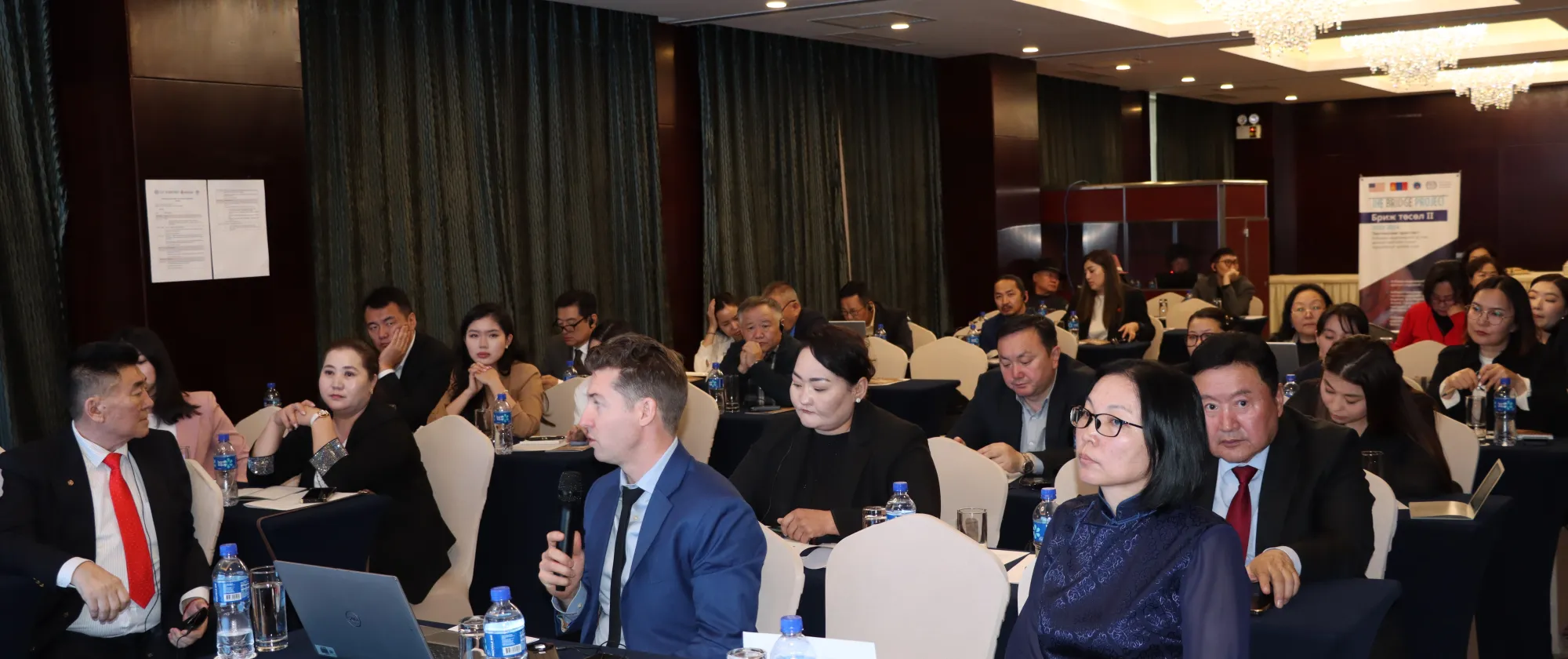
In collaboration with the Mongolian Employers’ Federation (MONEF) and the Mongolian National Chamber of Commerce and Industry (MNCCI), the ILO Bridge-II project organized a workshop on Responsible Business and Forced Labour in Mongolia. The Bridge-II project, titled “From Protocol to Practice: A Bridge to Global Action on Forced Labour - Phase II,” is funded by the US Department of Labor (USDOL).
30 May 2024
ULAANBAATAR, Mongolia (ILO News) - Mongolia has made significant strides in addressing forced labour, particularly through the ratification of two fundamental ILO Conventions on Forced Labour (Nos. 29 and 105) and corresponding legislative and enforcement efforts. The involvement of employer and business membership organizations (EBMOs) is crucial in these efforts.
As part of a broader effort to promote responsible business practices and protect human rights, national employer and business membership organizations (EBMOs) in Mongolia are eager to learn from their counterparts around the world. To this end, the Bridge-II project has initiated a series of activities to address forced labour in partnership with MONEF and MNCCI.
The first workshop on Responsible Business Conduct and Forced Labour in Mongolia gathered over 50 representatives from diverse business communities, including professional and industrial associations and private companies. This event provided an excellent opportunity to raise awareness and share best practices in addressing forced labour risks.
In his opening remarks, Wade Bromley, ILO Senior Employers’ Specialist, emphasized the importance of collective action by employer and business membership organizations in leading efforts to address forced labour.
Employer and business membership organizations at all levels, whether they are local, sectoral, national, or international, have a key role to play in supporting their member companies to act and to inform governments in the development of appropriately targeted legal and policy responses. This is not just about demand, but about motivating compliance across the private sector with an issue like forced labour.
Wade Bromley, ILO Senior Employers’ Specialist
Speaking at the workshop, Ganbaatar Khuyag, Executive Director of MONEF, also highlighted the commitment of Mongolian businesses to comply with core labour standards, including those on forced labour. “This should be a part of our regular work.” he added.
In addition to engaging thematic sessions led by ILO experts Bharati Pflug and Andrea Davila, participants benefited from a panel of local business representatives and national experts who provided valuable insights on the issue. Participants expressed their interest in further learning about forced labour, in particular the measures companies can take to reduce the risk.
Related content
Forced labour
From Protocol to Practice: A Bridge to Global Action on Forced Labour - Phase II (Bridge II) in Mongolia