

METI project empowers trade unions to shape inclusive trade and investment policies in Jordan
ILO–EU initiative brings Jordanian workers’ representatives into dialogue on employment-centred trade and investment reforms that support decent work and inclusive growth.
16 June 2026
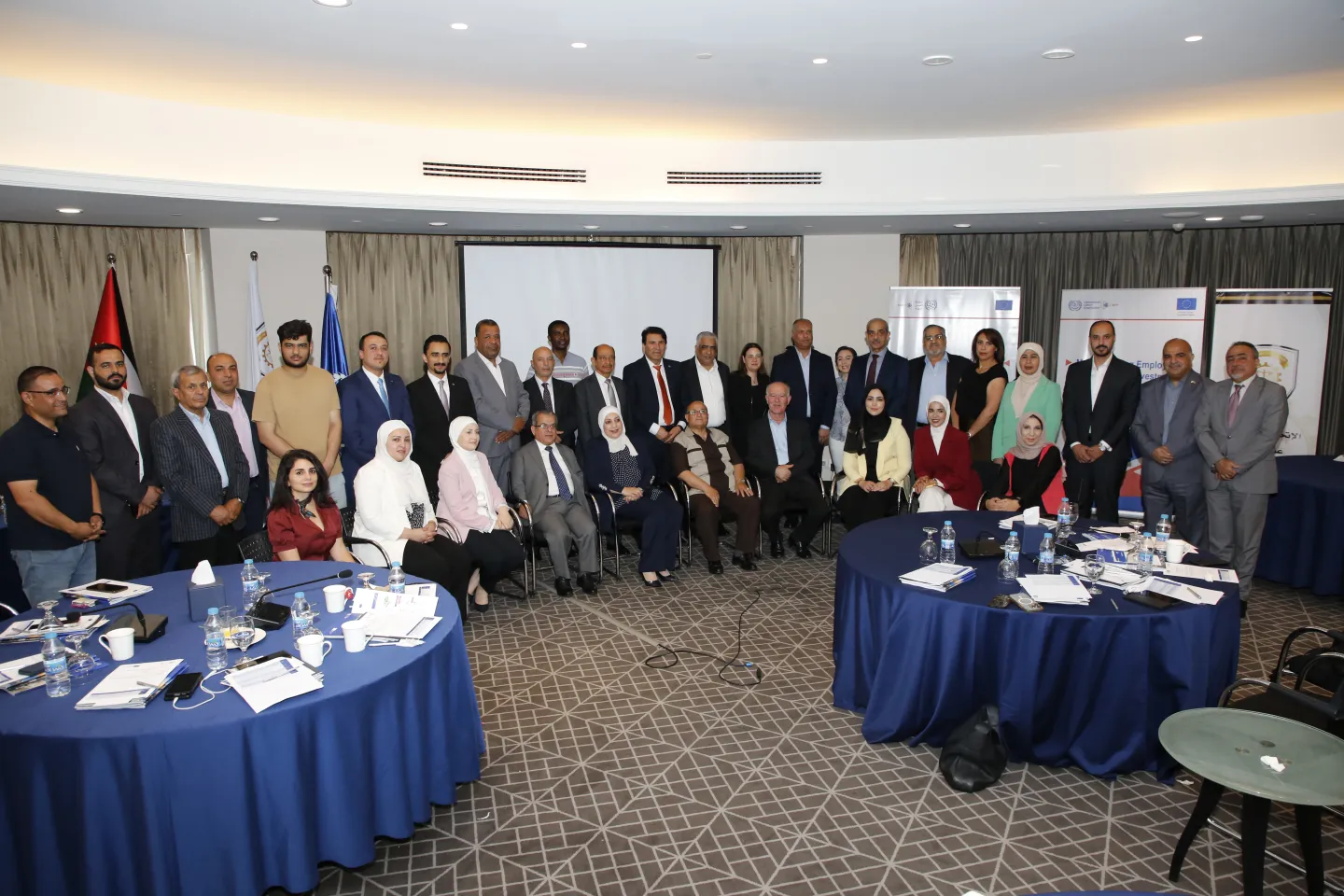
AMMAN (ILO News) - The International Labour Organization (ILO) convened a dialogue session for trade union leaders in Jordan under the European Union co-funded Mainstreaming Employment into Trade and Investment (METI) project. Held in the Jordanian capital Amman, the session aimed to strengthen the participation of workers' organizations in national discussions on the nexus between employment, trade and investment.
The session brought together representatives of the General Federation of Jordanian Trade Unions (GFJTU) and highlighted the tangible impact of the METI project in bridging the gap between trade, investment and employment outcomes, ensuring that workers’ voices play a central role in national economic decision-making.
Amplifying workers’ voices in economic policy discussions
As METI Phase II implements its activities in Jordan, the session provided an opportunity for trade union leaders to explore the links between economic policies, labour market outcomes, and decent work, while identifying ways to contribute more effectively to policy dialogue.
Participants examined practical pathways through which METI supports:
- The integration of employment considerations into trade negotiations and investment strategies
- Stronger participation of trade unions in national policy dialogue
- More balanced economic growth that benefits both businesses and workers.
Through these efforts, METI is institutionalizing social dialogue as a key mechanism for achieving inclusive economic outcomes.
Opening remarks

In his opening remarks, Vice President of the General Federation of Jordanian Trade Unions (GFJTU) Khaled Abu Marjoub emphasized that trade unions are an integral part of the project and key national partners in protecting stability, supporting production, and defending the interests of both workers and the nation.
He expressed hope that the session would generate practical recommendations to strengthen the role of trade unions in economic and social policymaking, advance workers’ interests, and create broader opportunities for social dialogue, equitable growth, and sustainable development.
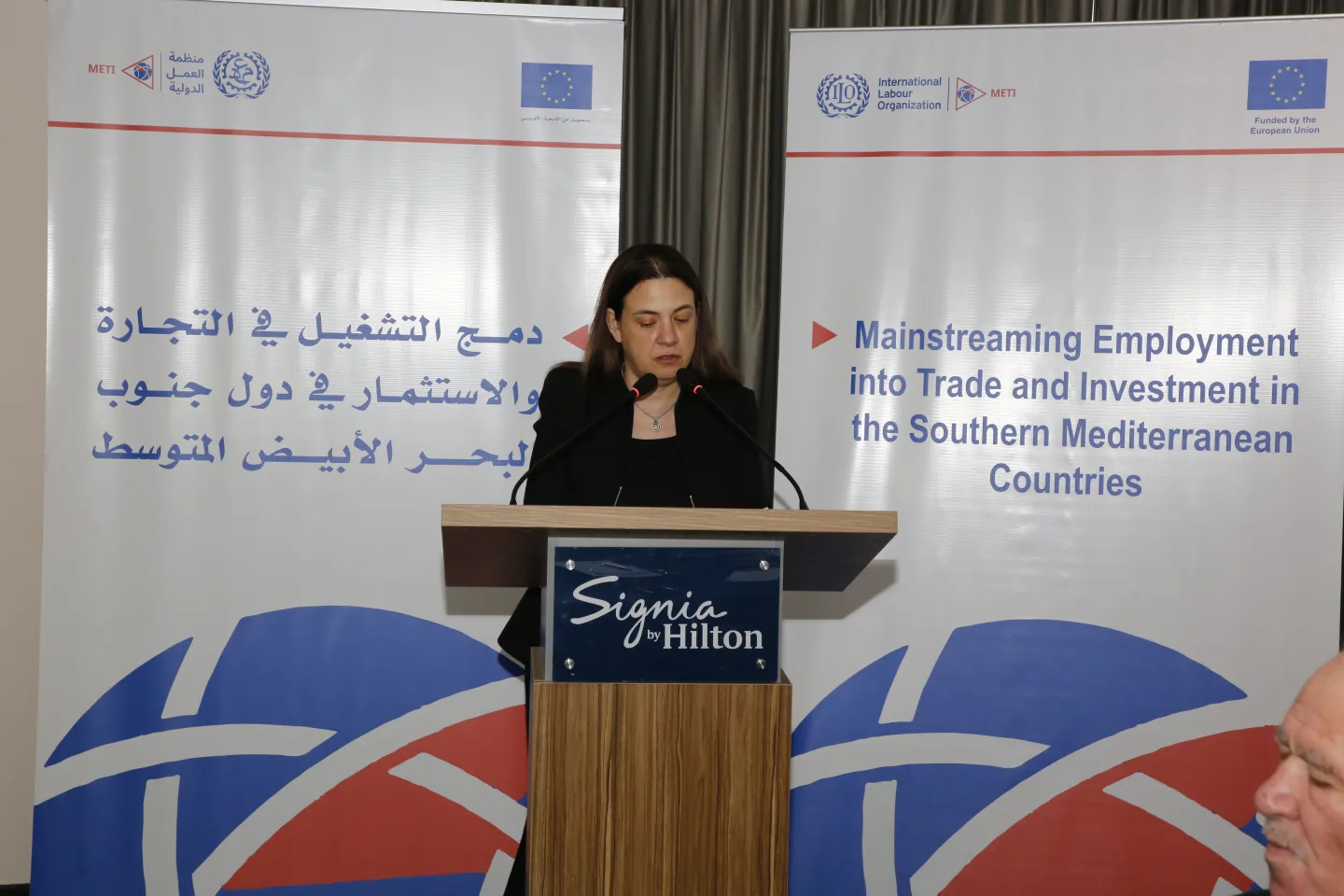
ILO Jordan Country Coordinator and Senior Regional Employment Policy Specialist for Arab States Amal Mowafy, highlighted that trade and investment policies should be assessed not only by their contribution to economic growth, but also by their ability to generate productive and decent jobs, particularly for young people and women. She noted that METI II builds on the achievements of the first phase and supports Jordan's Economic Modernization Vision by promoting employment-centred trade and investment policies, strengthening social dialogue, enhancing skills development, and supporting small and medium-sized enterprises. She reaffirmed the ILO's commitment to working with governments, employers' and workers' organizations to ensure that economic transformation translates into more inclusive growth, decent work, and sustainable employment opportunities.
Understanding trade and investment from a workers’ perspective
Through expert presentations and interactive discussions, the session provided participants with practical insights into the impact of trade and investment policies on employment, labour standards, and decent work outcomes in Jordan, highlighting opportunities for stronger engagement of trade unions in policy processes.
Importantly, METI is enabling trade union leaders to:
• Identify concrete policy entry points
• Engage more effectively in economic governance
• Advocate for reforms that promote quality job creation and inclusive growth.
Looking Ahead
The session marks an important step in strengthening constituents’ capacity for social dialogue and ensuring that workers’ perspectives are reflected in economic policy discussions. Building on the findings of METI Phase I, including the value chain assessment of Jordan’s engineering sector, participants reflected on the sector’s significant potential to contribute to export growth, job creation, and economic diversification. At the same time, they recognized key challenges related to skills development and retention, access to finance, technological upgrading, and maintaining competitiveness in evolving global markets, and ensuring respect for and the effective exercise of trade union rights.
Looking ahead, METI Phase II will continue to support evidence-based social dialogue and strengthen the capacity of workers’ and employers’ organizations to engage in trade and investment policymaking. The project will also promote actions that enhance skills development, improve working conditions, support sustainable and innovative business practices, and ensure that trade and investment policies contribute to inclusive growth and decent work in Jordan.
About METI
The Mainstreaming Employment into Trade and Investment (METI) project is co-funded by the European Union and implemented by the International Labour Organization (ILO). It aims to create more and better jobs in the Southern Mediterranean region by integrating employment priorities into trade and investment frameworks and strengthening dialogue among governments, employers, and workers’ organizations.
Related content
METI Project
Mainstreaming Employment into Trade and Investment in the Southern Mediterranean
Relevant projects
METI Project
Mainstreaming Employment into Trade and Investment in the Southern Mediterranean