

Making social protection accessible and effective for domestic workers with evidence from Bihar: Key insights on the way forward
The validation workshop reviewed the findings of a report and discussed ways forward to ensure accessible and effective social protection for domestic workers in India.
26 May 2025
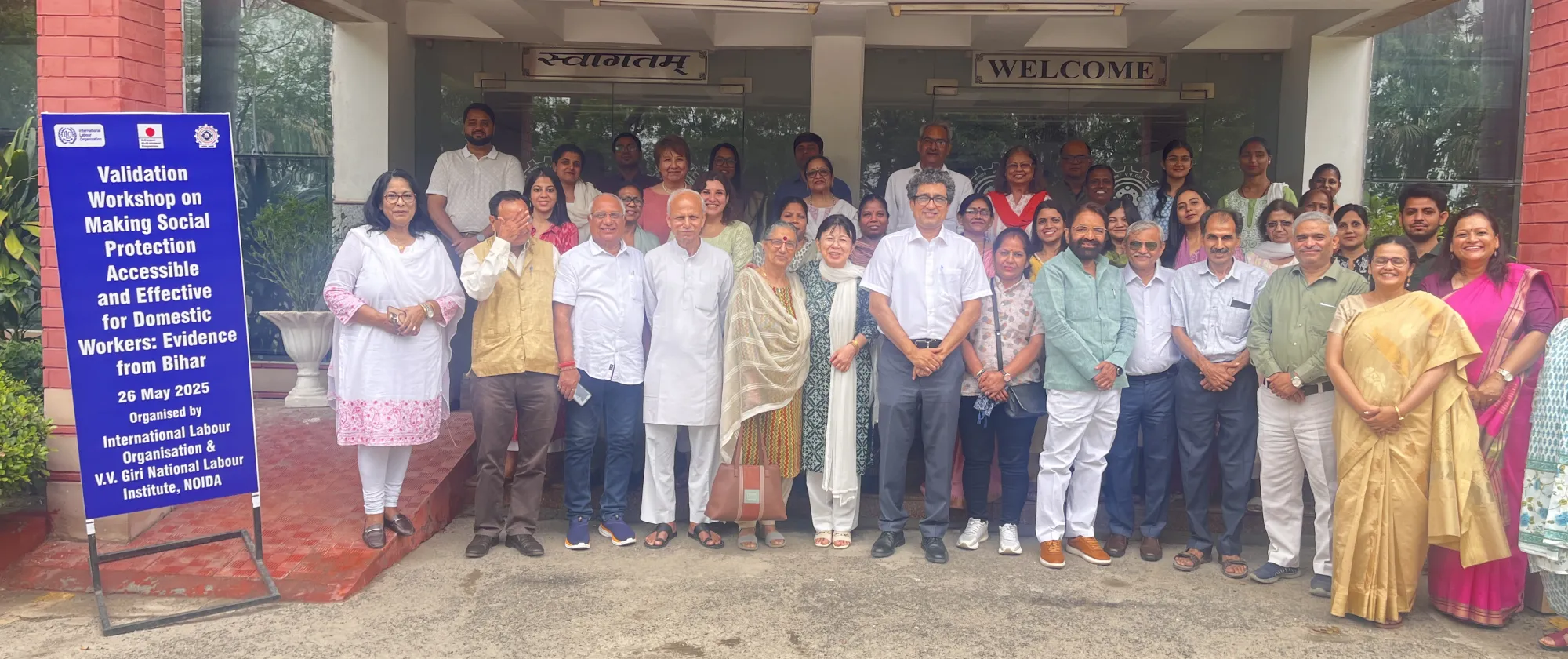
The ILO’s Promoting Rights and Social Inclusion through Organization and Formalization Project Phase 2 (PRS Phase 2), jointly with the V.V. Giri National Labour Institute (VVGNLI) organized a workshop “Making Social Protection Accessible and Effective for Domestic Workers: Evidence from Bihar” on 26 May 2025 to validate findings of the study on domestic workers' access to social protection.
According to the key findings of the study, presented by Dr Ellina Samantroy, Fellow at VVGNLI, the majority (93 per cent) of the workers surveyed were women, often young and migrants, performing multiple part-time jobs many earning between ₹2,000 and ₹3,000 per household per month, highlighting job insecurity and financial precarity. Although 79.2 per cent of the surveyed domestic workers were aware of the e-Shram portal, a national database of unorganized workers that facilitate their access to various social security schemes, only 46 per cent were registered due to barriers such as language constraints, complex procedures, lack of access to smartphones and weak institutional support from government offices and civil society organizations. The study also highlighted excessive workloads, poor and discriminatory treatment by employers, job instability, and denial of paid leave. The absence of grievance redressal mechanisms, support helplines, or legal enforcement further compounds the vulnerabilities of these workers.
Dr Kingshuk Sarkar, Ms Shahnaz Rafiq (INTUC), and Ms Aditi Yagnik (SEWA) called for recognizing households as workplaces, stronger enforcement of minimum wages and institutionalizing Domestic Worker Welfare Boards. Legal experts including, Mr Onkar Sharma clarified how the Labour Codes apply to domestic workers, including their right to organize and receive wage protections.
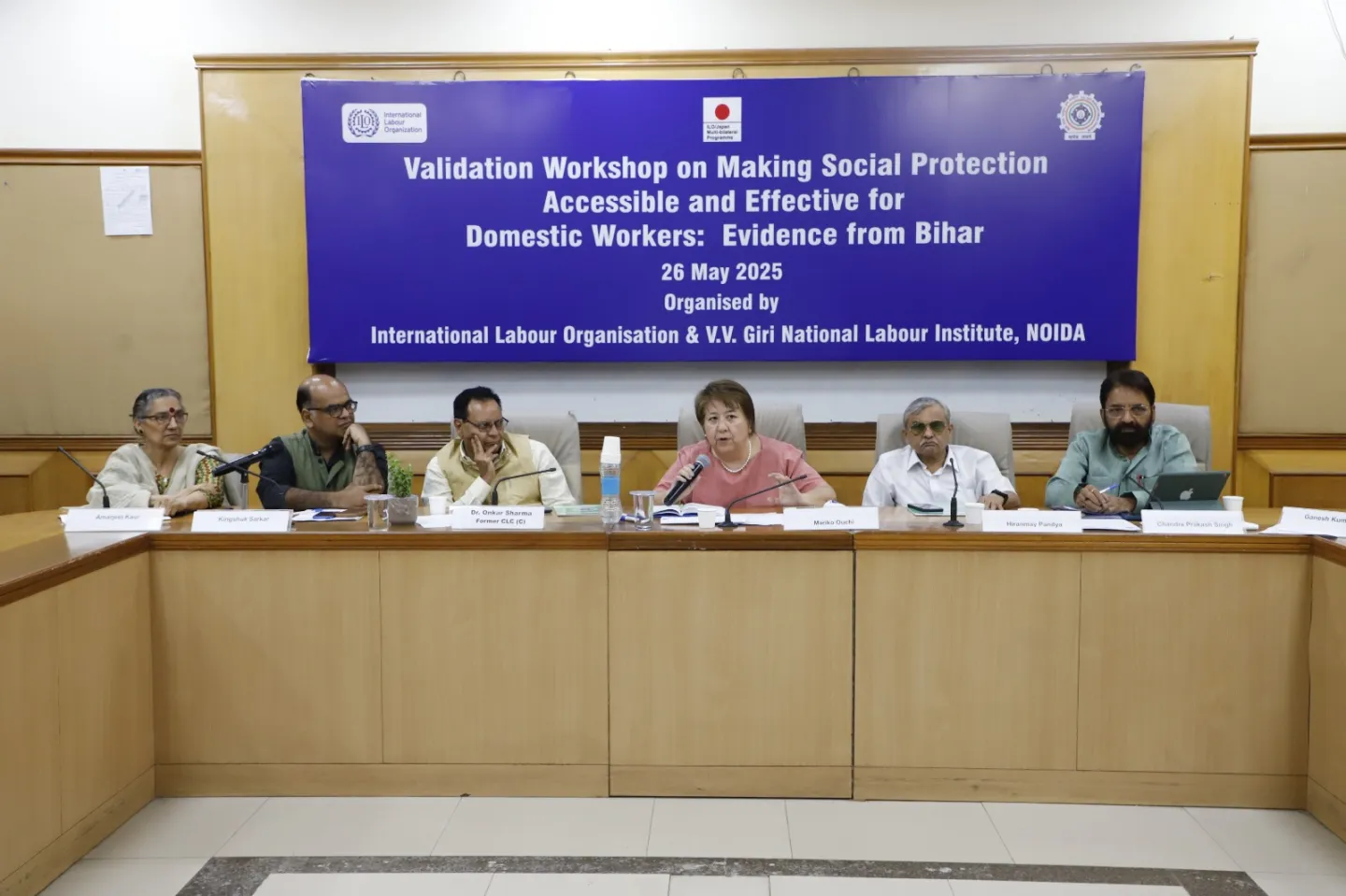
Moderating the first panel, Ms Mariko Ouchi, Senior Specialist, Social Protection, emphasized the need for inclusive, contributory social protection models, decentralization of benefits delivery, and convergence of schemes, especially for migrant and climate-affected workers.
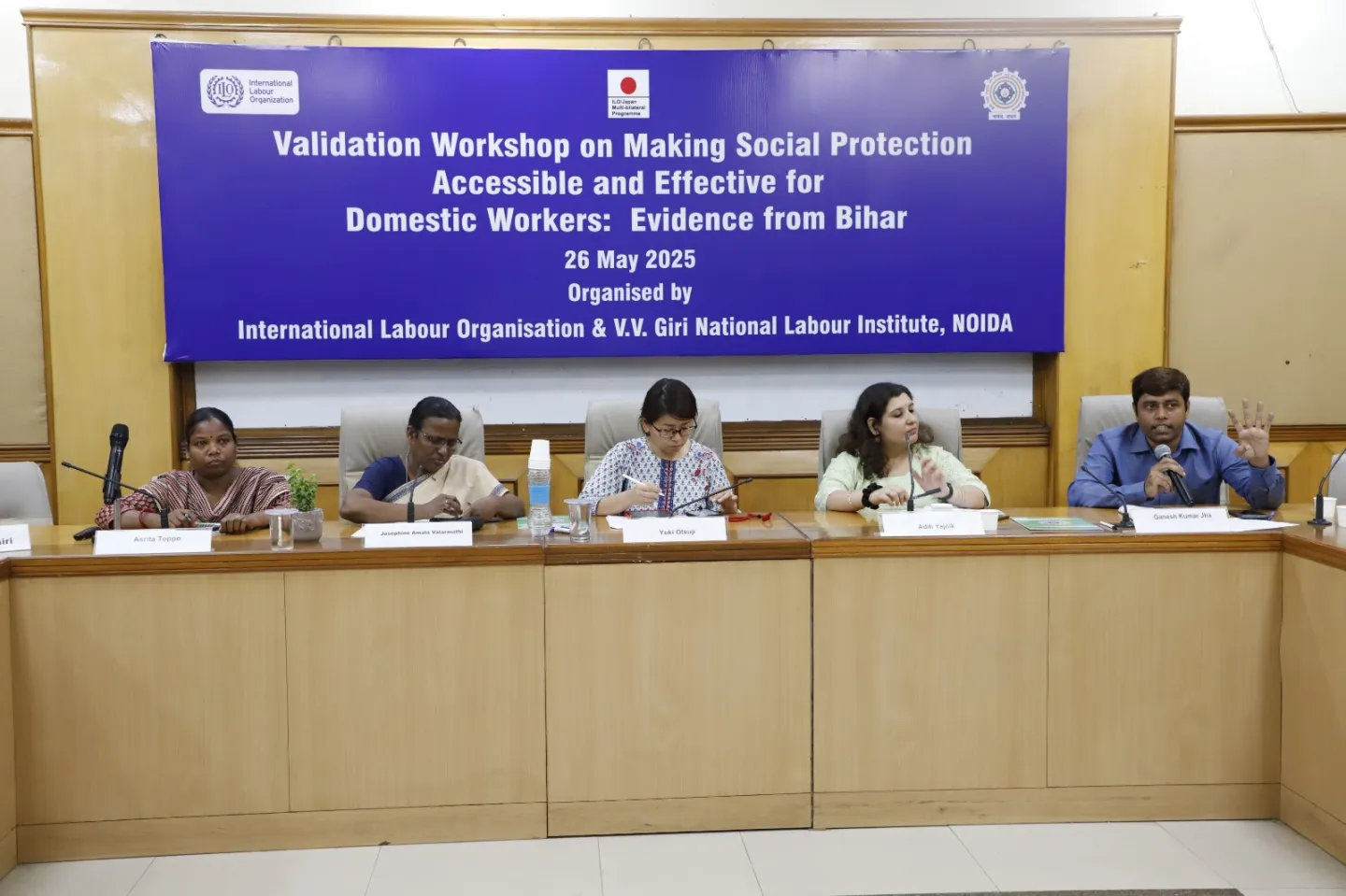
The second panel, chaired by Ms Yuki Otsuji, Workers’ Specialist, ILO, and Ms Baishali Lahiri, National Project Coordinator, PRS Project, examined good practices from Bihar and remaining gaps. They stressed the invisibility of domestic workers in labour systems and called for rights-based, gender-sensitive reforms. INTUC reinforced the need for worker-centric implementation, localized service delivery, and recognition of unpaid care work.
As way forward, participants suggested the need to promote fair wages, improve inter-departmental coordination between Ministries and agencies dealing with labour, social welfare, and urban/rural development issues, ensure portability of social protection for migrant workers, and align national efforts with international labour standards, such as the ILO’s Domestic Workers Convention (No. 189) and Violence and Harassment Convention (No. 190).

The workshop brought together representatives from central and state governments, international organizations, trade unions, civil society, and academia.
The workshop was held under the ILO’s “Promoting Rights and Social Inclusion through Organization and Formalization” (PRS Phase II) Project, which aims to reduce decent work deficits and gender inequalities in the informal economy and promote the transition to the formal economy in Nepal, India and Pakistan.