

Making productivity work for workers: ILO equips Trade Unions to champion fair wages and Decent Work through productivity
22 October 2024
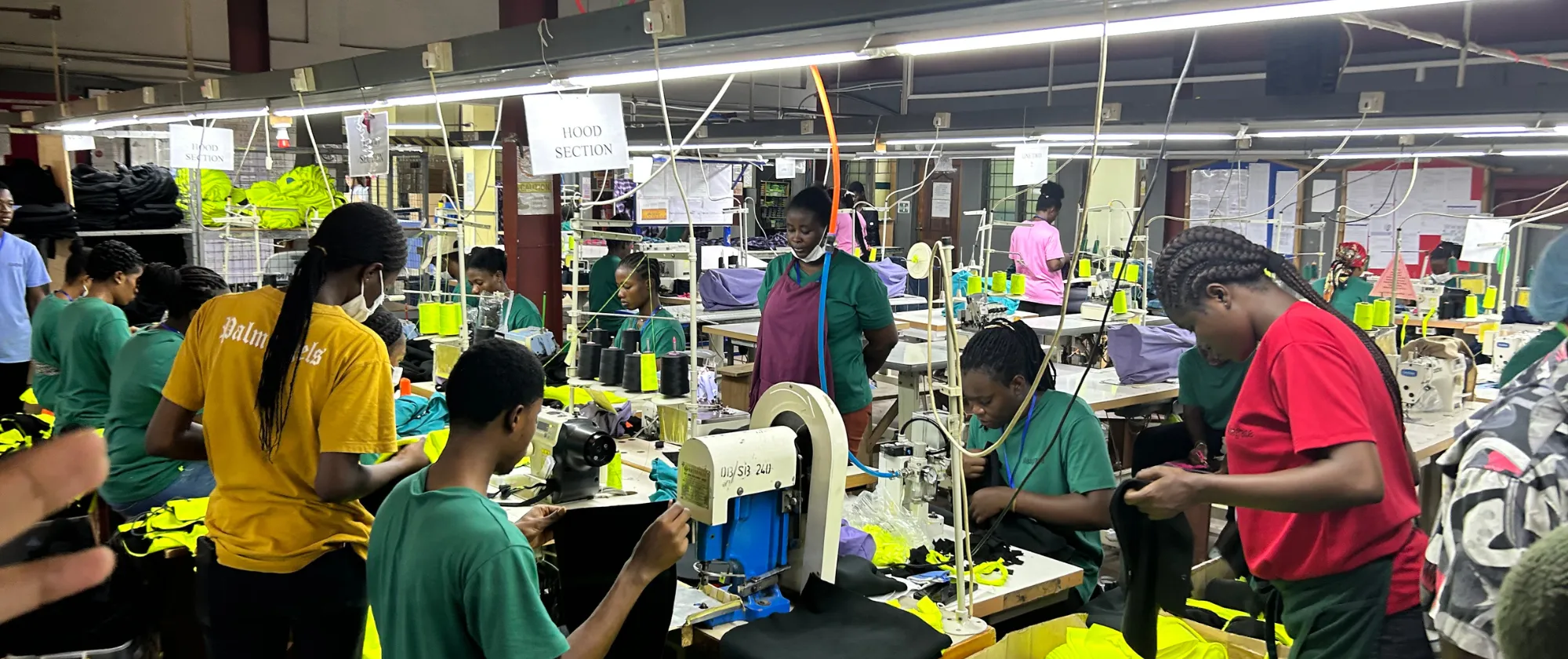
Ghanaian trade unions are leading reforms to create a Productivity Ecosystem for the country’s garment and shea processing industries.
Accra, Ghana: In Ghana, workers are breaking traditional conceptualizations of productivity with a pro-worker approach. Local workers’ organizations – thanks to the support of ILO’s Productivity Ecosystems for Decent Work programme - have taken ownership of productivity as an essential element for the improvement of wages and working conditions. Ghana’s Trade Union Congress (TUC), the most representative union, is now leading the charge, engaging government, and employers in a series of legislative, social dialogue and capacity building initiatives to boost labour productivity in two industrial sectors – garments and shea processing - and thus, achieve fairer wages.
To support this process, the Productivity Ecosystems for Decent Work Programme, the ITC-ILO’s Employment Policy and Analysis Programme and the Bureau for Workers Activities (ACTRAV) are jointly building capacity of workers’ organizations to engage in policymaking and wage negotiations linked to labor productivity, having already trained 28 senior officials from 17 workers' organizations affiliated with the Ghana Trade Union Congress.

Reimagining productivity for workers' benefit
This training is an important milestone within the comprehensive support that the ILO’s Productivity Ecosystems for Decent Work Programme is providing to workers organizations in Ghana. The project has showed how is possible to integrate workers priorities in SME support programmes, enabling workers organizations to shape project activities and lead the way in the transformation of priority sectors. This starts with the conceptualization of productivity itself. Workers organizations were supported to issue a pioneering position paper on Productivity and Decent work, defining these concepts as structurally interlinked. The project worked with TUC to review fundamental laws such as the Labour Act, modernizing sections linked to labour rights, productivity and working conditions. Workers organizations are also part of an ongoing process to draft the country’s first national OSH policy.
Deputy General Secretary of TUC, Dr Kwabena Otoo, was optimistic that the training will enable workers organizations to build stronger consensus with employers on the importance of labour productivity for minimum wage determination. The project is supporting a practical application of these skills in the shea sector, where it has helped the Tree Crop Development Authority to develop jointly with TUC a minimum price mechanism to safeguard worker incomes. TUC has created Ghana’s first shea union, that will ensure that minimum prices and workers' rights are respected.
I am leading on facilitating the shea workers union formation in Northern Ghana. It is only when we can formalise the informal sector that productivity gains can translate to fair and equitable wages for workers. Now I have enough and strong “bullets” in our advocacy to fight low productivity and working conditions.
Ms. Felicia Krajar, Northern Regional Secretary of TUC
Economic skills also come handy when TUC engages investors to attract high quality jobs to Ghana, another of the activities that received project support.
At the factory level, the course will be useful to continue with the engagement of TUC in tailoring and delivering technical trainings that can boost employability of workers in the priority sectors and the improvement of OSH in their workplaces. To that effect, TUC was also beneficiary of “Leading Safely,” a training to boost their leadership in the improvement of OSH across the whole industrial ecosystem.
I have also begun discussions on extending the training to other field officers and building them as trainer of trainers so that the impact can be massive. I'm now conscious of how we should view the workplace and its structure.
Mr. Kofi Asianowa Asare, Industrial Relations Officer of the Public Services Workers Union
Productivity Ecosystem for Decent Work is a global programme of the International Labour Organisation (ILO), funded by the Governments of Switzerland and Norway. In Ghana, the project seeks to address constraints to productivity growth and decent work in the textile and garment and the shea processing sectors.
About Productivity Ecosystems for Decent Work
Productivity ecosystems for decent work approach