

Making microfinance work in Sudan
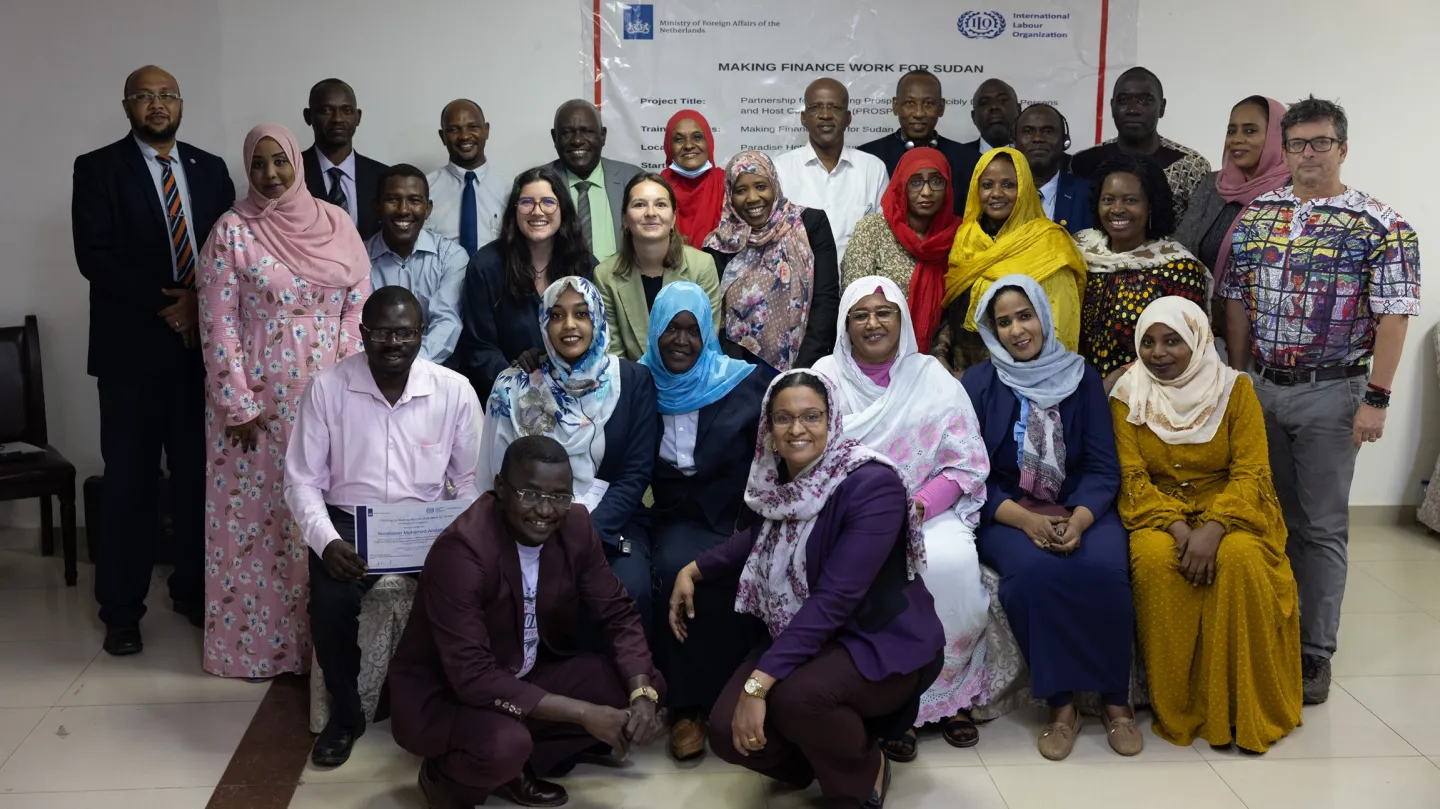
With the aim to improve micro-finance ecosystem and financial inclusion of refugees and their host communities in Sudan, the ILO brought together key stakeholders from the banking and finance sector at a national workshop.
29 August 2022
Former UN General Secretary and Nobel Laureate Kofi Annan said, “"Microfinance recognizes that poor people are remarkable reservoirs of energy and knowledge. And while the lack of financial services is a sign of poverty, today it is also understood as an untapped opportunity to create markets, bring people in from the margins and give them the tools with which to help themselves."
Conforming his message, ILO PROSPECTS in Sudan is investing in the realization of financial opportunities for the most vulnerable host and refugee communities. Setting a milestone in this process, the ILO managed to bring together the influential brains and minds in the country to participate in a workshop on ‘Making Microfinance Work in Sudan’.
A national level workshop on this issue was pertinent after ILO’s socio-economic assessments of Sudan revealed that the financial services sector covers only 3% of country’s total demand. The deteriorating economy, ongoing political instability and inter-communal conflicts have distressed existing operations of the micro finance institutions (MFIs). They are even restricted from expanding their coverage by the obsolete laws and regulations.
“To improve financial inclusion of rural and under-served communities, both strengthening financial education (pull initiatives) and expanding the supply of financial services (push initiatives) are necessary. Without the locally appropriate interventions providing access to finance, we are excluding the most vulnerable from the opportunities that formal financial services have to offer,” said Sean Paterson, Chief Technical Advisor, ILO PROSPECTS Sudan.
The ILO is implementing a targeted training programme for managers of financial services providers - Making Finance Work for Refugees, IDPs and Host communities Programme. It is part of the organization’s initiative on Financial inclusion for refugees and host communities which aims to extend financial services to forcibly displaced persons (FDPs) and host communities in East Africa and the Middle East.

The workshop participants came up with a set of suggestions, which will lead to development of cost effective and legally compliant financial services and products. “Microfinance services, especially services related to agricultural or pastoral finance can benefit the host and refugee communities in these regions. We can consider pastoral financing to support purchase of livestock or tools. In the agricultural field, it could be given to buy harvesting tools. Refugees and host will be able to increase their income and in turn contribute to nation building,” said AlHadi Adam Abakar, SME Unit Manager of Nile Bank in Sudan.
By integrating both push and pull initiatives, PROSPECTS will be able to create the conditions necessary for generating job opportunities, promoting the deployment of new technologies, introducing new value-added products and services, and enhancing agricultural and local economic growth for both the forcibly displaced and host community households.
“By improving the micro-finance ‘ecosystem’, the ILO expects increased financial resiliency, a rapid development of local economic drivers and value chains, and improved household level incomes for our targeted community,” said Paterson.
The “Making Finance Work in Sudan” workshop is the first step in this process, and it will play an important role in sustaining PROSPECTS programming efforts to improve financial inclusion in the country.
Related content
Financial education
Relevant projects
ILO-Netherlands Partnership
Partnership for improving prospects for forcibly displaced persons and host communities (PROSPECTS) in Sudan
Programme
Partnership for improving prospects for forcibly displaced persons and host communities (PROSPECTS)