

Employment-Intensive Investment Programme (EIIP)
Major labour-based public works programme concludes in Jordan, creating 1.7 million working days
Jordan, the ILO, and Germany through KfW Development Bank celebrate the completion of a nine-year collaboration that has become a national milestone in ownership, institutionalisation, and sustainable job creation.
30 November 2025
AMMAN (ILO News) - The International Labour Organization (ILO), together with the Government of Jordan and the German Development Bank (KfW), today marked the completion of the Sixth and final Phase of the Employment-Intensive Investment Programme (EIIP) in Jordan.
Over nine years and with funding of 71 million Euro from Germany through KfW, the programme generated more than 1.7 million working days and created over 25,500 short-term jobs for Jordanians and Syrian refugees, with 30 per cent women’s participation and 5 per cent participation of persons with disabilities.
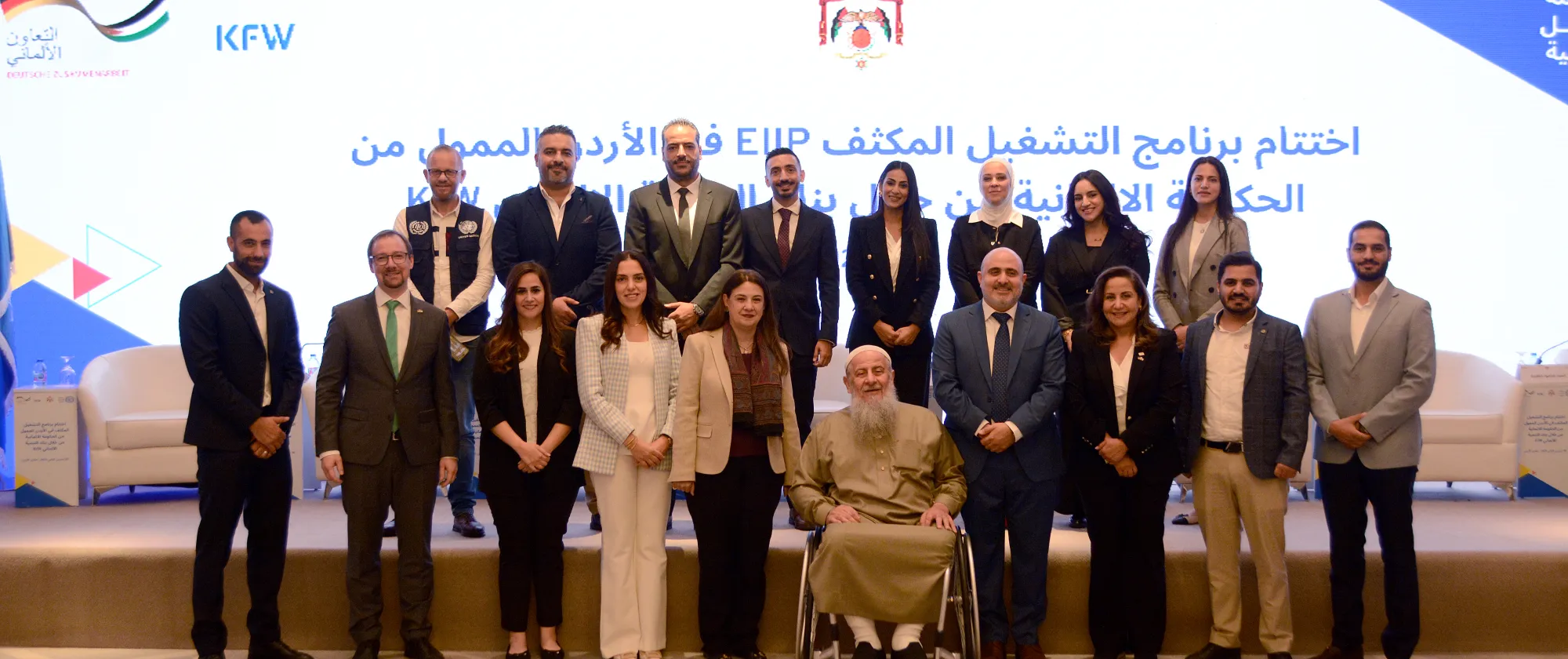
The closing ceremony brought together ministers, ambassadors, municipal leaders, development partners, employer and worker representatives of local communities to recognise the programme’s contributions to employment creation, environmental rehabilitation and institutional capacity building across the Kingdom.
Launched in 2016, EIIP has become one of Jordan’s flagship labour-based job creation initiatives. In addition to providing thousands of decent work opportunities, the programme supported the creation and rehabilitation of parks, green spaces, community centres, nurseries and other environmentally sustainable assets. Throughout its six phases, EIIP also played a central role in building the capacities of key ministries and municipalities, enabling Jordan to integrate labour-based methodologies into national systems and paving the way for discussions on a future national public works programme.
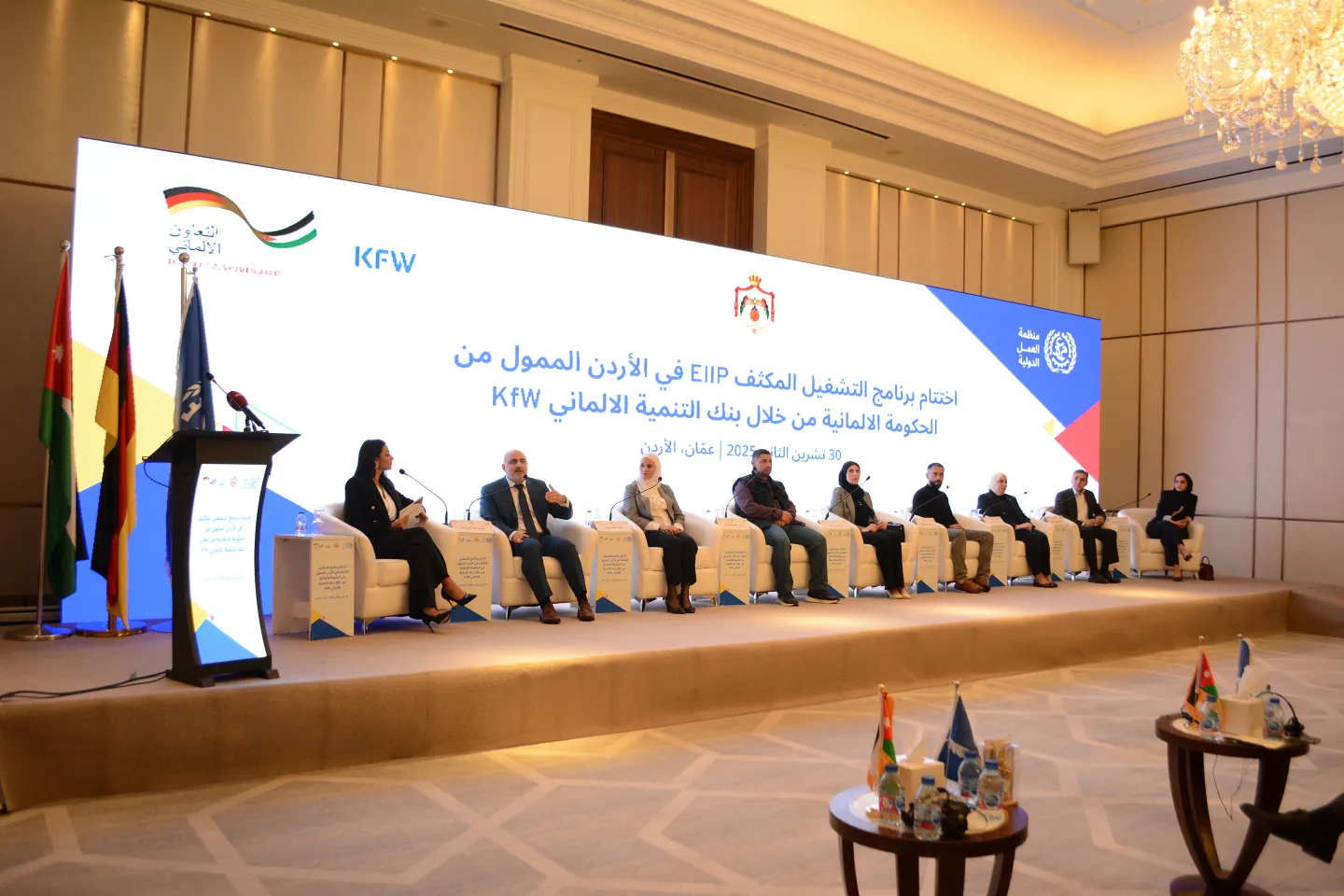
Speaking at the event, ILO Regional Director for Arab States Ruba Jaradat described the programmes’ completion as a milestone in Jordan’s development journey. “Today we are not simply closing a programme; we are celebrating the transfer of an entire development model into national hands,” Jaradat said. “Over nine years, EIIP has evolved from an ILO-led initiative into an approach fully embedded within Jordanian institutions. The capacities that have been built across ministries, municipalities, and local communities are now a national asset. I am proud to see Jordan preparing to advance this approach through the potential establishment of a national public works programme rooted in the knowledge and systems developed under EIIP.”
The programme’s emphasis on national ownership was echoed by Jordan’s Minister of Labour Khaled Al Bakkar, who underscored the importance of labour-based methods in linking immediate job creation with long-term employability. He emphasized that “the EIIP has demonstrated how employment programmes can provide workers both Jordanians and Syrian refugees with decent working conditions, practical skills, and pathways toward sustainable livelihoods. The Ministry of Labour fully supports the continuation of this approach and looks forward to exploring a national public works model built on the foundations laid by EIIP.”
The Secretary General of Ministry of Social development in Jordan Barq Al Dmour stated in his speech “This programme embodies a true model of development that places people at the heart of priorities. The collaboration between the Ministry of Social Development, the International Labour Organization, and the German Development Bank has demonstrated that strengthening social protection and empowering the most vulnerable families can go hand in hand with creating decent job opportunities and building sustainable community assets. The tangible results achieved today — from employing beneficiary households, to establishing nurseries and community spaces, to supporting and economically empowering women reflect the government’s continued commitment to strengthening the capacities of local communities and opening new pathways for hope and self-reliance.”
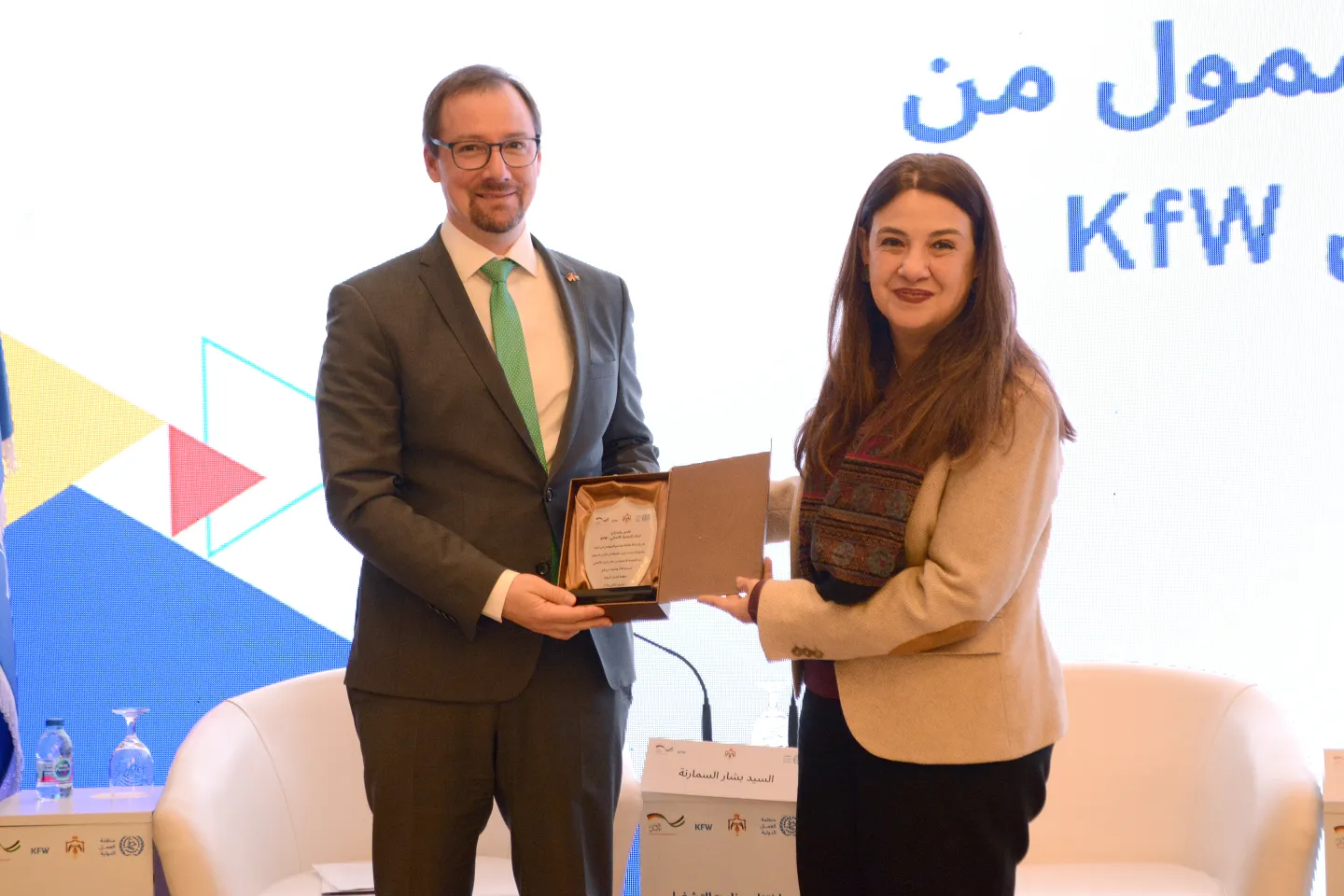
Director of KfW in Amman Matthias Schmidt-Rosen emphasized the strength of the long-standing partnership with Jordan and the ILO. He stated that “for nine years, EIIP has demonstrated the power of combining job creation with institutional strengthening. The programme has shown that development interventions can create dignified jobs, empower women and vulnerable groups, support both host communities and refugees, and strengthen national institutions at the same time. Germany is proud to be part of this journey and is pleased to see Jordan taking steps toward national leadership and sustainability in this field.”
The closing event highlighted that the programme’s most enduring legacy lies not only in the assets built or the jobs created but, in the systems, and capacities that now exist within Jordan’s ministries and municipalities. With operational manuals, monitoring tools, recruitment procedures, labour selection flowcharts, supervision systems, and quality assurance mechanisms now institutionalised, the Government of Jordan is well-positioned to advance discussions on the creation of a national public works programme grounded in the EIIP model.
As the ceremony concluded, speakers emphasized that while EIIP Phase VI is formally ending, its impact will continue through the strengthened national systems, empowered communities, and skilled workers it leaves behind. The programme stands today as a regional best practice in linking employment, community development, and national institutionalisation—an achievement made possible through sustained partnership between the Government of Jordan, the ILO, and the Government of Germany.
Related content

Project
Employment Intensive Investment Program EIIP Jordan, Phase VI
Relevant projects
Project
Employment Intensive Investment Program EIIP Jordan, Phase VI