

Advancing decent work through labour market evidence in Lesotho
Lesotho takes step towards evidence-based Labour Market reform with 2024 Labour Force Survey
14 July 2025
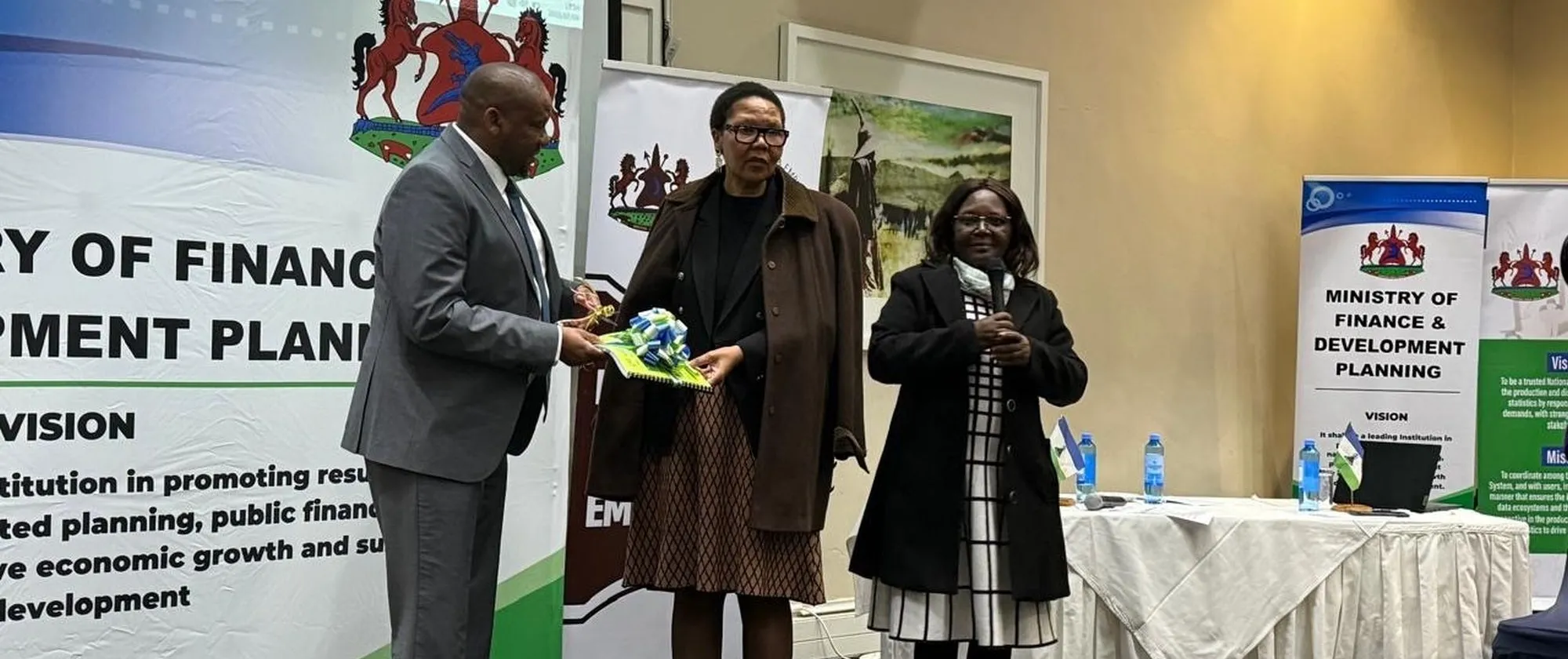
The Government of Lesotho launched the results of the 2024 Labour Force Survey (LFS) on 4th July 2025. The International Labour Organization (ILO) commended this milestone as a key achievement in the country’s efforts to understand and address labour market challenges through data-driven policy.
Speaking on behalf of the ILO Office in Pretoria, Ms Maria Payet, Senior Statistics Specialist, the Organization acknowledged its support throughout the survey process—including implementation, data analysis, and the launch event. “The level of detail produced in this LFS highlights Lesotho’s strong commitment to understanding the labour market and improving the employment experience of its people,” said the ILO.
With over two million people, Lesotho faces unique development challenges. The 2024 LFS provides critical insights into employment, unemployment, labour underutilization, and the informal economy. For example, the national employment-to-population ratio stands at 36.4%, while unemployment has risen to 30.1%—a sharp increase from 22.5% in 2019. Alarmingly, 84% of those employed are in informal jobs without social protection.
The ILO supported the survey’s alignment with international statistical standards, including the 19th, 20th, and 21st International Conference of Labour Statisticians (ICLS) resolutions. These allow for more accurate measurement of employment, work relationships, and informality—key dimensions for assessing Decent Work.
The LFS is not just a statistical report, it is a mirror. It reflects the daily struggles, aspirations, and contributions of Basotho men and women in the world of work. It tells us where our policies have made strides, where they have stumbled and where urgency is non-negotiable. Honourable, Minister Ts'eliso Mokhosi
Young people were a major focus of the report, with findings showing that 95% of employed youth are in informal work and 37.8% face unemployment. The ILO underscored the importance of using the data to shape youth employment strategies and pro-employment policies tailored to different regions.
Looking ahead, the ILO confirmed plans to initiate an employment diagnostics analysis in partnership with the Ministry of Labour. The results of the 2024 LFS will strongly contribute to this process.
The ILO reaffirmed its commitment to continue working with national stakeholders to deepen analysis through thematic reports—particularly on informality—and to support ongoing efforts to formalize jobs, enhance social protection, and advance Decent Work for all.
Lesotho’s achievement sets an example for the region. As ILO concluded, “It is hoped that other countries in Southern Africa will follow Lesotho’s lead in leveraging data to build inclusive, resilient, and fair labour markets.”