

Lebanon’s national tripartite dialogue sets shared priorities for an economic recovery grounded in decent work
Amid the ongoing hostilities and economic crisis, dialogue identifies shared priorities to protect jobs, sustain enterprises, support workers and safeguard their rights, uphold the fundamental principles and rights at work, and strengthen labour market resilience.
30 June 2026
BEIRUT (ILO News) – The ongoing hostilities in Lebanon and their impact on the economy and the population is compounding an already fragile economic and labour market situation, placing growing pressure on workers, enterprises and public institutions, participants said during the first national tripartite dialogue of its kind in Lebanon since the start of the current escalation of hostilities.
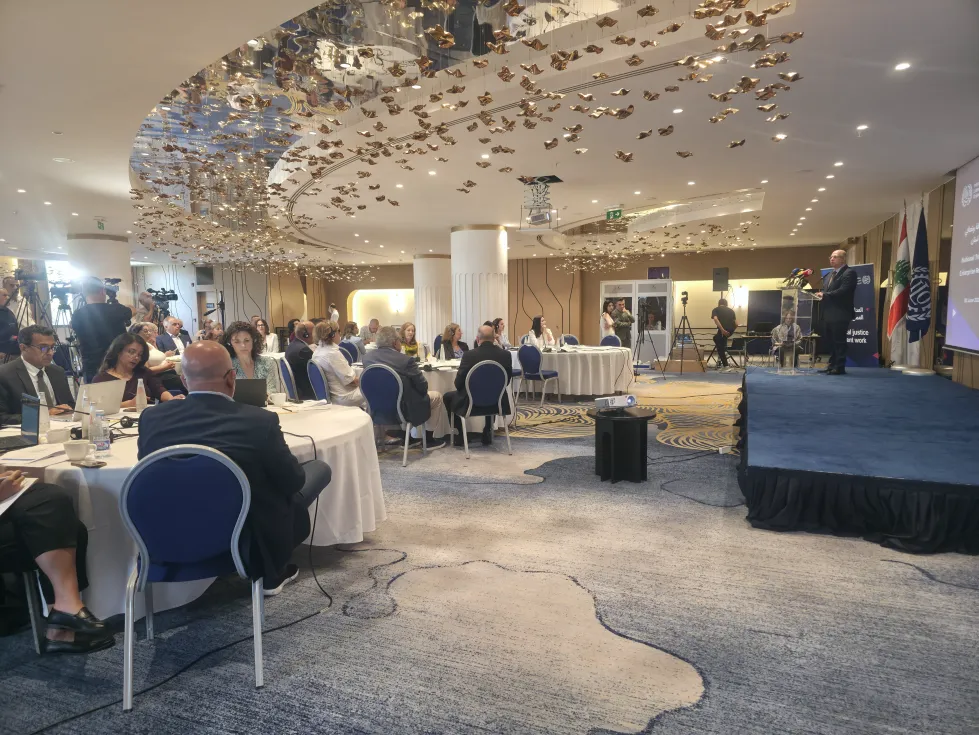
The National Tripartite Dialogue on Employment Protection, Enterprise Recovery and Economic Resilience in Lebanon, held in the Lebanese capital Beirut by the International Labour Organization (ILO), brought together government representatives, employers’ and workers’ organizations, the United Nations, development partners and key labour market actors to discuss practical pathways for a decent work-centred recovery.
The dialogue examined the impact of the crisis on workers and enterprises and identified shared priorities to preserve employment, support business continuity, protect rights at work and strengthen social protection.
Discussions highlighted how the hostilities in Lebanon and across the wider region have amplified long-standing structural challenges in Lebanon’s labour market, including wage erosion, income insecurity, widespread informality and the fragility of small and medium-sized enterprises. According to an ILO survey presented during the event, one in three interviewed workers lost their job as a result of the escalation of hostilities, while those who remained employed experienced an average income loss of nearly 15 per cent.
Participants discussed the uneven impact of the crisis, with internally displaced persons, women, young people, persons with disabilities and non-national workers bearing a disproportionate share of the burden. Small and medium-sized enterprises, which employ the majority of Lebanon’s workforce, were identified as particularly vulnerable due to liquidity constraints, disrupted operations and limited capacity to absorb shocks.
The dialogue pointed to broad convergence around three priorities: strengthening social dialogue and institutions for consultation, supporting enterprises and their workers through immediate and longer-term measures, and preventing further informality while promoting the transition to the formal economy.
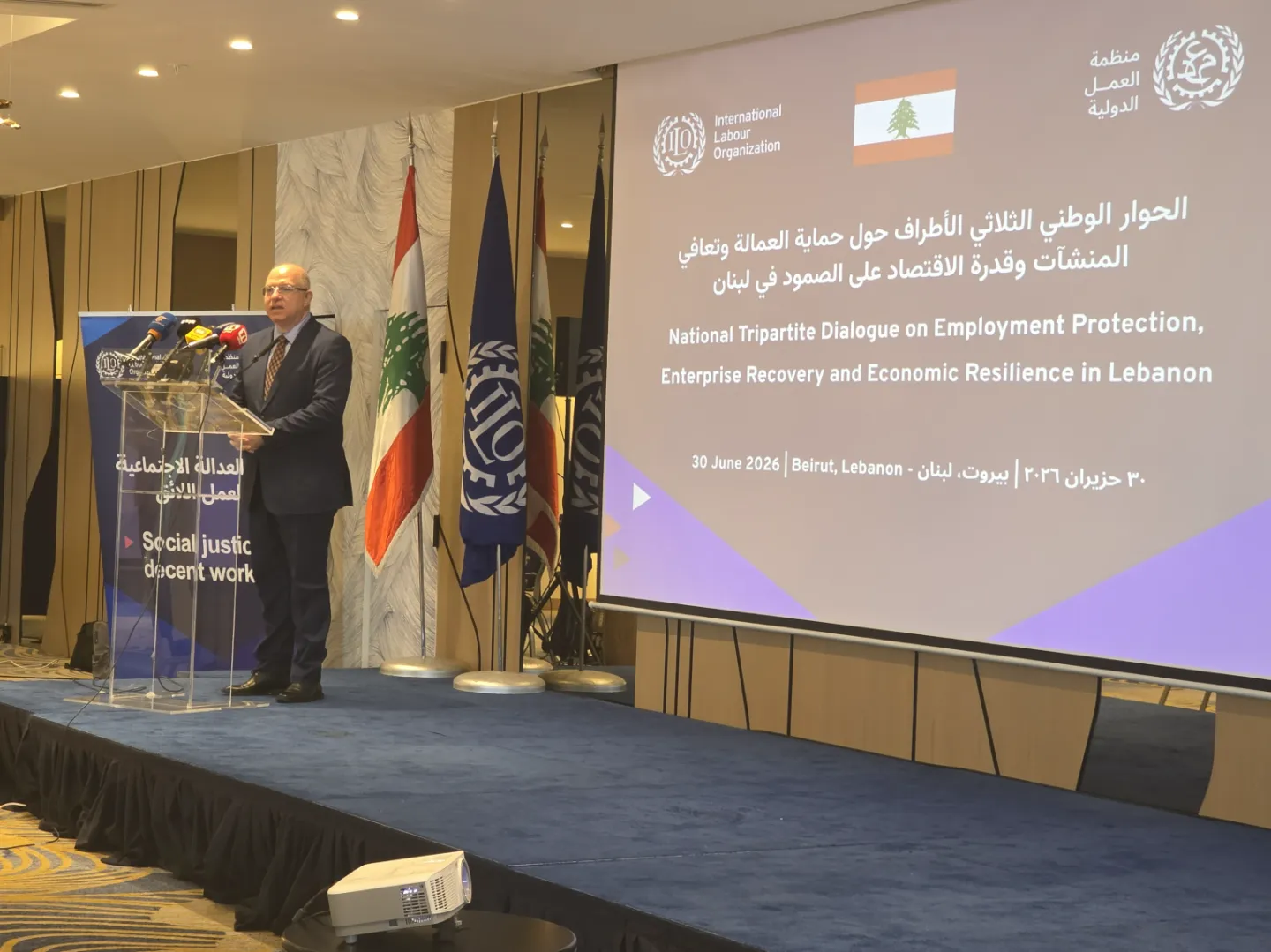
Lebanon’s Minister of Labour Mohammad Haidar emphasized that protecting workers and supporting enterprises are two interconnected priorities at this critical stage. “Preserving jobs, safeguarding rights and facilitating the continuity of production are the basis of any sustainable economic and social recovery. The Ministry of Labour reaffirms its commitment to strengthening dialogue with employers, workers and international partners to develop realistic national solutions that protect Lebanese people and support the resilience of the economy.”
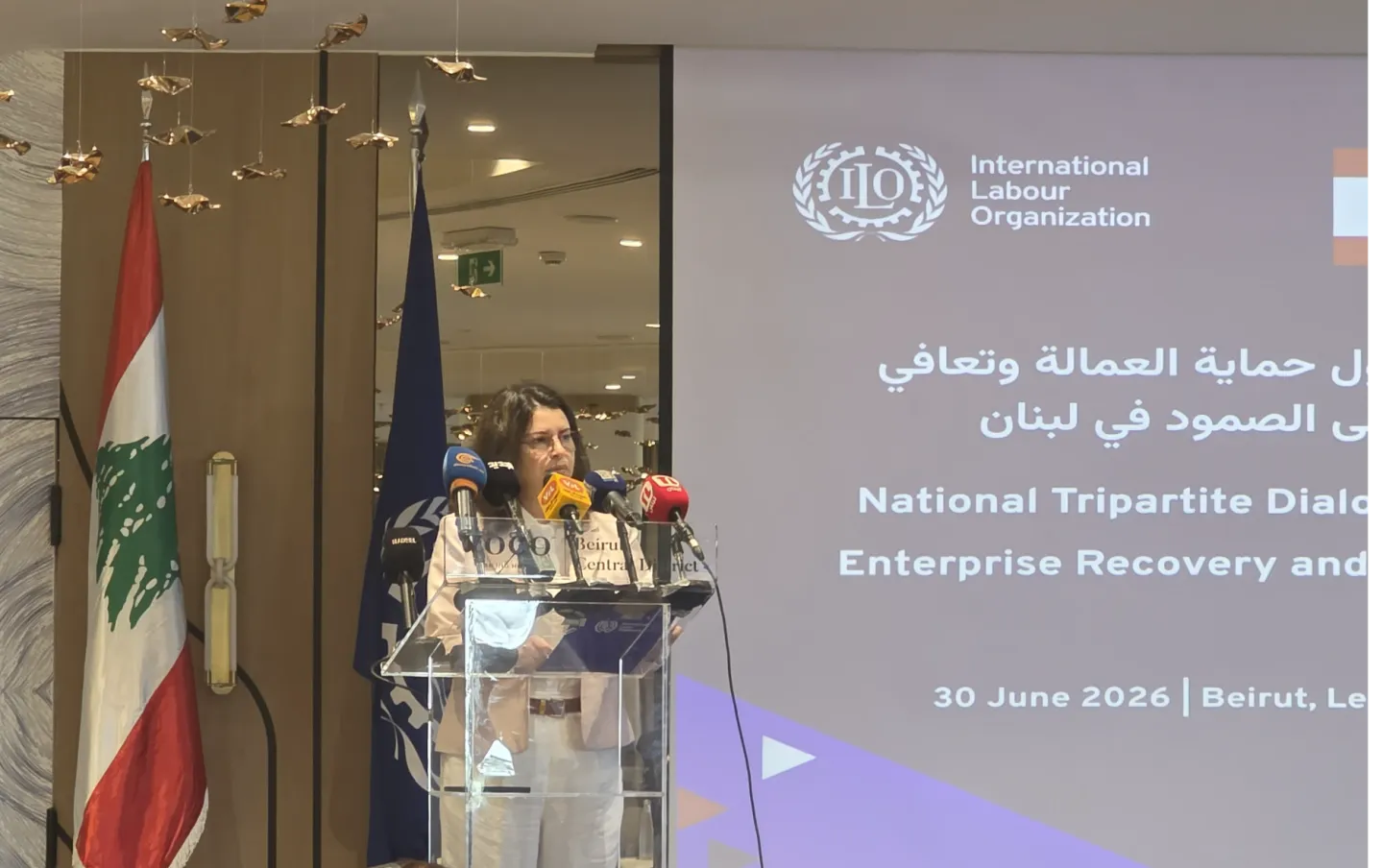
ILO Regional Director for the Arab States Ruba Jaradat said the dialogue showed clear agreement that Lebanon’s recovery must place decent work at the centre of crisis response. “Today’s dialogue identified a shared path forward: protecting jobs and incomes, supporting enterprises, strengthening social protection and preventing further informality must advance together. The ILO will continue to support Lebanon and its tripartite constituents through support for social protection, job creation, infrastructure development, skills and employment programmes, institutions and small and medium-sized enterprises, helping to protect jobs, restore incomes and turn crisis response into a more inclusive and sustainable recovery pathway.”
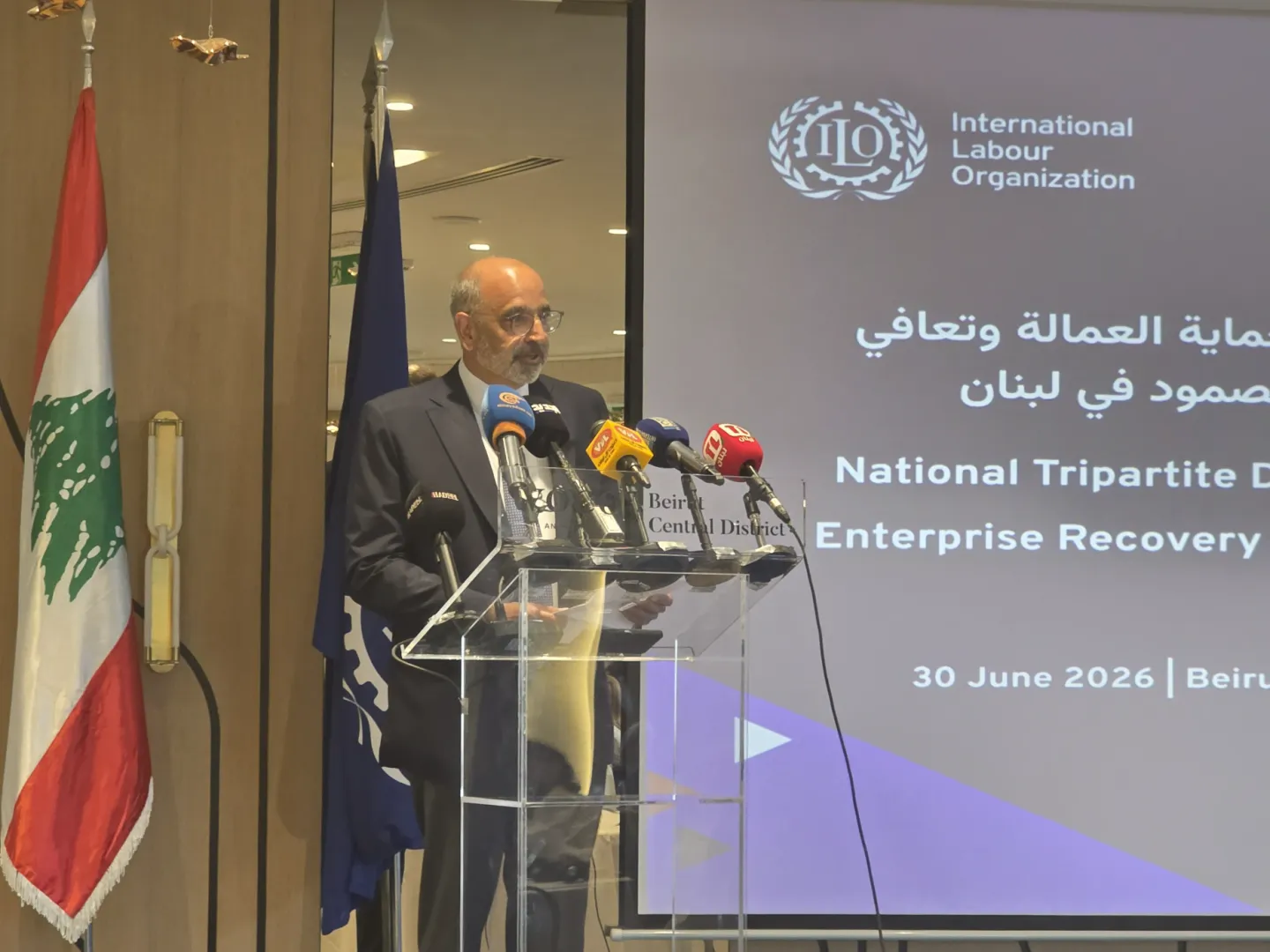
United Nations Resident and Humanitarian Coordinator for Lebanon Imran Riza stressed that “the current crisis requires protecting people, livelihoods and national systems together. Civilians, workers and first responders need protection. Families need income, and enterprises need continuity. Recovery does not begin only after the crisis ends; it also begins by protecting people’s livelihoods and safeguarding the systems that people depend on today.”
Social partners stressed that workers’ protection and enterprise sustainability must go hand in hand in any recovery process.
President of the Association of Lebanese Industrialists Salim Zeenni said economic recovery begins by enabling enterprises to continue operating, producing and retaining their workers. “The Lebanese private sector is facing major challenges, yet it still has the capacity to create jobs and support recovery if provided with a stable environment, accessible finance, energy, markets and measures that facilitate business and production. This dialogue is important because it links workers’ protection and enterprise sustainability as two mutually reinforcing conditions for economic recovery.”
President of the General Confederation of Lebanese Workers Bechara Al-Asmar said the crisis is placing severe pressure on workers and their families through declining incomes, irregular wage payments, job losses and the expansion of informal work. “What is needed today is to protect fundamental rights at work, strengthen social protection and prevent workers from bearing the cost of the crisis alone. Tripartite dialogue provides an essential space to agree on measures that preserve workers’ dignity and support labour market stability.”
President of the National Federation of Worker and Employee Trade Unions in Lebanon Castro Abdallah said there can be no real recovery without protecting the workers most affected, including informal workers, displaced workers, migrant workers and vulnerable groups. “Practical measures are needed to ensure income, safety at work, the right to organize and bargain collectively, and to prevent exploitation, child labour and forced labour. Any recovery pathway must be fair, inclusive and place workers at its centre.”
Possible measures discussed included improved access to affordable finance, wage support schemes for small and medium enterprises, tax relief, skills development, strengthening social protection, promoting respect for workers’ rights and the Fundamental Principles and Rights at Work (FPRW), labour law reforms, simplified business registration procedures, and incentives for formalization.
The outcomes of the dialogue will be further discussed with Lebanon’s tripartite constituents to develop shared recommendations on employment protection, enterprise sustainability and economic and social resilience.
ILO response to the crisis in Lebanon
As part of its response to the current crisis, the ILO is working with national and international partners and within the UN system to support decent work, social protection and long-term economic sustainability by protecting workers and the most vulnerable groups, supporting affected enterprises and local economies, and linking emergency assistance with income opportunities and decent work.
Related content

Country Portal
Lebanon