

ILO/China Partnership Programme
Lao People’s Democratic Republic to tackle skills mismatch and gender gaps in its labour market
A comprehensive ILO study highlights challenges and provides practical recommendations for fostering a resilient and market ready workforce in Lao People’s Democratic Republic.
30 March 2026
VIENTIANE (ILO News) – A skills gap that sees technical skills either underutilized or insufficient, a widespread lack of soft skills, and persistent gender disparities across sectors are amongst the challenges facing the Lao labour market, according to a study by the International Labour Organization.
Recently released Skills Mapping Research provides a comprehensive overview of the labour market, industrial development and enterprise skills needs in the Lao People’s Democratic Republic, while outlining a data driven roadmap to better align vocational training with the rapidly evolving needs of the industrial and service sectors.
It was conducted by the ILO/China Partnership Project on Strengthening Skills Development in ASEAN through South–South and Triangular Cooperation, in collaboration with the government, workers’ and employers’ organizations.
The study surveyed 300 alumni from technical and vocational education and training (TVET) institutions and Skills Development Centers (SDCs), along with 150 firms across Vientiane Capital, Luang Prabang and Champasak Province.
The report advocates a strategic overhaul of skills development by emphasizing the modernization of curricula to prioritize competency-based learning, strengthening upskilling and reskilling to meet technological demands, and integrating career counselling and job-matching services.
Additionally, it calls for strengthening public–private partnerships by refining regulations and incentivizing collaborative models such as Dual Cooperative Training to ensure education remains practical and aligned with industry needs. Finally, the report underscores the importance of institutional reform, urging the use of data driven policymaking and targeted initiatives to bridge gender gaps in technical fields.
“I urge line ministries and the South-South Cooperation Network to utilize the report findings to refine their strategies to address labour shortages in key sectors in order to bridge the mismatch between supply and demand, create jobs, and enhance enterprise productivity through workforce development,” said Sourisack Souphanthong, Deputy Director General of the Skills Development Institute.
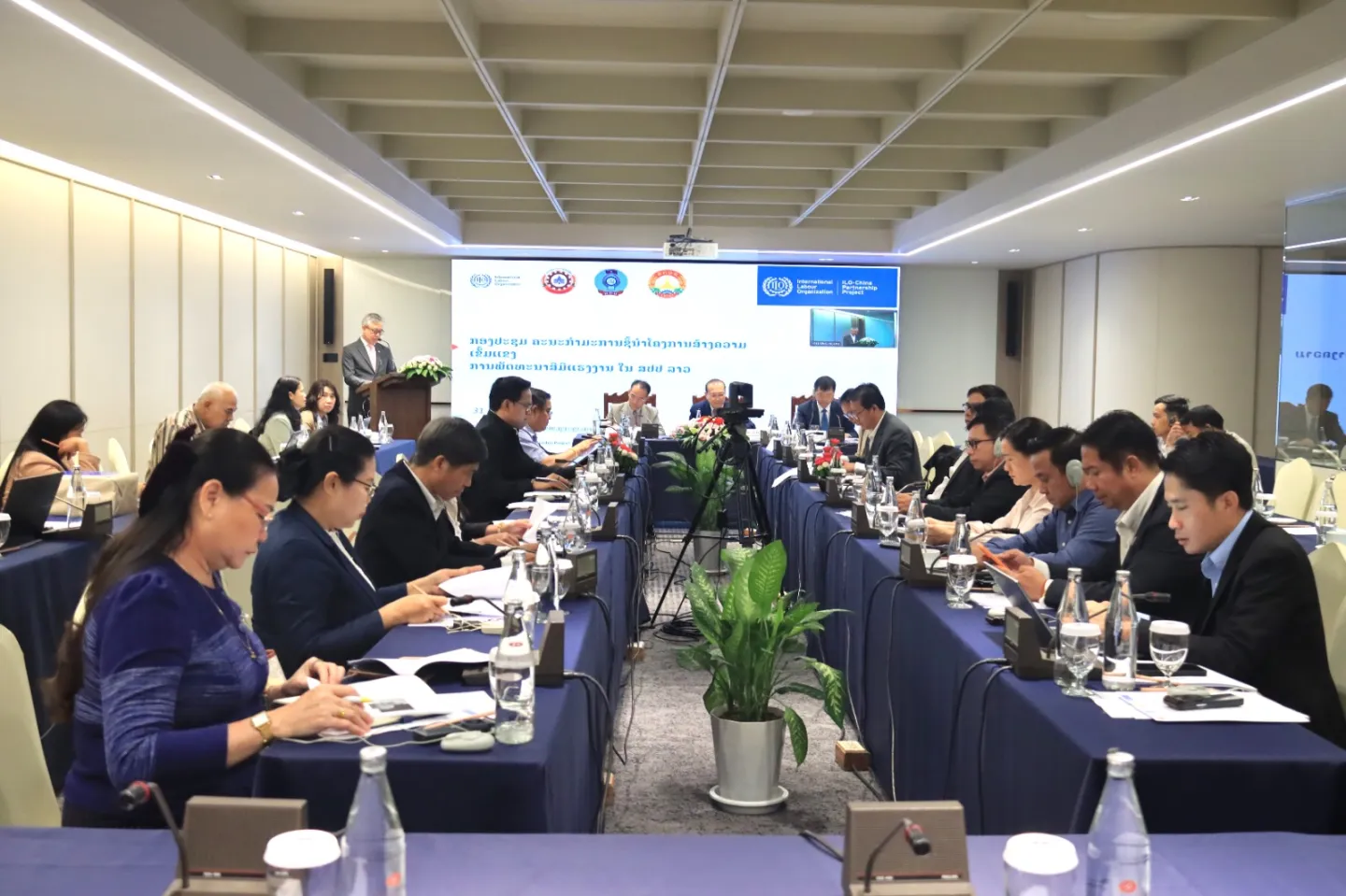
As a next step, relevant stakeholders will use the study findings to develop targeted action plans. These efforts will include advancing curriculum reform and strengthening school–enterprise cooperation, enhancing labour market information systems, and improving coordination between training institutions and enterprises in skills development through capacity building and technical support.
“We hope that the research will support future implementation efforts to ensure access to quality skills training, reskilling, upskilling, and the promotion of Decent Work for all,” said Tian Feng, Project Manager of the ILO/China Partnership Project on Strengthening Skills Development in ASEAN through South–South and Triangular Cooperation.
Related content

Skills development
ILO/China Partnership Programme on Strengthening Skills Development in Cambodia, Lao People's Democratic Republic and Myanmar through...
Relevant projects
Skills development
ILO/China Partnership Programme on Strengthening Skills Development in Cambodia, Lao People's Democratic Republic and Myanmar through...