

Laine Tej: A blueprint for inclusive and sustainable enterprise in Tunisia
In the heart of northern Tunisia, Laine Tej transforms local wool into sustainable creations. Supported by the ILO's Jeun’ESS program, it’s a model of sustainable development and inclusive innovation.
10 December 2024
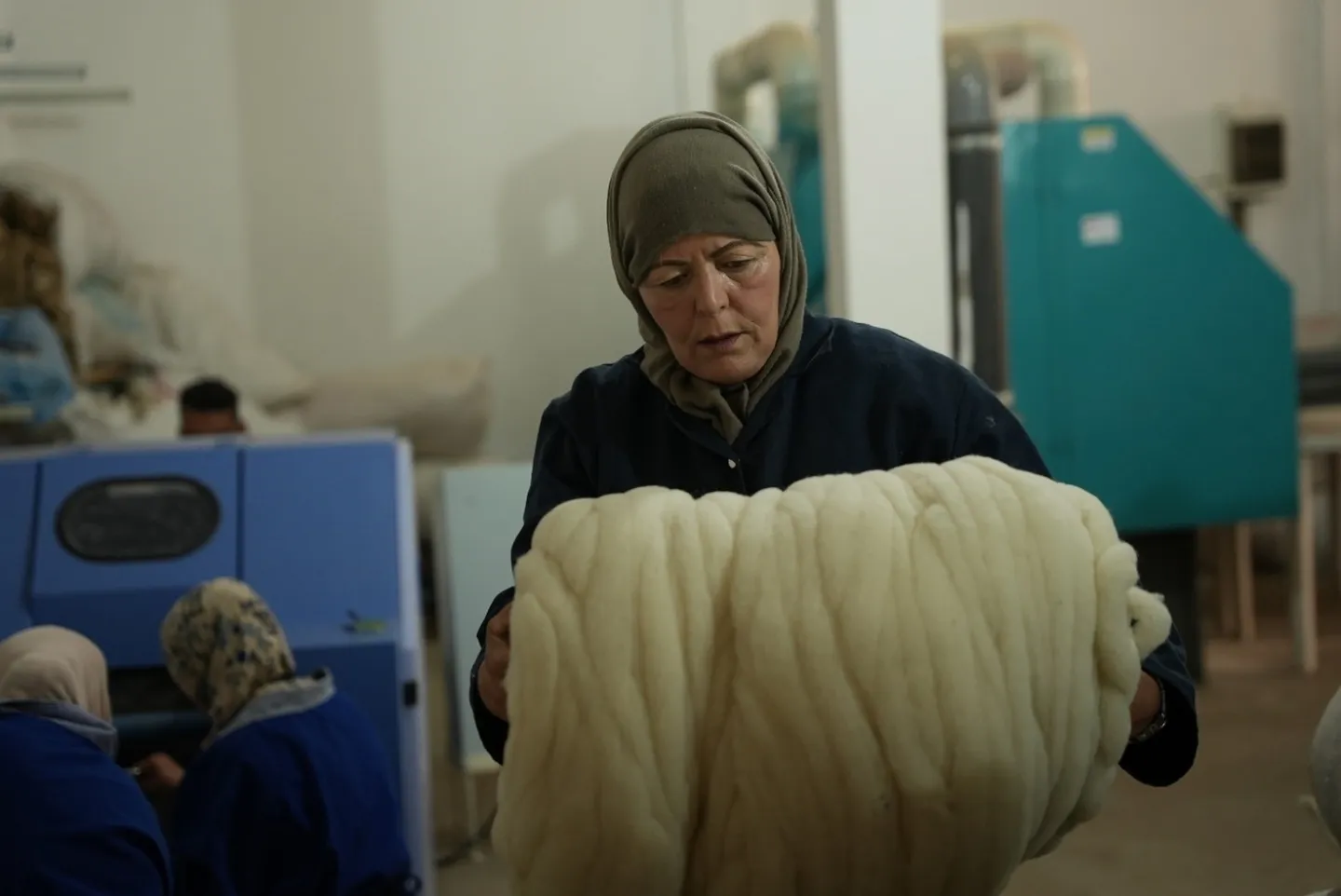
Geneva (ILO News) - In the Kef governorate, northern Tunisia, Laine Tej has emerged as a pioneering model of sustainable and inclusive entrepreneurship. Founded in 2019 by a group of women entrepreneurs, the company specializes in producing high-quality yarn from locally sourced sheep’s wool, combining traditional techniques with modern innovation. More than a business, Laine Tej embodies a commitment to environmental stewardship, social inclusion, and economic empowerment, aligning with global standards for health, safety, and sustainability.
Laine Tej’s operations reflect a holistic approach to local resource valorization and community development. Through its collaboration with the Ain Babouche Agricultural Development Group, the company engages both full-time workers and home-based artisans in the production of wool products, plant-based fibers, and essential oils. This integrated model supports not only economic growth but also the preservation of cultural heritage and craftsmanship.
Transforming Challenges into Opportunities with Jeun’ESS
Laine Tej’s journey has not been without challenges. Limited access to modern equipment and market constraints initially hindered growth. However, the company’s partnership with the Jeun’ESS programme, an initiative supported by the International Labour Organization (ILO), proved transformative.
In 2022, Jeun’ESS provided Laine Tej with a state-of-the-art wool processing machine, enhancing productivity and enabling the company to meet rising market demands. The new equipment also alleviated the physical burden on artisans, fostering more inclusive working conditions. This support allowed Laine Tej to:
- Increase production capacity and diversify its product offerings.
- Improve quality control, enhancing the market competitiveness of its wool products.
- Expand employment opportunities, particularly for marginalized groups.
Beyond technical upgrades, Jeun’ESS facilitated capacity-building initiatives that strengthened Laine Tej’s business management and strategic planning capabilities, positioning it for long-term success in the social economy.
Social Inclusion at the Core of Business Strategy
Laine Tej’s inclusive employment practices set it apart as a social enterprise committed to equity. The company actively integrates youth with disabilities and higher education graduates, ensuring diverse participation in its workforce. This inclusive approach not only creates jobs but also fosters a culture of social cohesion and empowerment, demonstrating that sustainable business practices can—and should—benefit all members of society.
Laine Tej’s focus on youth engagement is particularly significant. By providing training and mentorship, the company encourages young people to pursue careers in the wool and plant fiber industries, cultivating a new generation of social entrepreneurs.
A Sustainable Vision for Regional Development
Looking ahead, Laine Tej aims to diversify its product lines and develop new specialties that align with its commitment to sustainability. The company’s ongoing efforts to innovate and scale its operations reflect a broader vision for regional economic development in Tunisia’s Northwest. By leveraging local resources and fostering community-driven initiatives, Laine Tej is not only revitalizing traditional industries but also contributing to a more resilient and inclusive economy.
Conclusion: A Blueprint for Inclusive and Sustainable Enterprise
Laine Tej exemplifies the potential of social enterprises to drive inclusive economic growth and sustainable development. Its success, supported by the Jeun’ESS program, highlights the transformative impact of targeted interventions in empowering communities and fostering innovation.
As Laine Tej continues to grow, it offers a compelling blueprint for how businesses can balance economic viability with social responsibility, creating lasting value for both people and the planet. In doing so, it sets a powerful example for the future of inclusive and sustainable enterprise in Tunisia, Africa and beyond.
Relevant projects

JEUN’ESS: Promotion of Social and Solidarity Economy and Creation of Decent Jobs for Tunisian Youth