


Labour laws in contemporary times – challenges and opportunities
The PRS Project is building capacity of the tripartite constituents to promote formalization of the construction sector through strengthening OSH standards, improving accessibility of social protection measures to workers and promoting measures to address the gender gaps in the construction sector. The Labour Resources Department, Government of Bihar, organized a series of workshops where the ILO/PRS Project was invited as a technical partner to build the capacity of labour officers.
30 April 2025
The Building and Construction Workers Board, Labour Resources Department, Government of Bihar organized a series of workshops to build the capacity of the labour officers, including labour inspectors, labour enforcement officers, assistant labour commissioners to promote the welfare of unorganized workers focusing on construction workers among others. In this context the BOCW Board in Bihar organized two workshops. The first workshop on “Labour Laws in the Contemporary Times – Challenges and Opportunities” was on 30 April and 01 May 2025.
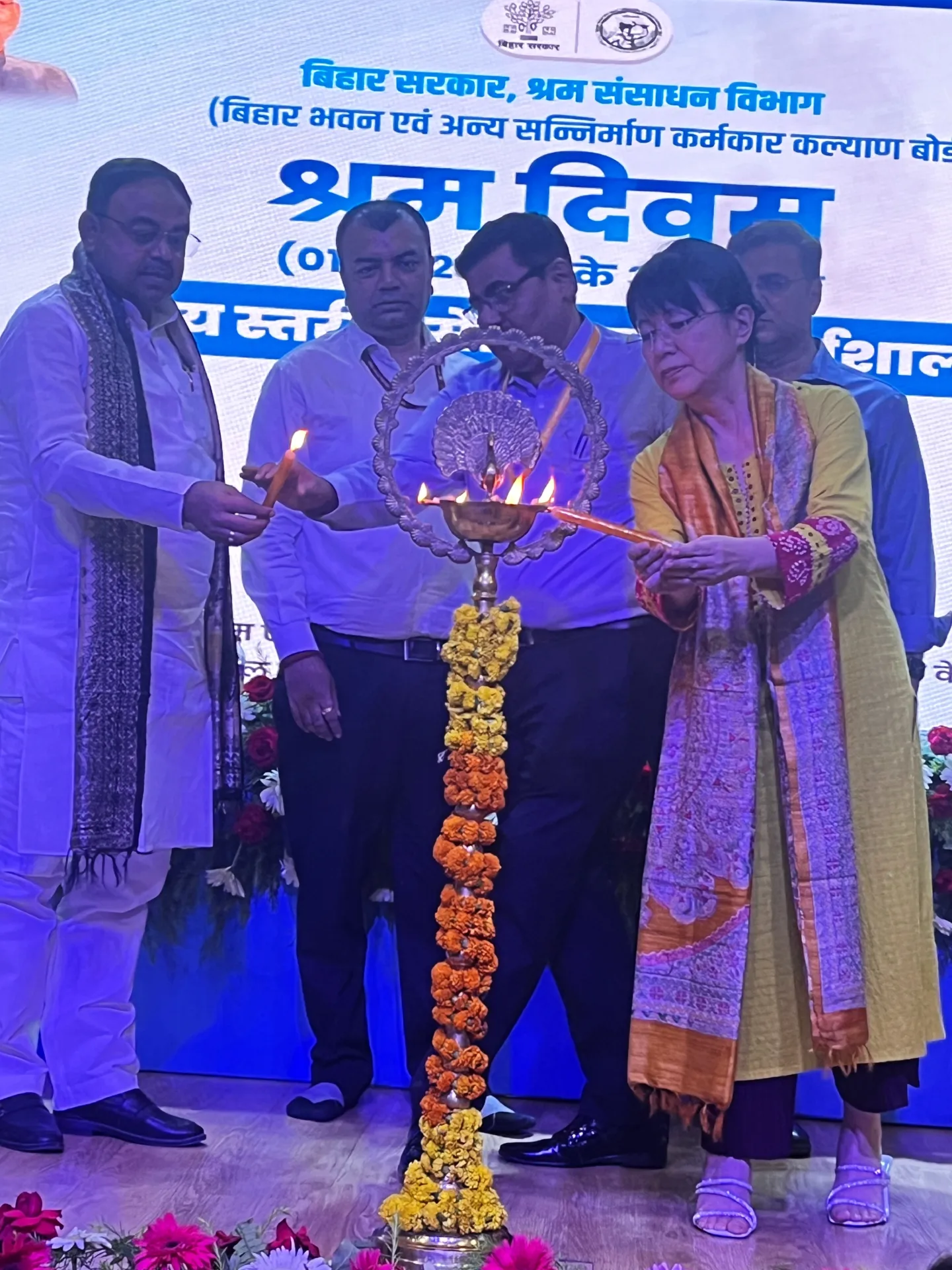
Hon’ble Minister of Labour, Shri Santosh Kumar Singh, made the Opening Address where he highlighted various initiatives taken by the Government of Bihar to promote welfare of unorganized workers. He also thanked ILO’s PRS Project for continued support to the labour department to promote welfare measures for informal workers. A 15-day statewide Information, Education and Communication (IEC) campaign was announced to strengthen public awareness about the social welfare schemes for unorganized workers.
The participants from the ILO included Ms Michiko Miyamoto (Director, ILO), Ms Yuki Otsuji (ACTRAV/Workers’ Specialist), Ms Heejin Ahn (Regional Manager, PRS Project), Ms Baishali Lahiri (National Project Coordinator, PRS Project) and Mr Karun Gopinath (NPC, Platform Economy Project). Ms Michiko, in her special address, briefly explained about the ILO’s tripartite structure and how it works. While lauding the progressive steps taken by the Bihar government to promote welfare of the unorganized workers, she also highlighted the additional challenges faced by migrant workers because of lack of access to information, portability of social protection, challenges in grievance redressal due to informal employment in the context of large-scale outmigration that takes place from Bihar.

Ms Yuki discussed the ramifications of artificial intelligence on the labour market in Bihar. As ACTRAV specialist, she emphasized the need for a worker-centred approach where trade unions play a meaningful role in shaping the future of work, highlighting the importance of recognizing platform workers as workers, including them and platform providers in social dialogue, and supporting skilling and reskilling efforts. Mr Karun while speaking on the India’s new-age economy driving work force - gig and platform workers, highlighted the preparations for the standard setting discussion on the platform economy to commence at the International Labour Conference in June 2025 as part of the double-discussion procedure. As a human right, labour market flexibility and social protection are not contradictions and that the ILO in India is actively engaged in supporting constituents in ensuring social protection is extended to platform workers.
Ms Baishali spoke on the growing importance of construction/ infrastructure industry in Indian economy and the scope of promoting better working conditions for workers therein. She briefly shared the statistics on the workforce in the construction sector and the need to formalize this workforce.
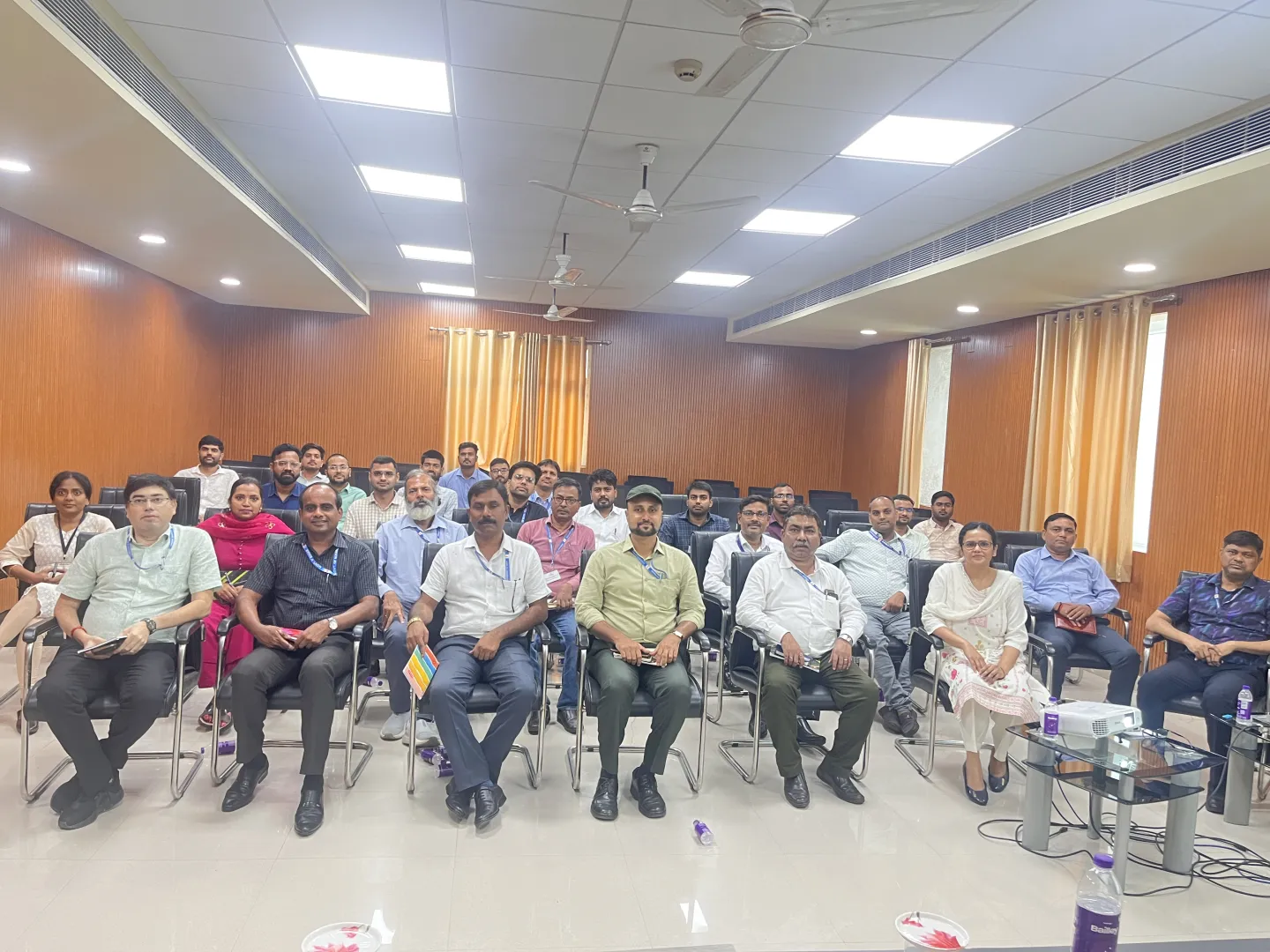
The second workshop in this series was organized on ‘Compliance with Health Safety and Other Standards at Construction Site’ on 21 and 22 July 2025. Speakers included Mr Rambabu, Superintending Engineer in Patna, Dr Onkar Sharma, Retd. Chief Labour Commissioner (Central) and Ms Baishali Lahiri from the ILO.
Dr Onkar Sharma spoke on the Labour Codes – The Code on Wages, 2019, The Code on Social Security and Occupational Safety Health & Working Conditions Code, 2020 and The Industrial Relations Code, 2020. He highlighted how the evolution of industrial jurisdiction in India has mirrored the changing dynamics of work, economy, and society and that in today’s context, there is an urgent need to revisit and reform existing labour legislations to better align them with contemporary realities faced by both workers and employers. Labour reforms must be grounded in evidence-based policymaking that balances the protection and promotion of workers’ rights with the imperatives of sustainable industrial growth, economic development, and employment generation.
Such policies should guarantee social security, wage security—including a statutory minimum wage—safe and healthy working conditions, and decent workplaces for all, recognizing that individuals spend nearly 40% of their lives at work. For instance, the Building and Other Construction Workers (BOCW) Act prescribes over 200 rules dedicated to health and safety—reflecting the importance of regulated workplace environments. To ensure effective implementation of labour laws, there is a pressing need for innovative technologies and methodologies that promote compliance through digitised systems such as e-portals for registration, licensing, and returns. These not only simplify procedures for employers but also enhance transparency and monitoring by authorities. A facilitative approach—combining rationalised compliance mechanisms, supportive hand-holding of employers, and targeted, benefit-oriented inspections—can promote a culture of responsible compliance without compromising workers’ rights. Additionally, conciliation processes should aim at timely settlements and relief, while quasi-judicial functions must be carried out with strict adherence to the principles of natural justice, including the issuance of well-reasoned speaking orders to minimise avoidable litigation.
Ms Baishali briefly introduced the ILO’s tripartite structure and how it works. She also spoke about the occupational safety and health challenges faced by the construction workers especially those who are in informal employment – without having any written contract from the employers or the contracts or/ and are not registered under the BOCW Board which extends social protection coverage to construction workers. Taking from the experiences of the PRS Project Ms Baishali highlighted the importance of last mile delivery of social protection to unorganized construction workers. She highlighted how frequently informal workers experience wage theft by the contractors and unfavorable wage negotiations by individual households engaging workers for small-duration assignments.
The PRS Project organized almost 25,000 informal construction workers between 2022 to 2025 through its implementing partner Indian National Trade Union Congress (INTUC) which also supervises the Workers’ Information and Support Centre (WISC) in Bihar. More than 22000 construction workers were supported with the procedure of application for the BOCW card by the INTUC. In the discussion, the labour inspectors also acknowledged that there is need of more awareness raising on labour rights and promoting OSH in small construction sites.
Ms Baishali also introduced the ILO’s various participatory learning tools, such as “Work Improvements for Small Construction Sites” and “Conducting Labour Inspections on Construction: A guide for labour inspectors” that are targeted towards capacity building of stakeholders to provide enabling OSH at construction workplaces. Using some photos from previous training sites open discussions were also conducted with labour inspectors by identifying good and bad practices in construction safety and recommending follow-up steps. The ILO/ PRS Project is promoting technical assistance to the Labour Resources Department to develop a SOP to promote OSH in construction. The participants were also requested to submit their feedback on the above guide for labour inspectors as a part of the SOP development for BOCW.
The ILO shall continue to closely work with the stakeholders in Bihar for strengthening OSH standards, improving accessibility of social protection measures and promoting measures to address the gender gaps in the construction sector.