

Social and solidarity economy
ILO strengthens partnerships with the cooperative movement in Latin America and the Caribbean to promote decent work
The ILO reaffirmed its commitment to advance the role of cooperatives and the wider social and solidarity economy (SSE) in promoting decent work, the care economy, and sustainable development.
13 May 2025
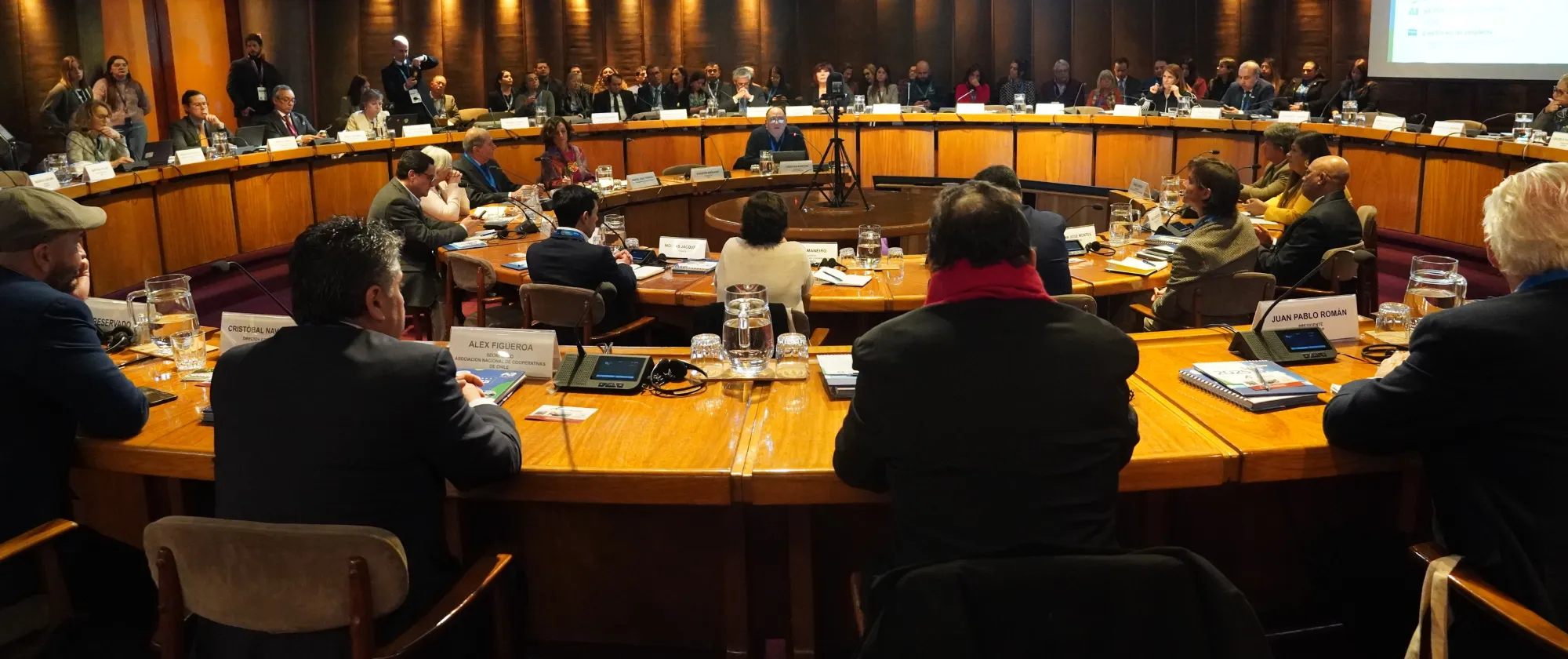
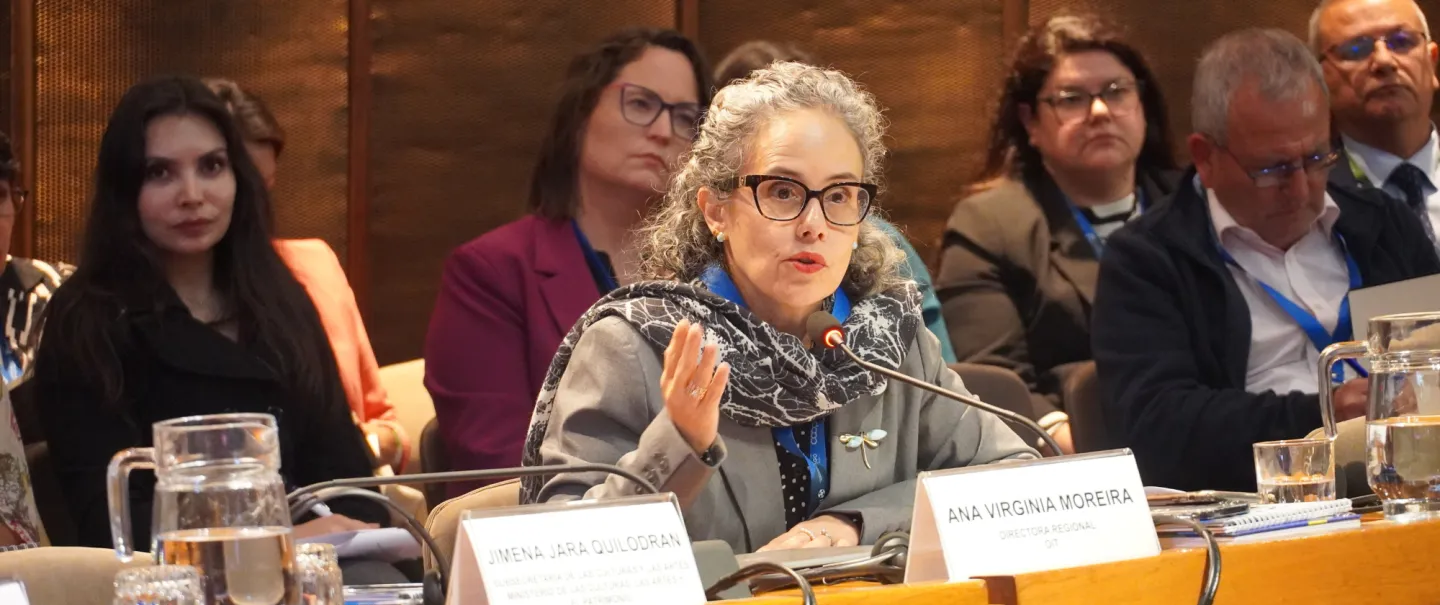
SANTIAGO, CHILE (ILO NEWS) — In a global context of economic and social transformation, cooperatives and other social and solidarity economy (SSE) entities emerge as essential actors in building more inclusive, resilient and sustainable societies. This was reaffirmed by the ILO Regional Office for Latin America and the Caribbean during two significant events held in Santiago, Chile on May 12 and 13, 2025. The Regional Director, Ana Virginia Moreira Gomes, participated in these meetings alongside representatives from governments, United Nations agencies, and the regional cooperative movement.
The events took place within the framework of the International Year of Cooperatives 2025, proclaimed by the United Nations General Assembly to highlight the contribution of cooperatives to sustainable development and the Sustainable Development Goals. A conference and a series of deep-dive workshops were organized by Cooperatives of the Americas and the National Institute of Associativity and Cooperativism of Chile (INAC), with the collaboration of the Economic Commission for Latin America and the Caribbean (ECLAC), Food and Agriculture Organization (FAO), and the ILO.
Cooperatives are strategic partners to advance decent work and social justice.
Ana Virginia Moreira Gomes, Regional Director of the ILO for Latin America and the Caribbean
"They are key to ensuring that essential sectors such as the care economy are organized under conditions of equity, sustainability, and respect for labour rights," concluded Moreira Gomes during her participation.
Cooperatives as allies for productive transformation and drivers of territorial development to foster social inclusion
The first event, the conference "Cooperatives promoting productivity and territorial development," held on May 12 at the headquarters of the ECLAC, brought together cooperative leaders and representatives of multilateral organizations to reflect on the contributions of cooperatives in Latin America and the Caribbean. The conference focused on how these organizations foster productivity, social inclusion, and territorial development.
Cooperatives were recognized as tools for reduciong poverty, strengthening local economies and promoting formal employment. Discussions also addressed their capacity to articulate territorial productive ecosystems and offer innovative solutions in strategic sectors such as agribusiness and the circular economy.
During her intervention, the ILO Regional Director emphasized that these organizations not only generate employment but also strengthen values such as solidarity, equity, and economic democracy, as reflected in ILO Recommendation 193 on the promotion of cooperatives:
"For over a century, the ILO has recognized cooperatives as key players for inclusive development. Our commitment is to continue supporting them so they can enhance their contribution to decent work and sustainability," affirmed Moreira Gomes.
Promoting partnerships for the future of care work in the region
On May 13, the reflection continued with a series of deep-dive workshops, including one at the ILO office in Santiago, which focused on the role of cooperatives and other SSE entities in the care economy and care provision in society. This aspect of the SSE is included in the ILO resolutions on decent work and the social and solidarity economy and on decent work and the care economy.
The workshop identified challenges and opportunities to strengthen regulatory frameworks, promote formalization of employment in cooperative sectors that provide care, and generate synergies with public policies, UN agencies, and among members of the cooperative movement.
In Latin America and the Caribbean, unpaid care work remains a significant barrier to achieving gender equality in the world of work. More than one-third of women outside the labour force cite care responsibilities as the main reason for not accessing the labour market. Furthermore, care work is predominantly performed by women, often in the absence of decent working conditions, as is the case with domestic workers who represent 1 in 9 women in the labour force in the region.
In this context, Moreira Gomes highlighted the opportunity offered by the International Year of Cooperatives to position SSE entities as strategic allies in promoting a more equitable, inclusive social organization of care that generates decent jobs and incorporates the ILO's 5R framework for decent care work: recognize, reduce and redistribute unpaid care work, and reward and represent paid care work.
"It is time to strengthen partnerships and ensure that the voice of cooperatives is heard at all levels. The ILO will continue to promote policies that recognize their role and facilitate their contribution to more just and sustainable societies," she said.
During the workshop, participants including cooperators from Latin America had the opportunity to listen to and reflect on social dimensions and contributions of cooperatives in the areas of the care economy, housing, and health, as well as learn more about the intervention model based on the ILO’s 5R framework. The model aims to increase income and improve the rights of informal workers in all their diversity through the creation or expansion of care cooperatives. National mappings characterizing the current social organization of care in Colombia, Bolivia, and Honduras were presented, and they will serve as a basis for pilot initiatives to operationalize the 5R framework.
The event also allowed sharing the training process in care cooperativism methodologies promoted by the ILO in Colombia. A special highlight was the testimony of Yoraima Navarro, an indigenous Arhuaco leader from the Sierra Nevada de Santa Marta and legal representative of the organization Josa Constructoras de Paz. Navarro recounted her training experience within the ILO project developed together with the Ministry of Equality and Equity, which contributed to the formulation of the public policy of the National Care System. This initiative led to the first ancestral Arhuaco care house, promoting the economic autonomy of 250 associated women weavers and reducing the time dedicated to care tasks. With this reduction, women can now devote more time to producing backpacks and other artisanal products that allow them to generate income and continue an ancestral community activity. Navarro also emphasized the efforts in her community to foster a cultural change promoting a more equitable distribution of care tasks between men and women.
The deep-dive workshop resulted in public policy recommendations to strengthen the role of cooperatives in promoting decent care work and gender equality, placing women at the center. These recommendations will serve as the basis for continuing dialogue at the 16th Regional Conference on Women in Latin America and the Caribbean, to be held in Mexico City from August 12 to 15, and at the fourth event of the International Year of Cooperatives on the care economy and society, scheduled for November in Panama.
The events concluded with a reaffirmation of the ILO's commitment to continue working alongside the cooperative movement, governments, and social partners in building a future of work based on inclusion, equity, and sustainable development.
Contenido relacionado

Topic portal
Cooperatives

ILC.110/Resolution II
Resolution concerning decent work and the social and solidarity economy