

Climate change
Jamaican trade union leaders step up for climate justice
The session kicks off a series of activities that will run through 2026, all aimed at strengthening trade union engagement in climate policy.
27 June 2025
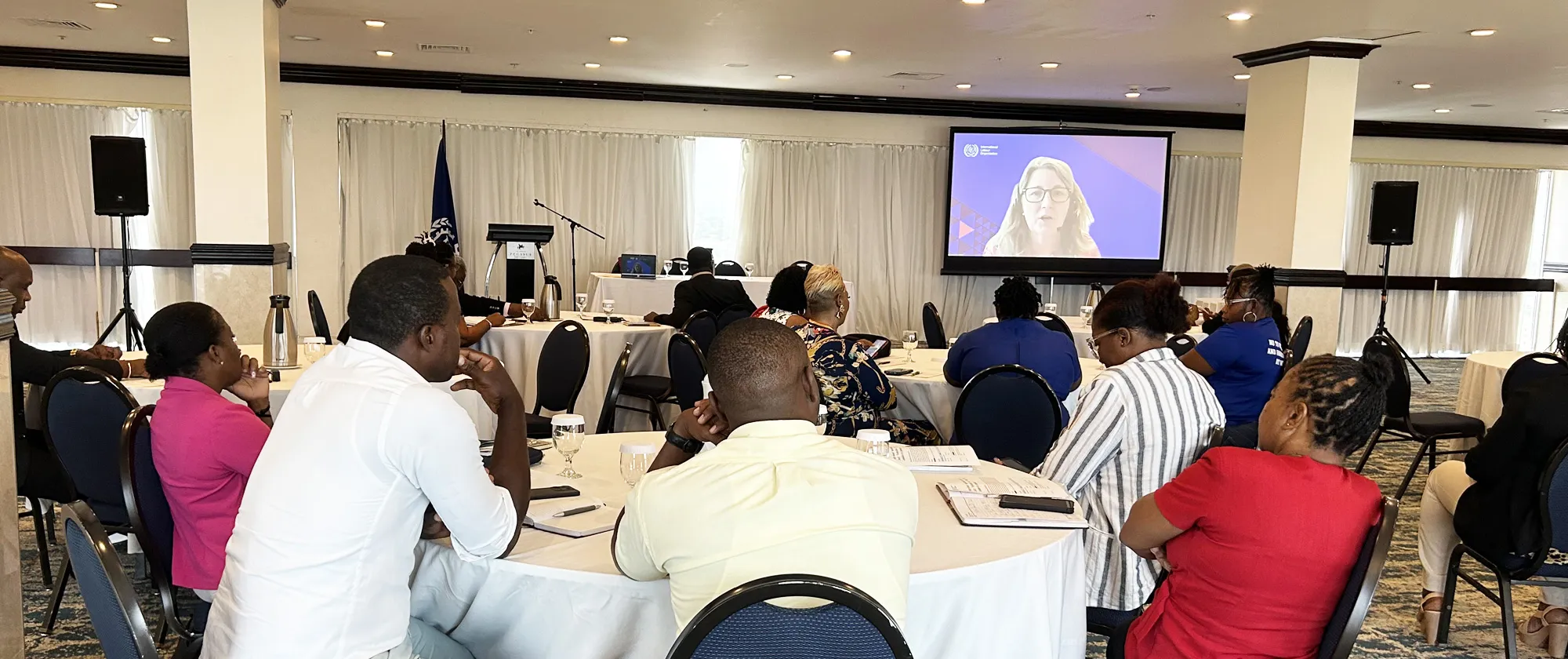
KINGSTON, Jamaica, (ILO News) – Trade union leaders from across Jamaica came together on 25 June 2025, in Kingston, for a landmark High-Level sensitization session on Just Transition. The event marked the official launch of workers’ activities under the Jamaica Just Transition: Embedding Climate Justice in Regional Policy Frameworks Project, setting the stage for workers to play a leading role in shaping the country’s climate and development future.
At its heart, Just Transition is about fairness. As Jamaica moves toward a greener, more sustainable economy, the goal is to ensure that no one is left behind - especially workers and communities most vulnerable to the impacts of climate change and shifting economic realities. For a Small Island Developing State like Jamaica, with a highly open and sensitive labour market, this approach isn’t just an option, it’s a necessity.
The day opened with a strong message from Ms. Vera Guseva, Workers’ Activities Specialist at the ILO Caribbean Office: “Workers are not just stakeholders but essential agents of change in the transition to sustainable economies.” Her words underscored the crucial role of trade unions in climate dialogue.
Joining virtually, Ms. Lene Olsen, Senior Specialist from the ILO Bureau for Workers’ Activities in Geneva, zoomed out to the global picture, sharing how Jamaica’s efforts are part of a worldwide movement for climate justice. Ms. Marissa Sheppard, ILO Project Coordinator, followed with a clear roadmap for the Project, connecting global goals to local realities.
The event marked a major step toward placing workers at the center of Jamaica’s response to climate change, social justice, and sustainable development. “Trade unionists have joined forces with the International Labour Organization (ILO) to deepen our understanding of what a just transition means specifically for Jamaica. For too long, trade unions have been sidelined in these vital discussions. That has to change. This two-year Just Transition Project is designed to put workers at the heart of the conversation and decision-making. We are equipping ourselves with the knowledge and tools needed to tackle upcoming challenges head-on, ensuring justice, fairness, and decent work remain central to the process,” said Mr. Shamir Brown, Vice President, Jamaica Confederation of Trade Unions (JCTU).
One of the session’s most compelling moments came from Dr. Lauren Marsh, Head of the Hugh Shearer Labour Studies Institute. “Our unique vulnerabilities as a Small Island Developing State demand a Just Transition that safeguard both livelihoods and the environment,” he stressed. His insights brought home the urgency and opportunity of this transition for Jamaican workers.
Participants then broke into working groups to identify union priorities and to start building actionable strategies. During the group work, ideas, purpose, and a shared vision was drafted to ensure workers are not just heard but lead the way in climate policy.
The session kicks off a series of activities that will run through 2026, all aimed at strengthening trade union engagement in climate policy.
Next up: A research process, including interviews and document reviews, to understand where unions stand and what support they need. A second workshop will validate those findings and shape concrete policy recommendations. The process will culminate in a union-led position paper and tailored advocacy strategies to influence Jamaica’s updated Nationally Determined Contributions (NDCs) planning, implementation and monitoring.
Unions in Jamaica are proving that climate action and social justice are two sides of the same coin and that a truly Just Transition starts with empowered workers leading the way.
Related content

Jamaica Just Transition: embedding climate justice in regional policy frameworks